Superman is really the all-father of superheroes. He is the Odin from which all else springs forward. Without Superman, there's no Marvel or DC, no billion-dollar blockbusters. His logo is one of the three most recognizable symbols on the planet, and it stands shoulder to shoulder with the crucifix and the Jewish star. Superman became a worldwide phenomenon and was created by two working-class kids from Cleveland, Jerry Siegel and Joe Shuster. Superman is for justice and it's kind of ironic that there was a great injustice done to his creators. Siegel and Shuster lost everything, and just like Superman, they demanded justice. They fought for years to receive proper credit and compensation.
What if we could travel not just through space, but through time itself? If you could travel through time, would you change the past or the future? What if you found it couldn’t be changed? What price does the time traveller -- and the people they are closest to -- pay? This is a journey from H. G. Wells' The Time Machine through ideas like The Grandfather Paradox and The Butterfly Effect to the professional time traveller that is the ever popular Doctor Who. Steven Moffat, David Tennant, Karen Gillan, and Neil Gaiman offer a unique perspective on the Doctor. Edward James Olmos reveals the hidden meaning of the language he created for the vision of the future that is Blade Runner. Bob Gale and Christopher Lloyd take us behind the scenes of Back to the Future, while Ed Solomon describes the joy of solving a time travel conundrum for Bill & Ted’s Excellent Adventure. But what would be the physical and emotional cost to the time traveller? Audrey Niffenegger explains what inspired her novel The Time Traveller’s Wife. And what if someone from the future tried to travel back in time to warn us? Would we believe them? From the apocalyptic tones of 12 Monkeys to the drama of Quantum Leap and the comedy of Groundhog Day, time travel is a subject that has been irresistible to the creators of every type of science fiction.
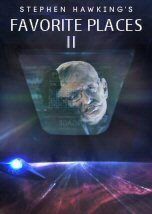
Is Time Travel Possible? Stephen Hawking explores the world's favourite scientific 'what if?' He explores all the possibilities, warping the very fabric of time and space as he goes. From killing your grandfather to riding a black hole, we learn the pitfalls and the prospects for a technology that could quite literally, change everything.
A powerful depiction of Vladimir Mukhin's struggle to resuscitate an almost forgotten russian cuisine, going against the established tradition. Be prepared for stunning images of culinary creations at White Rabbit, some will leave you uneased. A fifth-generation chef, Mukhin worked in his father’s kitchen as a young man, preparing Soviet-era classics. So, like generations of youths before him, Mukhin had to rebel against the old man. He left his small hometown of Essentuki for Moscow and became obsessed with modern techniques and food from across Europe. It wasn’t until he worked as a sous chef in France, when he collaborated on a menu with chef Christian Etienne, that Mukhin realized Russian cuisine could exist within modern cooking. 'His French clients who ate it were amazed,' he says. ¡They loved his Russian cooking.'
Washington, D.C. is in many ways a city of extremes. Starland Vocal Band, Marvin Gaye, Duke Ellington, Nils Lofgren, Chuck Brown, Henry Rollins, Fugazi and Trouble Funk all hail from D.C. In the early '70s, the music style go-go originated here, and has remained a local craze ever since. Dave Grohl sits down with Trouble Funk's Big Tony Fisher to talk about go-go, and explores its origins with Chuck Brown, the genre's undisputed godfather. He also chats with Don Zientara, owner of Inner Ear Studios, which the Virginia-raised Grohl says 'produced the entire soundtrack of my youth,' as well as with members of the harDCore band Bad Brains and Ian MacKaye of Teen Idles, Minor Threat and Fugazi, who all recorded at Inner Ear over the decades. The song 'The Feast and the Famine' is recorded during this episode.
From the age of 15, Whitney Houston began to enter the world of music. In 1983, she signed a contract with Clive David from Arista Records. From then on, she began a life of excess, luxury, fame, drugs, and many scandals. The documentary pays special attention to her relationships with her mother, father, husband and daughter, as well as her former best friend Robyn Crawford. It also addresses the singer's history of drug use, including overdose allegations in the 1990s, her early days as a gospel singer, her discovery by Arista Records boss Clive Davis, and key moments such as the releases of her debut album in 1985 and the film The Bodyguard in 1992. The film tells the story of the life and death of Whitney Houston, who marked a before and after in the history of music. It has been made with archival footage of the artist, from her concerts, interviews and home videos.











Superman is for justice and it's kind of ironic that there was a great injustice done to his creators. Siegel and Shuster lost everything, and just like Superman, they demanded justice. They fought for years to receive proper credit and compensation.