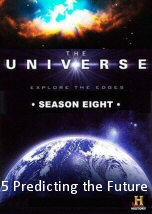
In the concluding episode of the series, Jim encounters ever larger cosmic structures to reveal the latest breakthroughs in our understanding of the universe. For example, Jim comes face to face with our galactic home, the Milky Way, a monstrous structure sculpted by the gravitational forces of dark matter. Jim finds out from pioneering researcher Adrian Fabian about the black hole at its centre, whose strange behaviour includes emitting the lowest note that can be heard in the cosmos. At an even greater scale, Jim encounters huge structures such as the Laniakea Supercluster, of which the Milky Way is only a tiny part. Then there’s the 'Giant Arc', a collection of galaxies that account for more than three per cent of the observable universe. Jim learns from its discoverer, British PhD student Alexia Lopez, that this gargantuan structure is forcing scientists to reassess their theory of how the universe evolves and may overturn some of the most fundamental principles in physics.
This documentary journeys with the scientists into the heart of a giant. Juno is the Nasa mission designed to peer through Jupiter's swirling clouds and reveal the wonders within. By projecting a 70-foot-wide, life-size Juno on a Houston rooftop, Scott Bolton, head of Juno, shows us how its fragile electronics are encased in 200kg of titanium. As Scott puts it, 'we had to build an armoured tank to go there.' Professor Andrew Ingersoll, Juno's space weatherman, reveals they have seen lightning inside Jupiter, perhaps a thousand times more powerful than Earth's lightning. This might be evidence for huge quantities of water inside Jupiter. Under the extreme conditions of Jupiter thousands of miles under the surface, hydrogen becomes a liquid metal. Juno is finding out how much liquid metallic hydrogen is inside Jupiter, and scientists hope to better understand how this flowing metal produces the most powerful aurora in the Solar System. But what is at Jupiter's heart? In Nice, Prof Tristan Guillot explains how Juno uses gravity to map the planet's centre. This can take scientists back to the earliest days of the solar system, because Jupiter is the oldest planet and it should contain clues to its own creation. By chalking out an outline of the Jupiter, Tristan reveals there is a huge rocky core - perhaps ten times the mass of Earth.
A third of the population regularly struggle with our sleep, which rose to one in two during the pandemic - the highest it's ever been. However, as more and more people seek help, an explosion in sleep science is enabling the study of sleep in ways not possible before. What's more, recent breakthroughs are uncovering what's happening in our brains and bodies while we're asleep, getting us closer than ever to understanding the importance of sleep for our health. Michael Mosley shows why cutting our sleep short can be linked to a host of illnesses, including serious diseases like Alzheimer's. Revealing the very latest science breakthroughs and packed with personal anecdotes, this programme is a useful guide to anyone looking for tips and insights on how to get the benefits from learning how to sleep well.
An uplifting, boots-on-the-ground chronicle of ten first-time triathletes grinding toward Ironman 70.3 Swansea: dawn swims, wind-chewed bike rides, and long, lonely runs that turn strangers into a squad. Guided by local coaches and an irrepressible community spirit, they juggle work, family, injuries, and self-doubt while learning that endurance is as much about heart as it is about heart-rate. Shot with brisk intimacy and a clear love for its subjects, the film leans into small victories—clipless-pedal triumphs, cold-water courage—and the way a race can remake a life. By race day, the question isn’t who podiums—it’s how far determination, teammates, and a town’s backing can carry ordinary people beyond their limits.
A thrilling deep dive into the creative storm that brought a cultural phenomenon to life. This anniversary documentary explores the wild and often unpredictable journey behind Spielberg’s 1975 masterpiece — from Peter Benchley’s novel to the birth of the modern blockbuster. Featuring rare outtakes, unearthed behind-the-scenes footage, and candid interviews, it reveals how a troubled production, a malfunctioning mechanical shark, and a visionary young director came together to ignite a worldwide obsession with the ocean’s most misunderstood predator. Both a tribute and a revelation, it offers the most definitive look yet at how cinematic history was made.
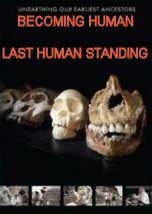
xamines the fate of the Neanderthals, our European cousins who died out as modern humans spread from Africa into Europe during the Ice Age. Did modern humans interbreed with Neanderthals or exterminate them? The program explores crucial evidence from the recent decoding of the Neanderthal genome. How did modern humans take over the world? New evidence suggests that they left Africa and colonized the rest of the globe far earlier, and for different reasons, than previously thought. As for Homo sapiens, we have planet Earth to ourselves today, but that's a very recent and unusual situation. For millions of years, many kinds of hominids co-existed. At one time Homo sapiens shared the planet with Neanderthals, Homo erectus, and the mysterious "Hobbits"–three-foot-high humans who thrived on the Indonesian island of Flores until as recently as 12,000 years ago. "Last Human Standing" examines why "we" survived while those other ancestral cousins died out. And it explores the provocative question: In what ways are we still evolving today?














At an even greater scale, Jim encounters huge structures such as the Laniakea Supercluster, of which the Milky Way is only a tiny part. Then there’s the 'Giant Arc', a collection of galaxies that account for more than three per cent of the observable universe. Jim learns from its discoverer, British PhD student Alexia Lopez, that this gargantuan structure is forcing scientists to reassess their theory of how the universe evolves and may overturn some of the most fundamental principles in physics.