











Last Watched

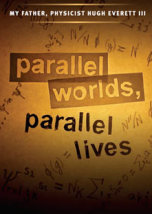
Parallel Worlds Parallel Lives

   2007    History
Mark Oliver Everett, singer of the band EELS, on his quest to get to know his later father, quantum physicist Hugh Everett III, who invented the Many Worlds theory. The film follows Mark on his journey across America, where he meets old friends and colleagues of his father. Hugh died of a heart attack in his home in 1982, where his body was found by 19-year-old Mark. Even though they had lived in the same house, the two of them were alienated. Only by entering the paradoxical world of quantum mechanics can Mark hope to understand why he was such a stranger to his own father.


The Virus of Faith

   2006    Culture
Dawkins opines that the moral framework of religions is warped, and argues against the religious indoctrination of children. He discusses specifically the idea of religion seen as a virus in the sense of a meme. He begins by explaining how a child is genetically programmed to believe without questioning the word of authority figures, especially parents – the evolutionary imperative being that no child would survive by adopting a sceptical attitude towards everything their elders said. But this same imperative, he claims, leaves children open to infection by religion.
Series: The Root of All Evil

The Crimes

   2007    History
Soldiers and officers continually came into conflict with their consciences. How much freedom did individuals have? Were they executing Hitler's criminal plans, or was it the Wehrmacht's war? There were crimes against humanity, against civilians, prisoners of war, and there was the Holocaust itself. The Trent Park records discovered and analysed by historian Sönke Neitzel, author of Tapping Hitler's Generals, show that the 84 German generals who were interned at Trent Park were aware of the severity of the war crimes they had been involved in and that some discussed them almost compulsively. They included the Commissar Order, to kill any Soviet commissar, and Rathenau's order to kill the Jews, including children.
Series: The Wehrmacht

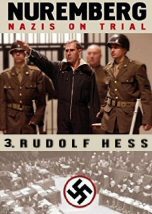
Rudolf Hess

       History
Episode three explores the mind of one of the most fanatical of all Nazis and the insight that gives into the psychology of dictatorship. Hess is brought to Nuremberg from the UK where he had flown 4 years earlier much to the bemusement of the British. Overy explains that they must have quickly realised he was not normal. In the intervening time Hess’s mental state has further deteriorated and when interviewed by Chief Interrogator Colonel John Amen proclaims amnesia. Chief Interpreter Richard Sonnenfeldt explains that they brought in Göring to confront Hess but that he too failed to make an impression.
Psychopathologist Prof. Edgar Jones proposes Hess’s behaviour patterns may be his way of escaping reality as he is forced to face the extent of the atrocities and choose between accepting his part of the blame or forsaking his Führer. However, as history Professor Robert Gellatel explains it is difficult to construct a case against Hess as he was imprisoned in England when the worst of the atrocities were carried out so British Prosecutor Mervyn Griffith-Jones must argue a conspiracy charge linking the pre-1939 persecutions to the post-1939 atrocities and a crimes against peace charge proving the flight to Scotland was merely a ruse.
Series: Nuremberg: Nazis on Trial

The Imposter

       History
In 1994, a thirteen year old boy disappeared from San Antonio, Texas. Three and a half years later, he is found alive and well thousands of miles away in a village in southern Spain with a story of kidnapping and torture. His family is overjoyed to bring him home. But all is not quite as it seems.
The boy bears many of the same distinguishing marks he always had, but why does he now have a strange accent? Why does he look so different? Any why doesn't the family seem to notice these glaring inconsistencies? It's only when an investigator starts asking questions that this strange tale takes an even stranger turn.

Hiroshima

   2020    History
The final hours of WW2 changed the course of history. As the Americans inch closer to Japan the Japanese fight with greater intensity. The question now is how to end the conflict. Starve them into capitulation? Many in US command believe the Japanese will never surrender. The alternative is to stage a massive invasion that would dwarf D-Day? The massacre of millions would be inevitable. But then a third and far darker option becomes available: the atom bomb.
Series: Greatest Events of WWII in Colour
Clarkson Farm Season 2

Clarkson Farm Season 2

2023  Nature
The Jinx

The Jinx

2015  History
Ancient Rome

Ancient Rome

2006  History
History of the Eagles

History of the Eagles

2013  History
Atom

Atom

2007  Science
P.U.L.S.E

P.U.L.S.E

2006  Art
The Hunt

The Hunt

2015  Nature