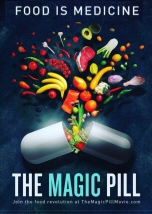
The Magic Pill follows doctors, patients, scientists, chefs, farmers and journalists from around the globe who are combating illness through a paradigm shift in eating. According to its followers, this simple change - embracing fat as our main fuel - is showing profound promise in improving the health of people, animals and the planet. The film is highly controversial and was criticized by some medical associations. The Paleo diet proposes that humans were genetically adapted to eating specifically those foods that were readily available to them in their local environments. Advocates of the diet claim many chronic diseases and degenerative conditions evident in modern Western populations have arisen because of a mismatch between Stone Age genes and modern lifestyles. The Paleo diet typically includes vegetables, fruits, nuts, roots, and meat and excludes foods such as dairy products, grains, sugar, legumes, processed vegetable oils, salt, alcohol or coffee.
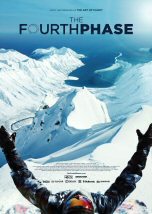
Iconic snowboarder Travis Rice and friends embark on a journey of 16,000 miles around the North Pacific in search of unchartered snowboarding territory. As Rice and the crew experience the highs and lows of a journey unlike any previously attempted, cutting-edge cinematography captures some of the world's most remote environments bringing breathtaking scenery and thrilling action to viewers worldwide.
The youngest foot soldiers for the Lord are shown in their native environment in this documentary. Becky Fischer is a children's pastor who runs 'Kids on Fire,' a summer camp for evangelical Christian children in North Dakota. Fischer believes in the political and moral importance of a Christian presence in America, and uses her camp to reinforce the religious training most of her charges are already receiving at home (the majority of the campers are home-schooled by their parents). Using video games, animated videos, and group activities to help put her message across, Fischer encourages the kids to pray for the President and his Supreme Court appointees while urging them to help 'take back America for Christ.' For the most part, the children seem reasonably ordinary beyond the fact they pray with uncommon fervour and sometimes speak in tongues. Along with Fischer and her cohorts, Jesus Camp features interviews with Ted Haggard, an evangelist and advisor to George W. Bush, and Mike Papantonio, a Christian talk-show host who believes the right-wing slant of many Christian evangelists is taking the church into a dangerous direction.
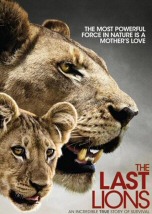
Fifty years ago there were close to half-a-million lions in Africa. Today there are around 20,000. To make matters worse, lions, unlike elephants, which are far more numerous, have virtually no protection under government mandate or through international accords. This is the jumping-off point for a disturbing, well-researched and beautifully made cri de coeur from husband and wife team Dereck and Beverly Joubert, award-winning filmmakers from Botswana who have been Explorers-in-Residence at National Geographic for more than four years. Pointing to poaching as a primary threat while noting the lion's pride of place on the list for eco-tourists-an industry that brings in 200 billion dollars per year worldwide-the Jouberts build a solid case for both the moral duty we have to protect lions (as well as other threatened "big cats," tigers among them) and the economic sense such protection would make. And when one takes into account the fact that big cats are at the very top of the food chain-and that their elimination would wreak havoc on all species below them, causing a complete ecosystem collapse-the need takes on a supreme urgency.
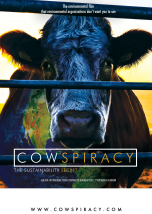
Follow the shocking, yet humorous, journey of an aspiring environmentalist, as he daringly seeks to find the real solution to the most pressing environmental issues and true path to sustainability. Discover 'The Facts' http://www.cowspiracy.com/facts
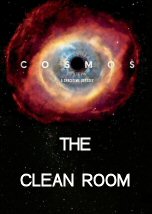
This episode is centered around how science, in particular the work of Clair Patterson (voiced in animated sequences by Richard Gere[33]) in the middle of the 20th century, has been able to determine the age of the Earth. Tyson first describes how the Earth was formed from the coalescence of matter some millions of years after the formation of the Sun, and while scientists can examine the formations in rock stratum to date some geological events, these can only trace back millions of years. Instead, scientists have used the debris from meteor impacts, such as the Meteor Crater in Arizona, knowing that the material from such meteors coming from the asteroid belt would have been made at the same time as the Earth. Patterson also examined the levels of lead in the common environment and in deeper parts of the oceans and Antarctic ice, showing that lead had only been brought to the surface in recent times. He would discover that the higher levels of lead were from the use of tetraethyllead in leaded gasoline resulting in government-mandated restrictions on the use of lead.











The Paleo diet proposes that humans were genetically adapted to eating specifically those foods that were readily available to them in their local environments. Advocates of the diet claim many chronic diseases and degenerative conditions evident in modern Western populations have arisen because of a mismatch between Stone Age genes and modern lifestyles. The Paleo diet typically includes vegetables, fruits, nuts, roots, and meat and excludes foods such as dairy products, grains, sugar, legumes, processed vegetable oils, salt, alcohol or coffee.