In 1914, Ernest Shackleton set out with 27 men aboard the Endurance on one of the boldest expeditions of the Heroic Age of Antarctic exploration: an attempt to cross the frozen continent from the Weddell Sea to the Ross Sea. But before they could even reach land, the ship became trapped in pack ice. Months later, crushed by the pressure, the Endurance was lost, leaving the crew stranded in one of the most hostile environments on Earth with no contact with the outside world. What follows is an extraordinary story of survival, leadership and endurance. Shackleton abandons the original goal and focuses entirely on bringing every man home alive, leading his crew across drifting ice, open ocean and some of the most dangerous seas on the planet. Using Frank Hurley’s remarkable original photographs and film footage, archived voices and letters from expedition members, interviews with their descendants and newly filmed images of the actual locations, the documentary brings this legendary 1914-1916 ordeal vividly back to life.
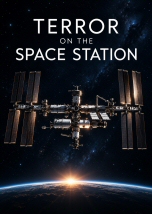
Orbiting Earth at around 27.000 km/h, the International Space Station is one of humanity’s greatest engineering achievements, but also one of the most unforgiving places ever built. Astronauts and mission controllers recount moments when routine work suddenly became a fight for survival: a spacesuit filling with water, toxic ammonia spraying across a spacewalker, dangerous temperature extremes, radiation, fire, contamination and the constant threat of collision. The series reveals how every mission depends on training, improvisation and split-second decisions in an environment where even a small failure can become fatal. Across the two episodes, presented here together in a single uninterrupted video, the danger escalates from the hazardous construction and maintenance of the station to the growing risks of life aboard it. Astronauts face micrometeoroids and space debris travelling at lethal speeds, docking emergencies and system failures, culminating in the extraordinary 2021 incident when the newly arrived Nauka module unexpectedly fired its thrusters and sent the entire ISS rotating out of control. With communications at risk and the structure under immense strain, crews in orbit and controllers on Earth must work together to regain control. The result is a gripping story of courage, science and survival inside a machine that has kept humans continuously living in space for more than two decades.
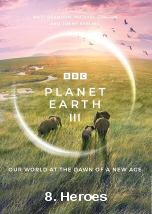
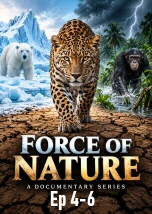
In the final three episodes, the series follows animals being pushed to the edge as melting ice, extreme heat and prolonged drought reshape the environments they depend on. In the Himalayas, a snow leopard is forced from familiar territory, while an Arctic ground squirrel in Alaska undertakes an extraordinary migration and a young Arctic fox in Svalbard faces her first winter alone. These cold-adapted animals must rapidly change behaviours that once worked for generations as their frozen worlds become increasingly unstable. The struggle then shifts to the opposite extreme, where wombats, leopards and kangaroo rats are tested by record heat and worsening drought, pushing their remarkable physical and behavioural adaptations to their limits. In the final episode, attention turns to the people working directly to help wildlife survive these new extremes, revealing rescue efforts, scientific interventions and conservation strategies in some of the planet’s harshest environments. Together, these final chapters show that survival now depends not only on the animals’ ability to adapt, but increasingly on how far humans are willing to go to protect them.
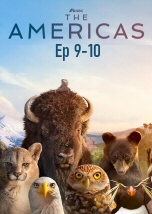
In the final two episodes, the journey reaches the Pacific edge of North America and the remote wilderness of Patagonia, two spectacular regions shaped by powerful oceans, towering forests and extreme weather. Along the West Coast, wolves comb the shoreline for food, sea otters battle crashing surf, blue whales gather in a rare display of speed and movement, and giant Pacific octopuses devote everything to protecting the next generation. High in the redwood canopy, even tiny salamanders perform extraordinary leaps to survive, revealing how life has adapted to one of the continent’s most dramatic coastal environments. The series then travels to the far south of the Americas, where Patagonia delivers a fittingly wild finale. Pumas stalk guanacos through snowy mountains, rockhopper penguins fight their way through violent waves to reach their colonies, giant stag beetles climb immense trees to compete for mates, and elephant seals clash for dominance along the coast. In one of the most remarkable scenes, a family of orcas passes down a dangerous hunting technique from one generation to the next, showing how survival here depends not only on strength, but also on experience, cooperation and learning.
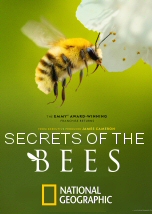
A hidden world unfolds as cutting-edge cameras follow bees closer than ever before, revealing the inner workings of their hives and the intelligence behind their behavior. Over several years, the documentary captures how these tiny pollinators build, communicate, and survive through changing seasons, while playing a critical role in sustaining a third of the food we depend on. Along the way, it exposes the growing threats they face and why their survival is essential for the balance of life on Earth. Both episodes of this series are combined into a single video, so you can experience the full story in one continuous viewing. With never-before-seen footage and expert insight, it offers a clear and fascinating look at one of nature’s most important—and most overlooked—species.
In a world where convenience rules what lands on our plates, this eye-opening investigation pulls back the curtain on the true cost of our modern food economy. What once promised abundance and innovation has morphed into a system where a few powerful corporations hold the reins, shaping government policy, squeezing farmers, and prioritizing profit over people. The result is a food supply that is astonishingly efficient yet painfully vulnerable — and deeply tied to a global health crisis fueled by ultra-processed products. With incisive reporting and compelling voices from leading food system critics, this urgent follow-up dives deeper into how profit-driven consolidation has rewired what we eat and how it’s made. Through revealing stories from workers, families, and the experts who dared to investigate, it challenges everything we think we know about food, health, and corporate control — and urges viewers to rethink the cost of what ends up on our tables.














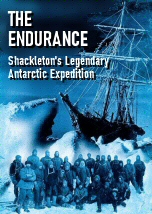





What follows is an extraordinary story of survival, leadership and endurance. Shackleton abandons the original goal and focuses entirely on bringing every man home alive, leading his crew across drifting ice, open ocean and some of the most dangerous seas on the planet. Using Frank Hurley’s remarkable original photographs and film footage, archived voices and letters from expedition members, interviews with their descendants and newly filmed images of the actual locations, the documentary brings this legendary 1914-1916 ordeal vividly back to life.