In the extraordinary final chapter, viewers are taken on a global journey to review regions renowned for their extreme longevity. From picturesque Sardinia to the serene landscapes of Okinawa and the vibrant community in Loma Linda, the film uncovers the secrets behind these remarkable Blue Zones. It offers a fascinating glimpse into the unique lifestyles and community dynamics that contribute to the residents' exceptional health and long lives, leaving viewers intrigued by the possibilities of enhancing their own well-being. The film doesn't stop at showcasing these remarkable places; it also delves into innovative approaches to improve public health. By highlighting initiatives like Singapore's Proximity Housing Grant and the transformative Blue Zones project, the episode encourages viewers to reflect on the impact of environment and policy on individual health. Ultimately, it leaves audiences pondering how they can adapt these life-enhancing principles to enrich their own lives.
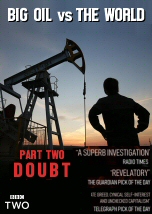
Even as the science grew more certain, the oil industry continued to block action to tackle climate change in the new millennium. In a revelatory interview, Christine Todd Whitman, George W. Bush's former environment chief, tells the story of how the industry successfully lobbied President Bush to reverse course on his campaign promise to regulate carbon emissions. Tensions grew between two of the world's biggest oil companies, ExxonMobil and BP, after the latter publicly called for action to tackle climate change. The election of Barack Obama provided hope for supporters of climate action, but the billionaire Koch brothers made an effort to block the new president's attempts to pass climate change legislation, and climate denialism became the mainstream position of the Republican Party. A lawyer who worked for Koch brothers through this period speaks on camera for the first time.
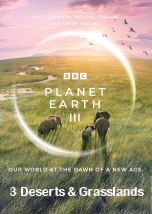
The third episode takes viewers on a riveting journey to some of the world's most extreme and breathtaking deserts and grasslands, where nature puts on its most dramatic show. It begins in the arid landscapes of Central Africa's Guelta d'Archei and the Namib Desert in Southwest Africa, places where water is scarce, and survival is a daily battle. The focus then shifts to the remarkable adaptability of creatures like ostriches, who brave the scorching heat and predators to raise their young and a handful of leopards who learned to hunt from trees on the African plains. In Australia, viewers witness the intricate courtship rituals of the spotted bowerbird, a species facing challenges due to climate change. The narrative then takes us to the vast Eurasian Steppe, home to the unique Saiga antelope, and to Brazil's Cerrado, a biodiverse grassland where the elusive maned wolf plays a crucial role in maintaining the ecosystem. The episode highlights not only the resilience and beauty of these creatures but also the fragility of their habitats, emphasizing the urgent need for conservation efforts.
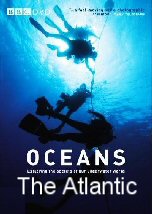
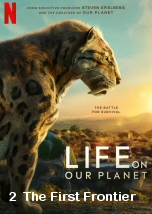
The second episode of the series immerses the viewer in a fascinating journey through the history of life on our planet, focusing on the evolution and adaptation of life in the seas. It begins billions of years ago, when the Earth was an inhospitable place and life was impossible on the surface due to a hostile environment. The documentary highlights how, beneath the waves, life began to flourish, protected from storms and other elements of nature. It addresses the development of photosynthesis by plankton and how this led to a significant change in the Earth's atmosphere, allowing the emergence of animal life. This visually stunning narrative chronicles the evolution of various forms of marine life, from the earliest complex life forms to the appearance of the first fish and cephalopods. The documentary shows how marine life has influenced terrestrial life, emphasizing the impact of the 'greening' of planet Earth.
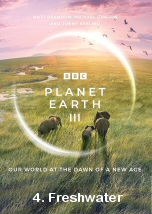
Covering one tenth of all species on the planet, Freshwater is a rich, diverse habitat filled with never-ending surprises. The fourth episode is set beneath the Yucatan Peninsula and spanning diverse locations like the rainforests of Costa Rica and the Kalahari Desert and presents a vivid exploration of how freshwater shapes life on Earth. The narrative journeys through the unique breeding rituals of gliding tree frogs in Costa Rica, the strategic hunting methods of mugger crocodiles in Sri Lanka, and the astonishing adaptations of wildlife in the Okavango Delta. It highlights the critical role of freshwater in supporting diverse ecosystems, from the teeming fish species in Lake Malawi to the perilous journey of gobies in Bioko. The episode also addresses human impact, showcasing the extensive irrigation system in Pakistan and its unintended consequences on local wildlife, like the endangered Indus river dolphin. This captivating chapter not only showcases nature's marvels but also underscores the delicate balance between human needs and wildlife conservation.
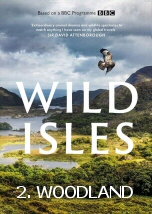
Sir David Attenborough explores the incredible diversity of Britain’s woodlands, taking us on a seasonal journey through our forests, and revealing a host of spectacular animals and the hidden dramas that rule their lives. In an ancient pine tree in the Cairngorms, two eagle chicks are on the verge of fledging their gargantuan nest. In winter in the Forest of Dean, the reintroduction of wild boar has given the robin a lifeline. As they root through the thick snow, the boar unearth the worms with their snouts, which the robins otherwise couldn't find. Back in Scotland, a male capercaillie displays to gathering females. These birds are on the edge. With only around 500 left, they are some of the rarest and most threatened in the British Isles. In a beech woodland outside London, the deciduous trees burst to life in spring, and huge colonies of wood ants awaken and go looking for food. Also looking for sustenance is a female roe deer. With no large predators left in our woods, the deer are free to browse on new growth to the extent that they can damage the woodland itself. In Sussex is an ancient-looking landscape, but one that has only been recreated in the past 20 years. This is the wood pasture of Knepp, created by using old grazing methods that generate a mix of scrub, open areas and ancient trees. In the Scottish Highlands, red squirrels battle it out for access to ripe pine cones at the top of a tree. It’s an acrobatic and energetic encounter, with more than a little cunning required to win the day. As the summer finally fades, we encounter a honey buzzard nest, where two chicks feast on wasp grubs, squabble between themselves and grow up before our eyes. Autumn brings the fallow deer rut. The woods resonate with their calls, and bucks fight for supremacy. The season also brings colour, both in the leaves but also in the fungi that fruit at this time of year. The mushrooms are just a tiny part of their story, however, and we travel underground to see how the wood-wide web connects the whole forest together.











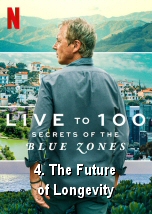




The film doesn't stop at showcasing these remarkable places; it also delves into innovative approaches to improve public health. By highlighting initiatives like Singapore's Proximity Housing Grant and the transformative Blue Zones project, the episode encourages viewers to reflect on the impact of environment and policy on individual health. Ultimately, it leaves audiences pondering how they can adapt these life-enhancing principles to enrich their own lives.