Inspired by his late mentor, Will Smith embarks on a 100-day, pole-to-pole odyssey that pushes him far beyond his comfort zone. Traveling alongside scientists, explorers, and local experts, he climbs remote mountains, dives beneath polar ice, and confronts the raw power of nature. The journey blends adrenaline and curiosity, revealing how extreme environments shape life—and how facing the planet’s edges can reshape us, too. In the first two episodes, the adventure begins with sweeping ambition and immediate immersion. Smith sets out on the global route with National Geographic, then plunges into the Amazon rainforest, tracking dangerous wildlife and learning from those who know the jungle best. It’s a vivid opening that sets the tone for a quest defined by discovery, risk, and awe at the natural world.
Professor Jerry Brotton reveals that maps are far more than neutral guides to places: they are expressions of the societies that create them and powerful instruments for shaping territory, belief and authority. Beginning with some of the earliest known maps, he traces how cartography evolved from marking land and ownership to serving kings, empires, scientists and governments. From Henry VIII’s coastal surveys and the Cassini family’s scientific breakthroughs to the drawing of modern national borders, the series shows how maps can define who controls land, who belongs where and even how entire peoples understand the world around them. Across the three episodes, presented here together in a single uninterrupted video, the journey moves from ancient and medieval worldviews to imperial expansion and the digital age. Brotton explores religious maps, Aztec symbolism, Victorian attempts to classify societies, the politics behind projections of the globe, and the rise of Google Earth and data-driven mapping. He then follows the mapmakers and explorers who turned distant lands into targets for conquest and profit, from Ptolemy and Columbus to Walter Raleigh and the trading empires that followed. The story ends in the Arctic, where new maps are once again being used to stake claims over oil, gas and minerals, proving that even in the twenty-first century, cartography remains inseparable from power, plunder and possession.
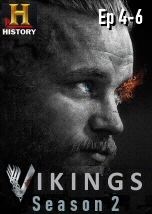
In the next three episodes of Season 2, Ragnar’s ambitions in England collide with a devastating crisis at home. His first face-to-face encounter with King Ecbert reveals two formidable leaders who recognize something of themselves in each other and begin to imagine possibilities beyond endless bloodshed. But while Ragnar negotiates in Wessex, Jarl Borg has seized Kattegat and driven his family into hiding. Ragnar abandons England and races home, where an unexpected reunion changes everything: Lagertha and Bjorn return with warriors of their own, joining Ragnar and Rollo in a desperate battle to reclaim Kattegat and settle an increasingly personal score. Victory, however, only creates new dangers. Athelstan survives a terrifying ordeal in Wessex and finds himself drawn into the confidence of the intellectually curious King Ecbert, forcing him to confront once again the conflict between his Christian faith and the Viking world that has transformed him. Lagertha must return to a brutal marriage, Bjorn begins to choose his own path, and King Horik arrives with a proposal Ragnar can barely accept: Jarl Borg may be needed as an ally for another invasion of England. Ragnar appears willing to put vengeance aside—but beneath the feasts, negotiations and promises of reconciliation, a merciless trap is closing. Loyalty, faith and family are tested as Ragnar proves that forgiveness and revenge can sometimes wear exactly the same face.
This visionary documentary series asks a bold and urgent question: how can the power of nature itself help repair the damage we have done to the planet and even reverse climate change? Drawing on cutting-edge science and filmed across some of Earth’s most vital ecosystems, the series reveals nature not as a victim, but as one of our strongest allies. It offers a hopeful glimpse into a future where working with natural systems could restore balance, resilience, and abundance on a global scale. In the first two episodes, the focus turns to oceans and grasslands, two of the planet’s most powerful yet underestimated climate regulators. Viewers discover how marine life plays a crucial role in removing carbon from the atmosphere, and how vast grasslands, sustained by thriving animal populations, lock away carbon beneath the surface. Through new research and striking imagery, the episodes show why protecting and restoring these ecosystems is essential to our future—and how human action can help them recover.
In the first three episodes of Season 2, Ragnar Lothbrok is thrust into a brutal conflict that threatens both his family and his ambitions. Fighting alongside King Horik against Jarl Borg, he is forced to confront the ultimate betrayal when his own brother Rollo stands on the opposite side of the battlefield. But victory brings little peace. Princess Aslaug arrives in Kattegat carrying Ragnar’s child, shattering his marriage to Lagertha and dividing his family just as Ragnar’s dreams of returning west begin to grow. Ragnar is Earl and prepares a new expedition to England. A violent storm scatters the Viking fleet and drives the survivors onto the shores of Wessex, where they encounter a formidable new ruler, King Ecbert. Raids, ambushes and bloody clashes mark the beginning of a dangerous struggle for power, while Athelstan’s knowledge of England becomes increasingly valuable. Yet the greatest threat may be waiting at home: as Ragnar pushes deeper into Wessex, the embittered Jarl Borg turns his attention towards Kattegat. These opening episodes launch the season with brother against brother, Viking against Saxon, and ambition, loyalty and revenge threatening to tear Ragnar’s world apart.
This eye-opening documentary puts a simple but provocative question to the test: how much does what we eat really shape our bodies and our health? In a tightly controlled scientific experiment, identical twins adopt radically different diets and lifestyles for eight weeks, allowing researchers to isolate the impact of food itself. By combining cutting-edge science with deeply personal experiences, the series reveals how diet influences everything from energy and metabolism to long-term wellbeing. In the first two episodes, the experiment begins as each pair of twins commits to either a plant-based or an omnivorous diet. As they adjust to unfamiliar routines, some changes feel surprisingly easy while others expose cravings, doubts, and unexpected challenges. Along the way, questionable dietary advice is put under the microscope, and a celebrity chef rethinks his approach to cooking, highlighting how habits, culture, and taste all collide when science meets the dinner table.








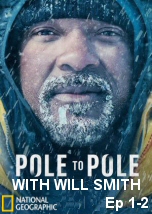



In the first two episodes, the adventure begins with sweeping ambition and immediate immersion. Smith sets out on the global route with National Geographic, then plunges into the Amazon rainforest, tracking dangerous wildlife and learning from those who know the jungle best. It’s a vivid opening that sets the tone for a quest defined by discovery, risk, and awe at the natural world.