In Episodes 4 and 5 you’ll dive deeper into the emotional journeys as relationships begin to take shape and expectations meet reality. Connor continues building confidence as he navigates new dating opportunities, while James faces both hopeful moments and the frustration of not finding the right connection yet. Madison explores more meaningful interactions, showing both excitement and vulnerability as she opens herself up to love. At the same time, the newer participants begin to reveal their true personalities through real experiences. Logan pushes himself beyond his comfort zone in search of a genuine bond, Emma faces the emotional ups and downs of dating, and Dylan starts to gain confidence as he learns from each encounter. These episodes highlight honest conversations, small breakthroughs, and the unpredictability of relationships, making every moment feel real, relatable, and deeply engaging.
In the first three episodes of Season 2, the uneasy peace after Rome’s defeat begins to unravel. Arminius suspects the Romans are rebuilding their strength and turns to Marbod, the powerful leader of the Marcomanni, hoping to forge a broader Germanic alliance before Rome can strike again. At the same time, his brother Flavus returns to Germania in Roman service, reopening old wounds and forcing Arminius to confront the family he left behind. Thusnelda takes dangerous risks of her own, infiltrating the Roman camp as tensions rise on both sides. The situation becomes even more explosive when Marbod secretly meets Tiberius in an attempt to secure peace with Rome, while Germanicus questions Flavus’s loyalty and the Romans exploit every division among the tribes. Arminius brings his son Gaius into the village, then turns against Marbod when he discovers the depth of his dealings with Rome, while Thusnelda reacts furiously to the secrets Arminius has kept from her. These opening episodes turn the struggle into a dangerous web of betrayal, family conflict and political ambition, where every alliance could decide the future of Germania.
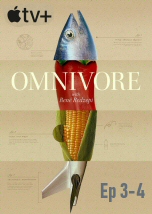
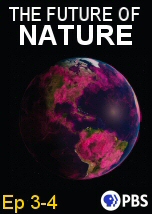
In episodes 3 and 4, a seemingly simple ingredient becomes the invisible force that has shaped civilizations, fueled exploration, and quietly dictated the fate of empires. From ancient trade routes to modern industry, salt emerges not just as a seasoning, but as a powerful driver of human history and survival. At the same time, the story shifts to something far more familiar yet equally unsettling: the global dominance of a single type of banana. What appears to be abundance hides a fragile system built on uniformity, where one disease could wipe out a staple food relied upon by millions. As the journey unfolds, the narrative exposes the hidden cost of convenience and monoculture, revealing how the loss of biodiversity is not a distant ecological concern but an immediate threat to our food security and future. With striking connections between past and present, these episodes invite you to rethink what you eat, where it comes from, and how something as ordinary as salt or a banana could hold the key to understanding the balance—and imbalance—of our world.
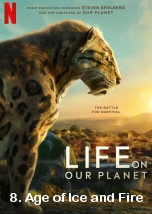
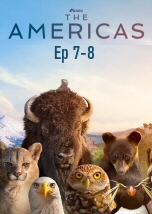
In episodes 7 and 8 of the series, the journey moves from the towering Andes to the tropical Caribbean, revealing two worlds where wildlife survives through astonishing specialization. In the Andes, spectacled bears guide their cubs down perilous cliffs, rare marvelous spatuletail hummingbirds fight and dance for mates, frogs endure freezing nights high beside retreating glaciers, torrent ducks master near-boiling mountain rivers, and thousands of flamingos gather at toxic high-altitude lakes in spectacular courtship displays. The Caribbean offers an entirely different struggle for survival. Sailfish coordinate high-speed attacks on sardine shoals, sperm whales dive into the deep around Dominica, millions of red crabs cross Cuba’s forests on their migration to the sea, and animals on isolated islands develop remarkable ways to exploit scarce resources. On Isla Jicarón, white-faced capuchins even learn to use stones as tools to crack nuts, showing how intelligence and adaptation can make the difference between survival and failure in paradise.
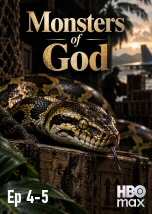
In the final two episodes of the series, the reptile trade enters a new and even more lucrative era. After prison, Tommy Crutchfield returns to find an industry transformed by the rise of genetically altered “morphs”, rare colour and pattern variations that can sell for enormous sums. What appears to be a more legitimate breeding business quickly collides again with illegal trafficking, as Operation Chameleon begins to expose the international network linking collectors, dealers and even major zoological institutions. The investigation then closes in on Anson Wong, the Malaysian trafficker described as one of the most powerful figures in the global reptile trade. As U.S. Fish and Wildlife agents work undercover to penetrate his organization, the story expands from rare snakes and lizards to critically endangered species such as the ploughshare tortoise, whose extraordinary black-market value has helped drive it toward extinction in the wild. These final episodes reveal how obsession, vast profits, corruption and international demand can turn the pursuit of exotic animals into a criminal empire with devastating consequences for wildlife.
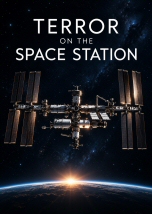
Orbiting Earth at around 27.000 km/h, the International Space Station is one of humanity’s greatest engineering achievements, but also one of the most unforgiving places ever built. Astronauts and mission controllers recount moments when routine work suddenly became a fight for survival: a spacesuit filling with water, toxic ammonia spraying across a spacewalker, dangerous temperature extremes, radiation, fire, contamination and the constant threat of collision. The series reveals how every mission depends on training, improvisation and split-second decisions in an environment where even a small failure can become fatal. Across the two episodes, presented here together in a single uninterrupted video, the danger escalates from the hazardous construction and maintenance of the station to the growing risks of life aboard it. Astronauts face micrometeoroids and space debris travelling at lethal speeds, docking emergencies and system failures, culminating in the extraordinary 2021 incident when the newly arrived Nauka module unexpectedly fired its thrusters and sent the entire ISS rotating out of control. With communications at risk and the structure under immense strain, crews in orbit and controllers on Earth must work together to regain control. The result is a gripping story of courage, science and survival inside a machine that has kept humans continuously living in space for more than two decades.





















At the same time, the newer participants begin to reveal their true personalities through real experiences. Logan pushes himself beyond his comfort zone in search of a genuine bond, Emma faces the emotional ups and downs of dating, and Dylan starts to gain confidence as he learns from each encounter. These episodes highlight honest conversations, small breakthroughs, and the unpredictability of relationships, making every moment feel real, relatable, and deeply engaging.