








Last Watched

"Food"  Sort by

Cooked: Fire

   2016    Culture
As he tries his hand at baking, brewing and braising, acclaimed food writer Michael Pollan explores how cooking transforms food and shapes our world. In the first espisode, with help from Aboriginal hunters and a barbecue pit master, Pollan shows how fire shaped human gastronomy, and weighs our duty to the animals we eat.
Series: Cooked
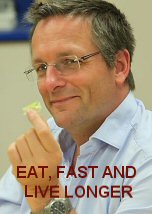
Eat Fast and Live Longer

   2012    Medicine
Michael Mosley has set himself a truly ambitious goal: he wants to live longer, stay younger and lose weight in the bargain. And he wants to make as few changes to his life as possible along the way. He discovers the powerful new science behind the ancient idea of fasting, and he thinks he's found a way of doing it that still allows him to enjoy his food. Michael tests out the science of fasting on himself - with life-changing results.

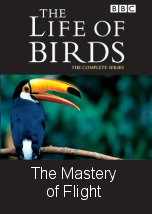
The Mastery of Flight

   1998    Nature
The second programme deals with the mechanics of flight. Getting into the air is by far the most exhausting of a bird's activities, and Sir Attenborough observes shearwaters in Japan that have taken to climbing trees to give them a good jumping-off point. The albatross is so large that it can only launch itself after a run-up to create a flow of air over its wings. A combination of aerodynamics and upward air currents (or thermals), together with the act of flapping or gliding is what keeps a bird aloft. Landing requires less energy but a greater degree of skill, particularly for a big bird, such as a swan. Weight is kept to a minimum by having a beak made of keratin instead of bone, a light frame, and a coat of feathers, which is maintained fastidiously. The peregrine falcon holds the record for being fastest in the air, diving at speeds of over 300 km/h. Conversely, the barn owl owes its predatory success to flying slowly, while the kestrel spots its quarry by hovering. However, the true specialists in this regard are the hummingbirds, whose wings beat at the rate of 25 times a second. The habits of migratory birds are explored. After stocking up with food during the brief summer of the north, such species will set off on huge journeys southwards. Some, such as snow geese, travel continuously, using both the stars and the sun for navigation. They are contrasted with hawks and vultures, which glide overland on warm air, and therefore have to stop overnight.
Series: The Life of Birds

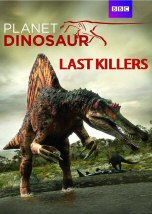
Last Killers

   2011    Science
In late Cretaceous Canada, in what will be known as Dinosaur Provincial Park, a Daspletosaurus stalks a Chasmosaurus in a forest, but loses the element of surprise and is forced to retreat. The Chasmosaurus comes across a younger Daspletosaurus, before being ambushed by a group of the tyrannosaurids. The episode then cuts to the high Arctic, where Edmontosaurus are hunted by a large species of Troodon. The theropods attack at night, separating a juvenile from the herd and severely wounding it, only to be driven away by an adult. In the morning, they return to eat the carcass of the juvenile, which died during the night. The episode returns to the Daspletosaurus, who chase and bring down the Chasmosaurus. The larger adults bully the youngsters off the carcass, forcing them to wait until they have finished. The episode then cuts to Madagascar, where a mother Majungasaurus (an Abelisaurid) and her two offspring chase a group of Rahonavis off a carcass. However, they are temporarily driven off themselves by a male Majungasaurus. But, after he steals some food from one of the young, the female attacks him, before she and her young cannibalise his body. The episode returns once again to North America, where the Daspletosaurus are waiting for the annual migration of Centrosaurus. They attack during a rainstorm, killing some of the ceratopsians. The Centrosaurus make it to a flooded river and begin to swim across, and although many make it to the other side, some are caught by giant crocodilians or are severely wounded by floating debris and thus drown, or drown for unseen reasons. In the morning, the carcasses attract scavengers, including the Daspletosaurus. A montage is then shown of Daspletosaurus and Majungasaurus, the narrator saying that together, the tyrannosaurids and abelisaurids were the last of the killer dinosaurs.
Series: Planet Dinosaur

Colonizing Space

   2008    Technology
Space colonization is no longer the fodder of science fiction, it is becoming a reality. Examine the efforts underway to establish a human colony on Mars, including how they plan to grow food, recycle wastewater and introduce greenhouse gases to revive the red planet and make it more habitable for humans. Cutting-edge computer graphics are used to bring the universe down to earth to show what life would be like on Mars, and to imagine what kind of life forms might evolve in alien atmospheres.
Series: The Universe

Cowspiracy: The Sustainability Secret

   2014    Nature    HD
Follow the shocking, yet humorous, journey of an aspiring environmentalist, as he daringly seeks to find the real solution to the most pressing environmental issues and true path to sustainability. Discover 'The Facts' http://www.cowspiracy.com/facts
Atom

Atom

2007  Science
The Sky at Night

The Sky at Night

2018  Science
Tiger

Tiger

2020  History
The Hunt

The Hunt

2015  Nature
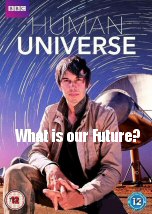
Human universe

Human universe

2014  Technology