Join a team of local archaeologists as they excavate never before explored passageways, shafts, and tombs, while piecing together the secrets of one of the most jaw-dropping, exciting, and important Ancient Egyptian discoveries in decades. News of the tomb discovery has gone around the world and it has been heralded as the most significant find in almost fifty years. The condition of the tomb is remarkable - but the real excitement lies in what is to come. The archaeologists hope they are going to unearth the possessions, grave goods, and mummies of the high-priest and his family - and with that information hoping to transform our understanding of this period of Old Kingdom history.
A new force threatens our perfect planet. In the past, five mass extinction events were caused by cataclysmic volcanic eruptions. It was not the lava or ash that wiped out life, but an invisible gas released by volcanoes: carbon dioxide. Almost every part of modern life depends on energy created by burning fossil fuels, and this produces CO2 in huge amounts. Humans are changing our planet so rapidly, it’s affecting earth’s life support systems: our weather, our oceans and the living world. The greatest change to be made is in how we create energy, and the planet is brimming with natural power that can help us do just that. It’s these forces of nature - the wind, the sun, waves and geothermal energy - that hold the key to our future. Through compelling animal-led stories and expert interviews, we discover how CO2 is destabilising our planet. We meet rescued orphaned elephants in Kenya, victims of ever worsening droughts, and join ocean patrols off the coast of Gabon fighting to save endangered sharks. In the Amazon, we witness wildlife teams saving animals in the shrinking forests, and in San Diego we enter a cryogenic zoo preserving the DNA of endangered species before they become extinct.
Oceans are the largest ecosystem on earth, covering two thirds of our world’s surface and providing half the oxygen in our atmosphere. They are home to as much as 80 per cent of all life on earth, and nearly three billion people rely on them for their primary source of food. But our planet’s oceans would be little more than stagnant wastelands, and life on planet earth would cease to exist, were it not for one simple factor: a global network of powerful ocean currents. Every drop of seawater on earth rides these currents, taking 1,000 years to complete a single circuit. Without the constant mixing of currents, tides and waves, our oceans would stop supporting life - and a healthy ocean is vital to a healthy planet.
Weather controls the distribution of freshwater on Earth. David Attenborough narrates how this uneven distribution has given rise to an incredible diversity of species and habits, from the driest desert to the lushest tropical rainforest. Featuring a colony of ants banding together into a raft every time its home in the Amazon floods, a rain frog that manages to eke out an existence in one of the world's driest habitats on Earth, and the last wild camels that survive the Gobi Desert's bitter winters by eating snow that blows in from Siberia.
As tides rise and fall twice a day, vast amounts of water swirl around the earth. This is a huge energy source that's currently largely untapped. An estimated 3000 gigawatts are available to be harvested globally, enough to power a third of the earth's homes. Yet compared to wind and solar, the technology needed to harness tidal power is still in its infancy. The power of the ocean’s tides is the last great untapped energy source on Earth. From sub-sea kites to floating platforms, teams of engineers are racing to perfect the technology to harness the vast flows of water.
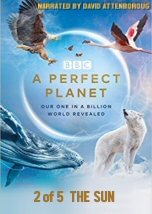
From the frozen poles to the searing deserts, this episode shows how animals have come up with strategies to survive the uneven amounts of sunlight that fall on our planet over the course of a year. The exception is on the equator, where the duration of day and night remain the same throughout the year. Here, this guaranteed sunlight drives the great diversity of life in the tropical jungles.











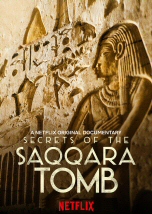





The condition of the tomb is remarkable - but the real excitement lies in what is to come. The archaeologists hope they are going to unearth the possessions, grave goods, and mummies of the high-priest and his family - and with that information hoping to transform our understanding of this period of Old Kingdom history.