
Last Watched

"The Universe"  Sort by

Alien Moons

   2007    Science
Travel from the inner solar system to the Kuiper Belt and explore the moons surrounding the planets of the solar system. Many of these moons that were once unknown are now on the cutting edge of astronomical study. Some burst with volcanic fury another spews icy geysers and others offer the possibility of alien life. Are these strange worlds simply hostile environments unfit for humans or do other possibilities exist? Cutting-edge computer graphics are used to bring the universe down to earth and to imagine what kind of life forms might evolve in alien atmospheres.
Series: The Universe
The Milky Way

   2007    Science
We used to think that Earth was at the centre of the universe, but now we know we're not even at the centre of our own galaxy. Countless wonders exist between where earth is situated and the massive black hole at the galactic centre of our galaxy. Within the Milky Way can be found the debris of old, dying stars fuelling the birth of new stars and at the galactic centre hypervelocity stars get catapulted clear beyond the Milky Way's outer rim at unimaginable speeds. Come along for a guided tour of 100,000 light-year-wide family of stars and stellar phenomena we call The Milky Way.
Series: The Universe

Atom: The Illusion of Reality

   2007    Science
In the last in the series Professor Jim Al-Khalili explores how studying the atom forced us to rethink the nature of reality itself. He discovers that there might be parallel universes in which different versions of us exist, finds out that empty space isn't empty at all, and investigates the differences in our perception of the world in the universe and the reality.
Series: Atom

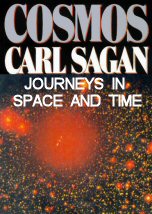
Journeys in Space and Time

   1980    Science
Ideas about time and space are explored in the changes that constellations undergo over time, the redshift and blue shift measured in interstellar objects, time dilation in Albert Einstein's theory of relativity, the designs of both Leonardo da Vinci and spacecraft that could travel near light speed, time travel and its hypothetical effects on human history, the origins of the Solar System, the history of life, and the immensity of space. In Cosmos Update, the idea of faster-than-light travel by wormholes (researched by Kip Thorne and shown in Sagan’s novel Contact) is discussed.
Series: Cosmos

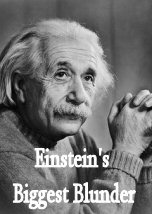
Einstein Biggest Blunder

   2000    Science
At the dawn of a new century, a new theory is being born. It threatens to demolish the foundations of 20th century physics. Its authors are two of the world's leading cosmologists. If they're right, Einstein was wrong. It all began when Andy Albrecht and Joao Magueijo met at a conference in America in 1996. This program began from Newtonian view of the universe then takes you through the General Relativity and the Flatness problem. This leads to the Horizon problem and its solution, the Inflation theory. However modern astronomy doesn't stop here, the Inflation theory has its flaw too, and what happened before the big bang? This can all be answered by changing one thing, the one thing no body dare to question until now.

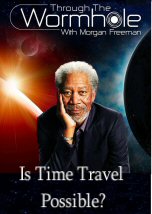
Is Time Travel Possible

   2011    Science
Einstein's world-shaking Theory of Relativity says that time travel is perfectly possible -- if you're going forward in time. Finding a way to travel backwards requires breaking the speed of light, which so far seems impossible. But now, strange-but-true phenomena such as quantum nonlocality (where particles instantly teleport across vast distances) may give us a way to make the dream of traveling back and forth through time a reality. Step into a time machine and rewrite history, bring loved ones back to life, control our destinies. But if succeed, what are the consequences of such freedom? Will we get trapped in a plethora of paradoxes and multiple universes that will destroy the fabric of the universe?
Series: Through the Wormhole