From virtually the moment we're born, there's a story that's preached across cultures and continents. It's a familiar fairy tale, that finding one true love is the key to a fulfilled and happy life. As an adult, we're forced to reconcile the messaging on monogamy with one simple fact: humans are terrible at it. What do biology, human history and the promiscuity of bonobos reveal about monogamy? Experts and everyday couples weigh in on shifting cultural norms.
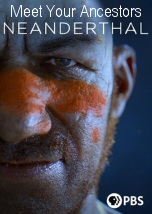
According to recent science the Neanderthals are not the knuckle-dragging apemen of popular imagination. The first part of the film investigates what Neanderthals looked like and how they lived in their Ice Age world. They were faster, smarter, better looking - and much more like us than we ever thought. Our guide is Ella Al-Shamahi, who enlists the skills of Andy Serkis, the master of performance capture, and a group of experts to investigate deeply Neanderthals appearance. In the second part, Ella explores the fate of the Neanderthals - asking why they became extinct, and discovering how they live on inside of us today. About 2% of the DNA of most people is of Neanderthal origin - and it continues to affect us today. Neanderthals were a people who were supremely well adapted to their environment. But about 40,000 years ago they disappeared. Why?
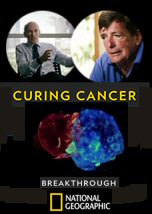
A thought-provoking and imaginative perspective on a scientific discovery. Follow maverick doctors who supercharge killer T cells, creating a breakthrough treatment for cancer.
Al-Khalili travels to northern Syria to discover how, a thousand years ago, the great astronomer and mathematician Al-Biruni estimated the size of the earth to within a few hundred miles of the correct figure. He discovers how medieval Islamic scholars helped turn the magical and occult practice of alchemy into modern chemistry. In Cairo, he tells the story of the extraordinary physicist Ibn al-Haytham, who helped establish the modern science of optics and proved one of the most fundamental principles in physics - that light travels in straight lines. Prof Al-Khalili argues that these scholars are among the first people to insist that all scientific theories are backed up by careful experimental observation, bringing a rigour to science that didn't really exist before.
Is it humankind's greatest achievement? 12 billion miles away a tiny spaceship is leaving our Solar System and entering the void of deep space. It is the first human-made object ever to do so. Slowly dying within its heart is a plutonium generator that will beat for perhaps another decade before the lights on Voyager finally go out. But this little craft will travel on for millions of years, carrying a Golden Record bearing recordings and images of life on Earth. In all likelihood Voyager will outlive humanity and all our creations. It could be the only thing to mark our existence. Perhaps some day an alien will find it and wonder. The story of Voyager is an epic of human achievement, personal drama and almost miraculous success. Launched 16 days apart in Autumn 1977, the twin Voyager space probes have defied all the odds, survived countless near misses and almost 40 years later continue to beam revolutionary information across unimaginable distances.
On the coast, two worlds collide. Coasts are the most dynamic and challenging habitats in the ocean - that brings great rewards but also great danger. The extraordinary animals that live here must find ingenious ways to cope with two very different worlds. This episode is a rollercoaster ride of heart-stopping action and epic drama, peopled with characters from the beautiful to the bizarre. We meet fish that live on dry land and puffins that must travel 60 miles or more for a single meal, and witness a life-and-death struggle in a technicolour rock pool. In a secluded cove in the Galapagos, sea lions feast on 60kg tuna. It should be impossible - tuna are usually far too fast for sea lions to catch. But here the sea lions club together to herd their prey inshore. Once trapped in the shallows, these huge fish are easy pickings. As the tide recedes in Brazil, lightfoot crabs leap from rock to rock, desperately avoiding the water - their lives depend on it. Moray eels launch themselves from rock pools, jaw gaping. Then octopuses, too. Both crawl across dry rock to set their ambush. Elsewhere, the ever-changing tides create rock pools. But these temporary worlds are a battleground. Predatory starfish turn a magical garden into the stuff of nightmares.
















What do biology, human history and the promiscuity of bonobos reveal about monogamy? Experts and everyday couples weigh in on shifting cultural norms.