Dr Janina Ramirez unlocks the secrets of illuminated manuscripts that were custom-made for kings and explores the medieval world they reveal. 'Ruling by the Book.' Janina begins her journey with the first Anglo-Saxon rulers to create a united England, encountering books in the British Library's Royal manuscripts collection which are over a thousand years old and a royal family tree which is five metres long. Janina finds out about a king who had a reputation for chasing nuns and reads a book created as a wedding gift for a ten-year-old prince. She roams from Westminster Abbey to other ancient English spiritual sites such as Winchester, St Albans and Malmesbury, and sees for herself how animal skins can be transformed into the finest vellum.
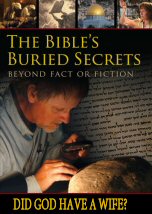
Dr Francesca Stavrakopoulou asks whether the ancient Israelites believed in one God as the Bible claims. She puts the Bible text under the microscope, examining what the original Hebrew said, and explores archaeological sites in Syria and the Sinai which are shedding new light on the beliefs of the people of the Bible. Was the God of Abraham unique? Were the ancient Israelites polytheists? And is it all possible that God had another half?
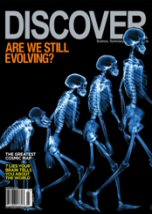
Dr Alice Roberts asks one of the great questions about our species: are we still evolving? There's no doubt that we're a product of millions of years of evolution. But thanks to modern technology and medicine, did we escape Darwin's law of the survival of the fittest? Alice follows a trail of clues from ancient human bones to studies of remarkable people living in the most inhospitable parts of the planet and the frontiers of genetic research, to discover if we are still evolving - and where we might be heading.
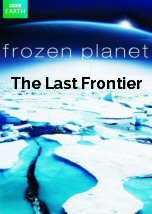
The documentary series reveals the extraordinary riches and wonders of the Polar Regions that have kept people visiting them for thousands of years. Today, their survival relies on a combination of ancient wisdom and cutting-edge science. Most Arctic people live in Siberia, either in cities like Norilsk - the coldest city on earth - or out on the tundra, where tribes like the Dogan survive by herding reindeer, using them to drag their homes behind them. On the coast, traditional people still hunt walrus from open boats - it is dangerous work, but one big walrus will feed a family for weeks. Settlers are drawn to the Arctic by its abundant minerals; the Danish Armed Forces maintain their claim to Greenland's mineral wealth with an epic dog sled patrol, covering 2,000 miles through the winter. Above, the spectacular northern lights can disrupt power supplies so scientists monitor it constantly, firing rockets into it to release a cloud of glowing smoke 100 kilometres high. In contrast, Antarctica is so remote and cold that it was only a century ago that the first people explored the continent. Captain Scott's hut still stands as a memorial to these men. Science is now the only significant human activity allowed; robot submarines are sent deep beneath the ice in search of new life-forms, which may also be found in a labyrinth of ice caves high up on an active volcano. Above, colossal balloons are launched into the purest air on earth to detect cosmic rays. At the South Pole there is a research base designed to withstand the world's most extreme winters. Cut off from the outside world for six months, the base is totally self-sufficient, even boasting a greenhouse.
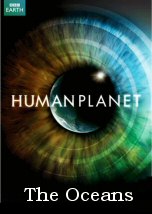
Human Planet is a majestic portrait of humankind and the power of nature in extraordinary symbiosis, struggle and strife. For the first time, the camera has turned on ourselves. In doing so, we see how amazing human beings can be and how we adapt to any habitat, anywhere. Human Planet is epic in ambition, extreme in content, intimate in effect. It explores how we have devised ways of surviving in every corner of Earth – from the remotest deserts to the busiest urban metropolis. Each episode focuses on an iconic environment and reveals how we have adapted to the challenges of the landscape and the endless diversity of animals and plants we live with. Discover how our remarkable intelligence, tool use, and close-knit social lives have enabled us to cope with just about anything nature can throw at us". As an air-breathing animal, the human is not built to survive in water. But people have found ways to live an almost aquatic life so they can exploit the sea's riches. From a 'shark-whisperer' in the Pacific to Brazilian fishermen collaborating with dolphins to catch mullet, this journey into the blue reveals astonishing tales of ingenuity and bravery. Daredevil Galician barnacle-collectors defy death on the rocks for a catch worth 200 pounds per kilo. In Indonesia an epic whale-hunt, using traditional hand-made boats and harpoons, brings in a sperm whale. The Bajau 'sea gypsies' of the Sulu Sea spend so much time on water they get 'land sick' when they set foot on the land! We dive 40 metres down to the dangerous world of the Pa-aling fishermen, where dozens of young men, breathing air through a tangled web of pipes attached to a diesel engine, capture thousands of fish in a vast net. We see how surfing has its origins in the ancient beliefs of the ocean-loving Polynesians, and we join a Borneo free-diving spear-fisherman on a breath-taking journey 20 metres down in search of supper.
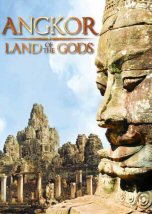
Buddhists, Hindus, and hundreds of thousands of travellers from around the globe flock to Cambodia every year to experience the grandeur of Angkor. Its famous temples were built over the span of five centuries by the rulers of the Khmer Empire, and endure today as one of Earth's greatest archaeological wonders. Join us as we shed light on one of the most enigmatic, mesmerizing civilizations in the history of mankind. We peel away the myth and legend to uncover the hidden story behind the creation of this ancient city. Angkor Wat is the largest temple on the face of the Earth and is a symbol of one of the greatest empires in the history of Southeast Asia. And yet, for centuries, the sacred structure remained lost within the tropical forests of Cambodia, along with the history of the young king who built the temple. Discover the story of Suryavarman II and how he ushered in the golden age of the Khmer Empire. See how Angkor Wat was constructed over four backbreaking decades, and witness the monument in its true glory and splendour, as it appeared 900 years ago.





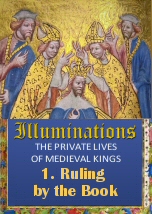


Janina finds out about a king who had a reputation for chasing nuns and reads a book created as a wedding gift for a ten-year-old prince. She roams from Westminster Abbey to other ancient English spiritual sites such as Winchester, St Albans and Malmesbury, and sees for herself how animal skins can be transformed into the finest vellum.