In this second episode, a woman recounts her journey to becoming a mouthpiece for white nationalist hate speech, work that culminates in high-profile violence and murder. Samantha confesses how she became a spokesperson on the Internet for the hate speech of one of the many white nationalist groups that swarm the United States. And this fact ended in racist violence and death during an event. 'I had to start to realize what I was supporting. Was I the victim or was I also a villain?' says Samantha, looking into the camera. Hand in hand with xenophobia, digital true crime seems to have no respite, and so it will be shown how those supremacists work with good Wi-Fi.
Global superstar Jennifer Lopez reflects on her multifaceted career and the pressure of life in the spotlight in this intimate film. The documentary also unveils the characteristics that make the superstar the figure she is: from her performances on stages around the world, to her halftime show at the 2020 Super Bowl, one of the most controversial performances in the history of this show. It also addresses how the international superstar, who has inspired people for decades with her perseverance, creative brilliance and cultural contributions, takes the reins of her career, using her voice for a greater purpose. Jennifer Lopez exposes her insecurities, the pressures the media has placed on her career and the effect paparazzi and tabloids have on the life of a star.
In the fourth episode, several women recall their harrowing experiences with one man's heinous attempts at virtual blackmail, aimed at obtaining sensitive sexual material. A woman tells us: 'I received a message from a man who said: Send me a naked picture or I will kill you'. This young woman was able to add her case to those of other women who were encouraged to denounce and expose the harasser. No one is completely invisible on the Internet.
In this sixth and final episode, the FBI escalates its pursuit of an elusive hacker, but he soon turns the tables by questioning the legality of a key tool in their investigation. We'll also find out how one man is being watched by the government for alleged Russian election interference. Is he responsible, or just a patsy for more powerful people? We'll have to get to the end to find out.
In the third episode, during cleanup at the plant, insiders claim that cost-cutting measures and intimidation tactics create a danger war force than the accident itself. Several state and federal government agencies mounted investigations into the crisis, the most prominent of which was the President's Commission on the Accident at Three Mile Island, headed by chairman John G. Kemeny. The investigation strongly criticized Babcock & Wilcox, Met Ed, Graphics processing unit, and the Nuclear Regulatory Commission for lapses in quality assurance and maintenance, inadequate operator training, lack of communication of important safety information, poor management, and complacency. Kemeny said that the procedures and that the control room were greatly inadequate for managing an accident.
This highly anticipated psychedelic docuseries showcases what these substances teaches people about consciousness, dying, addiction, depression and transcendence. Filmmaker Alex Gibney and best-selling author Michael Pollan present it in four parts, each focused on a different mind-altering substance: LSD, psilocybin, MDMA, and mescaline. With Pollan as our guide, we journey to the frontiers of the new psychedelic renaissance -- and look back at almost-forgotten historical context -- to explore the potential of these substances to heal and change minds as well as culture. The first chapter is a great introduction to the topic of LSD, from its 1943 origins to today's microdosing trend, for those who don’t already know a lot about the subject, and a fun and entertaining refresher on LSD for even experts in the field. The show takes us on a journey through the history of the powerful compound, from its discovery and its early medical use, to secret CIA mind-control studies, the counterculture and its banning, and finally to our current renaissance. It includes amazing clips of LSD’s inventor Albert Hofmann and powerful personal testimonies of individuals who have healed their suffering through LSD.



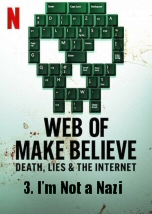




'I had to start to realize what I was supporting. Was I the victim or was I also a villain?' says Samantha, looking into the camera. Hand in hand with xenophobia, digital true crime seems to have no respite, and so it will be shown how those supremacists work with good Wi-Fi.