In the second episode, Abraham Lincoln faces the greatest crisis of his presidency as the Civil War engulfs the nation. With little military experience, he must learn rapidly how to act as commander in chief, challenge hesitant generals and make decisions that will determine the survival of the Union. As battlefield losses mount and the conflict grows more brutal, Lincoln comes to believe that defeating the Confederacy will require more than preserving the nation: slavery itself must be confronted. The episode follows Lincoln as he struggles with military setbacks, political pressure and the enormous human cost of war, while moving toward the Emancipation Proclamation as both a moral and strategic turning point. His relationships with commanders, advisers and abolitionist voices reveal a president evolving under extraordinary pressure, forced to balance principle with pragmatism as he transforms the meaning of the war and the future of the United States.
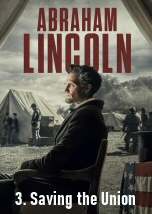
In the final episode of the series, the Civil War reaches its bloodiest and most decisive stage. After the Union victories at Gettysburg and Vicksburg, Abraham Lincoln becomes increasingly frustrated by generals who fail to destroy Robert E. Lee’s army and finally turns to Ulysses S. Grant, a commander willing to fight relentlessly until the Confederacy is defeated. At the same time, Lincoln pushes the nation beyond simply preserving the Union, supporting Black soldiers, confronting Frederick Douglass over their unequal treatment and making emancipation central to the meaning of the war. As casualties continue to mount, Lincoln faces the election of 1864, the fight to abolish slavery permanently through the 13th Amendment and the final collapse of the Confederacy. Lee’s surrender at Appomattox finally brings the long struggle toward its end, leaving Lincoln to consider how a divided nation can be reunited and what freedom will mean for millions of formerly enslaved people. But just as victory opens the possibility of a new beginning, his assassination transforms triumph into national tragedy and seals his place in American history.
From a 2,400-year-old corpse in remarkable condition to how shrunken heads are made, these 15 ancient secrets will have you completely riveted. The Vesuvius eruption may have been a gradual process. It took a storm to lift the cover on this ancient Roman city. The people of Pompeii often resorted to vigilante justice. How the wealthy of Pompeii protected their valuables? Was this pre-Viking gathering a prelude to a massacre? The valuable commodity behind King Solomon's wealth. This valuable Viking grave is missing something important. Is this where humanity decided to settle down? This mysterious stone structure is older than Stonehenge. This 2,400 year old corpse is in remarkable condition. Here's exactly how shrunken heads are made. DNA analysis reveals troubling news about shrunken heads. This mass grave discovery could alter Roman history. Gladiator teeth reveal signs of infant malnourishment. Evidence suggests Stonehenge was an elite cemetery.
Exoplanets, strange worlds outside our solar system. We're discovering the cosmos is full of alien planets. Alien worlds that challenge our understanding of planetary systems. Hellishly hot worlds, violently colliding worlds, worlds getting eaten by their stars. There's much, much more out there than we had ever imagined. Exoplanets are shaking up our understanding of the universe. The cosmos is a chaotic array of the odd, the weird, and the wonderful. The more we find, the less we know.
In the second part and conclusion, a spotlight on the mass marketing of the synthetic opioid fentanyl examines the connections between drug manufacturers and government policy. Video of sales retreats and promotional material reveals a deep cynicism among company employees and a disregard for the widespread, nefarious corporate practices.
It's not all about the pouches. These mammalian misfits are full of surprises, from flamboyant kangaroo showdowns to rattling koala mating calls. They might seem a bit bizarre but don't underestimate them. With unexpected superpowers and amazing adaptability, they have conquered a continent.



























The episode follows Lincoln as he struggles with military setbacks, political pressure and the enormous human cost of war, while moving toward the Emancipation Proclamation as both a moral and strategic turning point. His relationships with commanders, advisers and abolitionist voices reveal a president evolving under extraordinary pressure, forced to balance principle with pragmatism as he transforms the meaning of the war and the future of the United States.