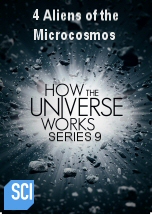
The cosmos, with its billions of galaxies and countless stars, isn't the only one. We share our lives with another universe: The world of the small, of the viruses, of the bacteria. We call this strange hidden kingdom the Microcosmos. We share our world with the microcosmos. Will we coexist in an uneasy peace, or will it destroy us? In 2020, A tiny virus caused a global pandemic, COVID-19. This pandemic makes people see the world completely differently, because there was an invisible universe, pretty much ignored for the most part. Very, very tiny things have a huge impact on our lives. The microcosmos is complex, while some parts kill us, others keep us alive. The microcosmos is responsible for the very oxygen that we breathe and the soil on which we live. And it will influence our future as we venture out into space.
One extraordinary family of fish has achieved the ultimate form of gender equality. When it comes to breeding, seahorses do it like no other animal on the planet. Their fierce females refuse to be left holding the baby. So it's the males that carry their brood. In this episode we explore the world of mating seahorses which are the only animals in the world that have a major gender role reversal.
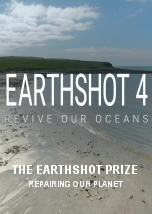
Seafood is a substantial part of the daily diet of over three billion people and oceans absorbs almost a third of all the greenhouse gases we emits. Buy the ocean it is not what it once was. Scenes of extraordinary ocean abundance now only exist in far-off places or in tales from the past. We urgently need to mend our relationship with our oceans and allow them to thrive once again. Prince William, David Attenborough and Shakira find out about inspiring people and projects across the world that can help us stop damaging the oceans and enable their revival.
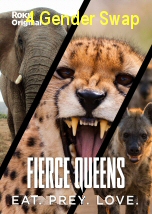
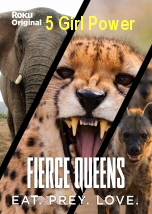
The plains of Africa, home to a powerful predator where females rule: spotted hyena. They have a reputation as dim-witted scavengers. But these fierce queens are the opposite; strong, fearless and highly intelligent. Hyenas are the girl gang of the Savannah. They hunt in packs, get first bite of their prey, and outrank every male in their group, making them some of Africa's most fierce queens.
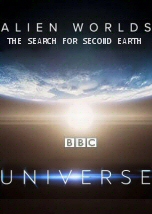
Humans have long gazed up at the night sky, wondering whether other lifeforms and intelligences could be thriving on worlds far beyond our own. But over the last few decades, ultra-sensitive telescopes and dogged detective work have transformed alien planet-hunting from science fiction into hard fact. We expected to find worlds similar to the planets in our own solar system, but we instead discovered a riot of exotic worlds. Vivid animation based on data from the most successful planet hunter of them all, the Kepler space telescope, brings these worlds into view: puffy planets with the density of polystyrene, unstable worlds orbiting two suns and 1,000-degree, broiling gas giants with skies whipped into titanic winds. But perhaps the most startling discovery was the number of worlds that may be contenders for a second Earth, at the right distance from their sun to have that ingredient so crucial for life as we know it, liquid water. Amongst them, we witness the most tantalizing discovery of all: a so-called ‘super-Earth’, situated in the Goldilocks zone - the area just the right distance from a sun to potentially support life - and with the faint signal of water in its atmosphere.
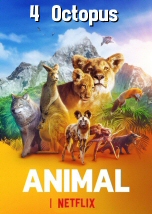
In changing seas and oceans, cephalopods like the cuttlefish and the giant Pacific octopus must rely on their remarkable intelligence to survive. Their alien appearance comes with astonishing resources, independence, and invention. And there's still so much to learn about these rarely seen legends of the deep.











In 2020, A tiny virus caused a global pandemic, COVID-19. This pandemic makes people see the world completely differently, because there was an invisible universe, pretty much ignored for the most part. Very, very tiny things have a huge impact on our lives. The microcosmos is complex, while some parts kill us, others keep us alive. The microcosmos is responsible for the very oxygen that we breathe and the soil on which we live. And it will influence our future as we venture out into space.