










Last Watched

"Ant"  Sort by

Life: Mammals

   2009    Nature
Mammals dominate the planet. They do it through having warm blood and by the care they lavish on their young. Weeks of filming in the bitter Antarctic winter reveal how a mother Weddell seal wears her teeth down keeping open a hole in the ice so she can catch fish for her pup. A powered hot air balloon produces stunning images of millions of migrating bats as they converge on fruiting trees in Zambia, and slow-motion cameras reveal how a mother rufous sengi exhausts a chasing lizard. A gyroscopically stabilised camera moves alongside migrating caribou, and a diving team swim among the planet's biggest fight as male humpback whales battle for a female.
Series: Life
Life: Hunters and Hunted

   2009    Nature
Mammals' ability to learn new tricks is the key to survival in the knife-edge world of hunters and hunted. In a TV first, a killer whale off the Falklands does something unique: it sneaks into a pool where elephant seal pups learn to swim and snatches them, saving itself the trouble of hunting in the open sea. Slow-motion cameras reveal the star-nosed mole's newly-discovered technique for smelling prey underwater: it exhales then inhales a bubble of air ten times per second. Young ibex soon learn the only way to escape a fox - run up an almost vertical cliff face - and young stoats fight mock battles, learning the skills that make them one of the world's most efficient predators.
Series: Life

The Southern Ocean

   2009    Nature
The Southern Ocean, which circles the globe without being blocked by land, is home to the Antarctic Circumpolar Current (ACC), the longest of the world's ocean currents. Also known as the "channel", it connects the Indian, Atlantic and Pacific Ocean basins and exerts a powerful influence over the Earth's climate. The ACC carries 150 times more water around Antarctica than the flow of all the world's rivers combined.
Series: Oceans

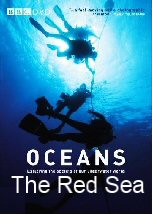
The Red Sea

   2009    Nature
The Red Sea is one of the youngest oceans in the world and one of the warmest. The northern region, with its diverse array of marine life, is one of the most visited dive locations on earth while the southern end remains virtually unexplored. It's a global hotspot for marine biology and an important trade route throughout human history, linking the trade goods of India and the Far East with the markets of Egypt and Europe.
Series: Oceans

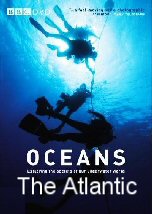
The Atlantic

   2009    Nature
The Atlantic is the second largest ocean on the planet. It is the resting place of the Titanic, home to the mysterious Bermuda Triangle and is the youngest of the Earth's great oceans. It reaches depths of 8,500 metres. Oceans investigates this influential body of water from a group of islands in its western reaches - the Bahamas.
Series: Oceans

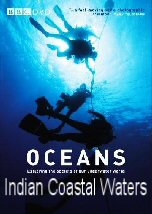
The Indian Ocean Coastal Waters

   2009    Nature
The tropical Indian Ocean is home to the Spice Islands. Characterised by beautiful sandy beaches, fringing coral reefs and coastal mangrove forests, this is a vibrant nursery area for marine life, such as whale sharks, crabs, seahorses and a great variety of fish. The coastal areas are where humans have the most direct impact on the ocean's resources.
Series: Oceans
Food Inc

Food Inc

2023  Technology
The Gene Code

The Gene Code

2011  Science
The Climate Wars

The Climate Wars

  Nature
Kingdom

Kingdom

2025  Nature
Earth at Night in Color

Earth at Night in Color

2020  Nature
How to Grow a Planet

How to Grow a Planet

2012  Science
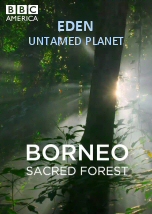
Eden: Untamed Planet

Eden: Untamed Planet

2021  Nature