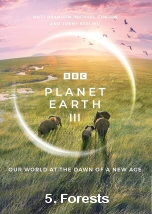
Journey to secret worlds where lives are wrapped in unexpected of ways. The fifth episode of the series takes viewers into the fascinating world of forests, revealing their hidden complexities and the intricate relationships within. Initially perceived as tranquil, forests are in fact bustling with life and intricate ecological interactions. The episode showcases various species, each with its unique lifestyle and survival strategies. Highlights include the Oriental pied hornbills in Borneo, whose extraordinary nesting rituals and partner dynamics are captivating. The Amazon rainforest is explored, introducing the peculiar treehoppers and their unique communication methods, vital for survival amidst numerous predators like ants and assassin bugs. The episode also delves into the intelligent and cooperative hunting techniques of dholes in the forests of India. The narrative takes a turn to China, focusing on the visually stunning courtship displays of Temminck's tragopans and golden pheasants. In the temperate rainforests of Western Canada, the rare spirit bear and its unique relationship with its habitat are examined. The episode concludes with an insightful look at the impact of human activity on forests and their inhabitants, particularly focusing on chimpanzees in Uganda, whose survival is increasingly intertwined with human expansion.
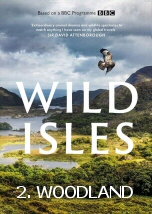
Sir David Attenborough explores the incredible diversity of Britain’s woodlands, taking us on a seasonal journey through our forests, and revealing a host of spectacular animals and the hidden dramas that rule their lives. In an ancient pine tree in the Cairngorms, two eagle chicks are on the verge of fledging their gargantuan nest. In winter in the Forest of Dean, the reintroduction of wild boar has given the robin a lifeline. As they root through the thick snow, the boar unearth the worms with their snouts, which the robins otherwise couldn't find. Back in Scotland, a male capercaillie displays to gathering females. These birds are on the edge. With only around 500 left, they are some of the rarest and most threatened in the British Isles. In a beech woodland outside London, the deciduous trees burst to life in spring, and huge colonies of wood ants awaken and go looking for food. Also looking for sustenance is a female roe deer. With no large predators left in our woods, the deer are free to browse on new growth to the extent that they can damage the woodland itself. In Sussex is an ancient-looking landscape, but one that has only been recreated in the past 20 years. This is the wood pasture of Knepp, created by using old grazing methods that generate a mix of scrub, open areas and ancient trees. In the Scottish Highlands, red squirrels battle it out for access to ripe pine cones at the top of a tree. It’s an acrobatic and energetic encounter, with more than a little cunning required to win the day. As the summer finally fades, we encounter a honey buzzard nest, where two chicks feast on wasp grubs, squabble between themselves and grow up before our eyes. Autumn brings the fallow deer rut. The woods resonate with their calls, and bucks fight for supremacy. The season also brings colour, both in the leaves but also in the fungi that fruit at this time of year. The mushrooms are just a tiny part of their story, however, and we travel underground to see how the wood-wide web connects the whole forest together.
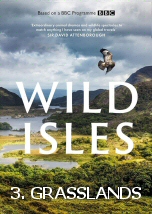
David Attenborough explores Britain and Ireland’s grasslands, revealing the creatures that create them and the extraordinary stories they hide. From the coastal flower meadows in the Scottish Outer Hebrides to the rich open landscapes in the mountains of southern Ireland, we enter surprising and dramatic worlds. In southern England, we meet an extraordinary bee that lives in chalk grassland, one of our rarest habitats, laying her eggs in empty snail shells. Meanwhile, in the colourful machair of the Hebrides, ringed plovers and lapwings strive to rear their families of tiny fluffy chicks and to save them for marauding gulls. We travel back in time to explore the vast wild grasslands once found throughout our isles, before meeting herds of semi-wild horses, where males battle fiercely for the females. Today, they are helping to turn some of this land back to wilderness. And in our precious remaining pockets of flower-rich meadow, a remarkable conservation success story plays out. Once extinct in our isles, England now has the largest known populations of large blue butterflies. Their survival relies on a game of deception with red ants, which are tricked into adopting the butterfly’s unassuming but predatory caterpillars. Our story then journeys to the mountains. Each morning in early spring, feisty male black grouse battle for prime position on their frozen breeding grounds. Their sole mission is to impress a female. Meanwhile, on south-facing scree slopes, dozens of adders emerge from hibernation to perform a surprisingly delicate courtship routine. The episode concludes with a mighty battle in the wild mountains of County Kerry. This is the scene of an epic and spectacular rut between the largest land mammals in Britain and Ireland, red deer. The grasslands of Britain and Ireland are under threat. We have lost 97 per cent of our species-rich meadows in the last century, as modern agriculture replaces these precious habitats. This episode shows just how important different types of grassland are to the species which call these islands home.
In the sixth episode, you’ll journey through Asia’s vast deserts and steppes, where life thrives against all odds. Meet the elusive Gobi bear, one of the rarest mammals on Earth, scent-marking ancient trees in its territory. In the densely populated Thar Desert, thousands of demoiselle cranes migrate from Siberia to be greeted with offerings of grain by the local Jain community. Discover how wild horses and gazelles endure harsh conditions and outsmart predators. This chapter reveals the remarkable resilience and adaptability of wildlife in one of the planet’s most unforgiving environments.
In episodes 3 and 4, the journey intensifies as Will Smith pushes deeper into both the physical and emotional extremes of the planet. In the Amazon, he ventures into dense, unforgiving jungle in search of the elusive green anaconda, confronting fear, danger, and the raw power of one of Earth’s most mysterious predators. Guided by local experts, the expedition becomes a test of courage and trust in a world where nature sets all the rules. The adventure then shifts dramatically to the Himalayas, where the challenge is no longer survival but meaning. High above the clouds, Will explores the idea of happiness alongside monks, scientists, and mountain communities, discovering how isolation, altitude, and ancient wisdom reshape the human mind. Together, these episodes connect the wildness of nature with the inner journey of self-discovery, revealing that the greatest expedition may be the one within.






















The Amazon rainforest is explored, introducing the peculiar treehoppers and their unique communication methods, vital for survival amidst numerous predators like ants and assassin bugs. The episode also delves into the intelligent and cooperative hunting techniques of dholes in the forests of India. The narrative takes a turn to China, focusing on the visually stunning courtship displays of Temminck's tragopans and golden pheasants. In the temperate rainforests of Western Canada, the rare spirit bear and its unique relationship with its habitat are examined.
The episode concludes with an insightful look at the impact of human activity on forests and their inhabitants, particularly focusing on chimpanzees in Uganda, whose survival is increasingly intertwined with human expansion.