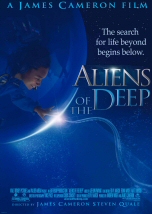
James Cameron journeys to some of the Earth's deepest, most extreme and unknown environments in search of the strange and alien creatures that live there. Joining him is a team of young NASA scientists and marine biologists who consider how these life forms represent life we may one day find in outer space not only on distant planets orbiting distant stars, but also within our own solar system. Aliens of the Deep is the result of expeditions to several hydrothermal vent sites in the Atlantic and the Pacific. These are violent volcanic regions where new planet is literally being born and where the interaction between ocean and molten rock creates plumes of super-heated, chemically-charged water that serve as oases for animals unlike anything ever discovered. Six-foot tall worms with blood-red plumes and no stomach, blind white crabs, and a biomass of shrimp capable of 'seeing' heat all compete to find just the right location in the flow of the super-heated, life-giving water or to fry.
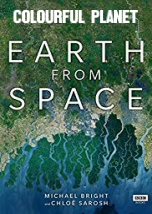
From space, Earth is a kaleidoscope. Turquoise plankton blooms trigger a feeding frenzy, China turns yellow with rapeseed flowers, and mysterious green lights appear in the ocean. Satellites give us a new perspective on its greatest and most beautiful spectacles allowing us to make new discoveries We can watch landscapes change through the seasons and marvel in the scale of their transformations. Satellite cameras capture a kaleidoscope of extraordinary colours surprising and constantly changing, created by natural phenomena, by animals and by people. These colours are revealing new insight into the health of our fragile planet, transforming our understanding of our colourful home.
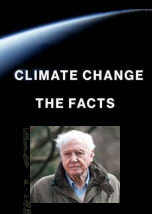
David Attenborough takes a stark look at the facts surrounding Climate Change in today's world, detailing the dangers we are already having to deal with and future threats, but also the possibilities for potential solutions to this global threat and the radical political, social and cultural changes needed. Interviews with some of the world’s leading climate scientists explore recent extreme weather conditions such as unprecedented storms and catastrophic wildfires. They also reveal what dangerous levels of climate change could mean for both human populations and the natural world in the future.
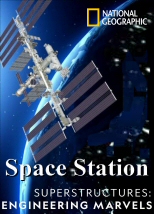
The International Space Station is the ultimate extreme home. Costing $150 billion, it is the most expensive structure humans have ever built, in the most inhospitable environment known to man, with no air food or water. Assembled at 250 miles above the earth, it's an epic engineering challenge. We're going to take it apart and uncover what's going on inside the ISS. Its superstructure secrets will help our species reach other planets and beyond. Using photo-real computer graphics, we take it apart to uncover the extraordinary innovations that enable it to support life in the deadly vacuum of space.
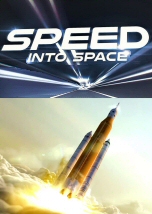
The most innovative area of human motion lies not on Earth, but with the exploration of space. Space is the most hostile environment we know. Navigating it involves crossing unprecedented distances. It's the greatest engineering challenge humanity has ever undertaken. Meet the pioneers who've dreamed of reaching other worlds, pushing the boundaries of space exploration, and the private space entrepreneurs jostling to offer the tantalizing prospect of cheap, frequent travel beyond the atmosphere into Earth orbit.
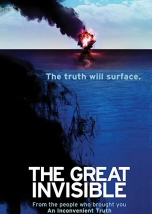
On April 20, 2010, the Deepwater Horizon oil rig exploded in the Gulf of Mexico. It killed 11 workers and caused the worst oil spill in American history. The explosion still haunts the lives of those most intimately affected, though the story has long ago faded from the front page. At once a fascinating corporate thriller, a heartbreaking human drama and a peek inside the walls of the secretive oil industry, 'The Great Invisible' is the first documentary feature to go beyond the media coverage to examine the crisis in depth through the eyes of oil executives, survivors and Gulf Coast residents who experienced it first-hand and then were left to pick up the pieces while the world moved on.


















Aliens of the Deep is the result of expeditions to several hydrothermal vent sites in the Atlantic and the Pacific. These are violent volcanic regions where new planet is literally being born and where the interaction between ocean and molten rock creates plumes of super-heated, chemically-charged water that serve as oases for animals unlike anything ever discovered. Six-foot tall worms with blood-red plumes and no stomach, blind white crabs, and a biomass of shrimp capable of 'seeing' heat all compete to find just the right location in the flow of the super-heated, life-giving water or to fry.