This remarkable science-history series investigates the blistering pace of human endeavour in space exploration, computing, energy, resources, Earth science and our understanding of the evolution of life itself. Across the last 50 years, humans have set a blistering pace and scientific discovery. We've crossed the boundaries of our solar system, made machines that can learn harnessed the power of the sun and built life from scratch. It's a period like no other in history, where human endeavour is changing everything: this is The Great Acceleration. As we race toward the future, we must examine the journey. In the first episode, Dr Shalin Naik explores the ambitious space shuttle mission that began in the '70s plus the future colonization of Mars. Over the past 50 years, space has become central to everything, from communications to entertainment to climate modelling. And as private enterprise enters space exploration, our understanding of the universe will only continue to expand. We will know if we can survive on other objects - the moon, maybe Mars, maybe even some of the moons of Jupiter and Saturn. Deep space is the last and infinite frontier. That's what we do as human beings. We explore, we learn, we make discoveries, from the moment we're born to the moment we die.
Over the last years, the world has experienced an energy revolution, driven by an urgent need to green the grid and save life on Earth as we know it. 50 years ago, a devastating oil crisis kicked off an energy revolution. The world set course to cut the costly habit of burning fossil fuels. With the urgent new threat of a changing climate, the drive to unleash the power of the sun, earth and wind has accelerated into a race for humanity's survival. Change is taken place but, is it happening fast enough to secure our future? Technologies are right here, right now, and they will enable the transition to 100% renewables, because winning the energy race means a win for the entire world.
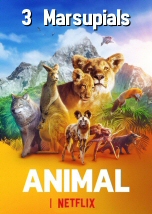
It's not all about the pouches. These mammalian misfits are full of surprises, from flamboyant kangaroo showdowns to rattling koala mating calls. They might seem a bit bizarre but don't underestimate them. With unexpected superpowers and amazing adaptability, they have conquered a continent.
Ewan and Charley swap their e-Harley Davidsons for plane first and follow it up with a journey by ship to Panama. McGregor's bike needs some repairs and will be fixed by the time they reach Costa Rica. The ship they travel in with the bikes looks like a beaten-down vessel that raises genuine concerns about making the journey in one piece. The boat crew looks sharp and proactive while trying to make the show crew's journey as comfortable and safe as possible. The episode also introduces Nuqui, one of the wettest regions in the world where the ship quickly makes a pitstop to fuel up on essential supplies.
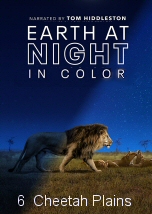
Sunset over the plains of Kenya's Maasai Mara, one of Africa's most protected wild spaces. And home to the fastest land animal on Earth, the cheetah. These agile cats have always been thought of as daylight hunters. They target prey from more than a kilometre away and chase it down at over 100 kilometres an hour. In one of these plains, two cheetah brothers attempt a high-speed night hunt with a gang of powerful hyenas on their trail.
On the second part of his journey through the dark ages Richard Rudgley continues into the age of the wandering peoples, the Volkerwanderung. These Northern people enjoyed a golden age unaffected by Rome and just 30 years after the Romans relinquished Britain, the 'Anglo-Saxons' made their move. The bedraggled legions are in retreat. Walls are pulled down. Mosaics shattered. And yet there never was a people called Anglo-Saxon. We look at the lasting influence of Saxon leaders like Alfred the Great, and his blue print for social justice.
























In the first episode, Dr Shalin Naik explores the ambitious space shuttle mission that began in the '70s plus the future colonization of Mars. Over the past 50 years, space has become central to everything, from communications to entertainment to climate modelling. And as private enterprise enters space exploration, our understanding of the universe will only continue to expand. We will know if we can survive on other objects - the moon, maybe Mars, maybe even some of the moons of Jupiter and Saturn. Deep space is the last and infinite frontier. That's what we do as human beings. We explore, we learn, we make discoveries, from the moment we're born to the moment we die.