







Last Watched

"Environment"  Sort by

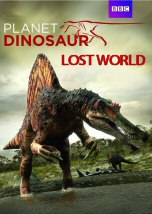
Lost World

   2011    Science
Planet Dinosaur is sure to please budding paleontologists and older dinosaur fans alike. Narrated by John Hurt, more than 50 different prehistoric species featured in this series and they and their environments were created entirely as computer-generated images. The first episode is 95 million years ago, Late Cretaceous in North Africa. We will see Ouranosaurus, Spinosaurus, Onchopristis (a giant sawfish), Rugops, Carcharodontosaurus, Sarcosuchus, pterosaur.
Series: Planet Dinosaur
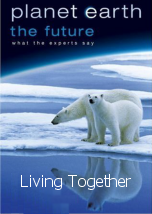
Living Together

   2006    Nature
The documentary deals with the future of conservation. It begins by looking at previous efforts. The 'Save The Whales' campaign, which started in the 1960s, is seen to have had a limited effect, as whaling continues and fish stocks also decline. In the 1990s, as head of the Kenya Wildlife Service, Richard Leakey took on the poachers by employing armed units. Although it was successful in saving elephants, the policy was detrimental to the Maasai people, who were forced from their land. The need for "fortress" areas is questioned, and the recently highlighted Raja Ampat coral reef in Indonesia is an example. The more tourism it generates, the greater the potential for damage — and inevitable coastal construction. Sustainable development is viewed as controversial, and one contributor perceives it to currently be a "contradiction in terms". Trophy hunting is also contentious. Those that support it argue that it generates wealth for local economies, while its opponents point to the reducing numbers of species such as the markhor. Ecotourism is shown to be beneficial, as it is in the interests of its providers to protect their environments. However, in some areas, such as the Borneo rainforests, the great diversity of species is being replaced by monocultures. The role of both religion and the media in conservation is argued to be extremely important. Contributors to the programme admit a degree of worry about the future, but also optimism.

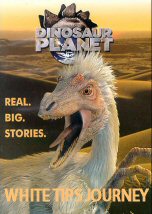
Dinosaur Planet: White Tip Journey

   2003    Science
Take a dino's-eye view of life in the prehistoric past as cutting-edge filming techniques and hard science. When White Tip, a female velociraptor, loses the rest of her pack, she must struggle to survive on her own. In time, she locates a new pack, as well as a mate, only to find that her hardships are just beginning in the harsh desert environment.
Series: Dinosaur Planet

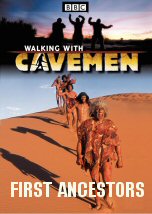
Walking with Cavemen: First Ancestors

   2003    History
It's 3.5 million years ago and in East Africa a remarkable species of ape roams the land. Australopithecus afarensis has taken the first tentative steps towards humanity by standing and walking on two legs. The rift valley was forming, and the rain forests dying as Africa dried out - turning the landscape into a mosaic of scattered trees and grass. In this new environment afarensis found it more efficient to move about on two legs rather than four.
Series: Walking with Cavemen

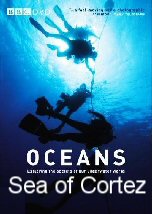
Sea of Cortez

   2009    Nature
The Sea of Cortez, also known as the Gulf of California, is a unique corner of the Pacific Ocean. This remarkable young sea is thought to be around five million years old and home to nearly 900 species of fish and the widest variety of whales and dolphins found anywhere on Earth. Some of the greatest changes threatening the world's oceans today can be seen in this stretch of water.
Series: Oceans

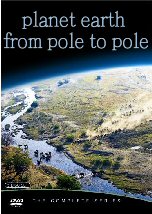
From Pole to Pole

   2007    Nature
Planet Earth is quite simply the greatest nature/wildlife series ever produced. The ultimate portrait of our planet looks at the key factors that shape our natural history. The sun and fresh water dominate the lives of all animals and plants on Earth and trigger seasonal migrations, small and large.
Series: Planet Earth