In just over 100 days, a new coronavirus has taken an unprepared world by storm, infiltrating every corner of the globe, sending entire nations into lockdown, killing thousands and infecting countless more. Across the world, governments are scrambling to react, hospitals are struggling to cope and an increasingly anxious public are starting to panic. The world's media is awash with data, information and misinformation. But what are the facts? What is COVID-19 and why is this strain of coronavirus so dangerous? What happens in our bodies when the virus attacks? How does this compare to previous pandemics? What do all the the numbers really mean, and how can data modelling help us look for an exit strategy? This programme investigates the scientific facts and figures behind the biggest public health crisis in living memory, and explores the latest research from the frontline of the medical and scientific fightback.
At a powderkeg moment in American policing, 'The Force' goes deep inside the embattled Oakland Police Department as it struggles to reform itself amid growing local controversy. Filmmaker Peter Nicks embedded with the department over the course of two years to follow its serial efforts to recast itself. The film focuses on the new chief brought in to effect reform at the very moment the Black Lives Matter movement emerges to demand police accountability and racial justice both in Oakland and across the nation. 'The Force' goes inside an embattled urban police department struggling to rebuild trust in one of America's most violent yet promising cities.
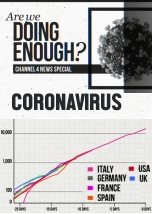
The Coronavirus disease 2019 (COVID-19) has spread globally since 2019, resulting in a pandemic. While the majority of cases result in mild symptoms, some progress to pneumonia and multi-organ failure. The deaths per number of diagnosed cases is estimated at between 1% and 5% but varies by age and other health conditions. In this special on the coronavirus, we're with health staff working on the front-line of the Covid-19 crisis - as well as the scientists, economists and virology experts who can answer the question... Coronavirus: Are We Doing Enough?
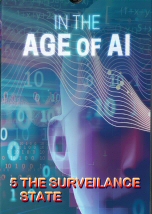
Frequent security expos feature companies like Megvii and its facial- recognition technology. They show off cameras with A.I. that can track cars, and identify individuals by face, or just by the way they walk. In China it's been projected that over 600 million cameras will be deployed by 2020. Here, they may be used to discourage jaywalking, but they also serve to remind people that the state is watching. Matching with the most advanced artificial intelligence algorithm, they can actually use this data, real-time data, to pick up a face or pick up a action. A.I. is a technology that can be used for good and for evil. So, how do governments limit themselves in, on the one hand, using this A.I. technology and the database to maintain a safe environment for its citizens, but not to encroach on a individual's rights and privacies?
In the Youtube video galaxy a new star has been born: the ASMR videos. It stands for Autonomous Sensory Meridian Response, and refers to the pleasant feeling that users associate with this type of digital content. The physical reaction also changes significantly from individual to individual and people reportedly experience a pleasant feeling of tingling in the scalp, which can spread to the shoulders and back, and usually be accompanied by a feeling of relaxation and generalised well-being. The intensity of the response can also be very strong, so much so that some have used the word 'braingasm', literally 'brain orgasm' to express the feeling. It's likely that you've already heard about it, but if not, this is the perfect opportunity to learn more about it. Especially because, for the first time, it seems that the benefits of ASMR videos have been scientifically proven.
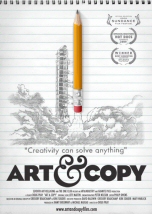
This film reveals the work and wisdom of some of the most influential advertising creatives of our time -- people who've profoundly impacted our culture, yet are virtually unknown outside their industry. Exploding forth from advertising's 'creative revolution' of the 1960s, these artists and writers all brought a surprisingly rebellious spirit to their work in a business more often associated with mediocrity or manipulation: George Lois, Mary Wells, Dan Wieden, Lee Clow, Hal Riney and others featured in ART & COPY were responsible for 'Just Do It,' 'I Love NY,' 'Where's the Beef?,' 'Got Milk,' 'Think Different,' and brilliant campaigns for everything from cars to presidents. They managed to grab the attention of millions and truly move them. Art & Copy is a powerful film about advertising and inspiration.

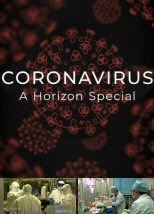






The world's media is awash with data, information and misinformation. But what are the facts? What is COVID-19 and why is this strain of coronavirus so dangerous? What happens in our bodies when the virus attacks? How does this compare to previous pandemics? What do all the the numbers really mean, and how can data modelling help us look for an exit strategy? This programme investigates the scientific facts and figures behind the biggest public health crisis in living memory, and explores the latest research from the frontline of the medical and scientific fightback.