It is the year 2546. Corporations rule the world, and an agent is on a secret mission to explore the untold stories of the past. His journey leads him into a secret virtual reality where one corporation has recreated the 1980s, an era that witnessed the birth of video game development, an event in which a politically and economically restricted small European country, Hungary, had a significant role. He discovers a strange but exciting world, where computers were smuggled through the Iron Curtain and serious engineers started developing games. This small country was still under Soviet pressure when a group of people managed to set up one of the first game development studios in the world, and western computer stores started clearing room on their shelves for Hungarian products. These developers really didn't know it was impossible, because they created games including amazing technical feats that even engineers at Commodore thought their machines weren't capable of.
Various eminent scientists explain the current knowledge of Black Holes and try to answer the question, do they really exist? New discoveries are challenging everything we know about black holes -- astronomers are beginning to question if they even exist. The latest science tries to explain how they work & what they look like, despite the fact we've never actually seen one. The two great theories of Einstein's General Relativity and Quantum Mechanics don't work together to explain Black Holes which is a big problem. Other theoretical constructs such as Gravastars and Planck stars have been postulated but proving their existence is just as difficult as that of Black Holes. So where next?
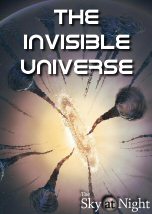
It is one of the most unnerving discoveries in space science - that most of the universe is missing. We live in a material world, so instinctively we know what normal matter is - the world around us, the planets, stars and interstellar dust. But scientists currently estimate that 95 per cent of everything in the universe is actually - one way or another - invisible. Some of this is ordinary matter that we just can't easily see. But there's also stuff that's much more weird. For instance, there's a new kind of matter we think is out there, but whose very existence is still largely hypothetical - dark matter. And most mysteriously of all, scientists think there is an unknown form of energy pervading the universe that we know so little about, all it has so far is a name - dark energy. Embark on a tour of this invisible universe, and shows how its existence - or lack of it - will define the fate of the entire universe.
Chris Packham goes on an investigative journey into the mysteries of planet Earth's super predator - Tyrannosaurus rex. The latest groundbreaking paleontological discoveries combined with studies of modern animals are redefining this iconic dinosaur. Tackling everything from the way he looked, moved, socialized - even down to his terrifying roar - Chris strips away Hollywood myths to uncover the amazing truth, and utilizing the latest CGI wizardry, he rebuilds the most authentic T rex ever seen from the bones up.
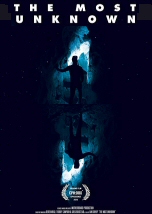
An epic documentary film in which nine scientists will meet in a chain of encounters to uncover unexpected answers to some of humanity's biggest questions. How did life begin? What is time? What is consciousness? How much do we really know? By introducing researchers from diverse backgrounds for the first time, then dropping them into new, immersive field work they previously hadn't tackled, the film reveals the true potential of interdisciplinary collaboration, pushing the boundaries of how science storytelling is approached. What emerges is a deeply human trip to the foundations of discovery and a powerful reminder that the unanswered questions are the most crucial ones to pose. The Most Unknown is an ambitious look at a side of science.
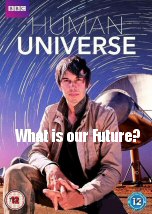
Professor Brian Cox concludes his exploration of our place in the universe by asking what next for the ape that went to space. Our future is far from certain. In Florida, Brian joins the latest efforts to protect Earth from potential catastrophic events. He joins a team of Nasa astronauts who are training for a future mission to an asteroid - should we ever discover one coming our way - under 30 feet of water in a submerged laboratory that simulates space. It is just one example of how, for our long-term survival, space exploration may well be vital. It is a view shared by Apollo 16 astronaut Charlie Duke, who tells Brian what it was like to escape the confines of the planet. It is a dream that both Nasa and now commercial companies share as they race to get humans back into deep space. But space travel, like every leap our civilisation has ever made, requires energy. Here too, scientists are hard at work attempting to safeguard our future. At the National Ignition Facility in California, Brian witnesses the world's most successful fusion experiment in action. He believes that if their mission succeeds, our civilisation will have unlocked a way to the stars that will not destroy the planet in the process. Brian concludes by returning to the top of the world in Svalbard, where he gains access to our civilisation's greatest treasure, locked away in a vault buried deep in the permafrost.












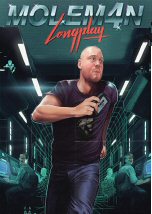






He discovers a strange but exciting world, where computers were smuggled through the Iron Curtain and serious engineers started developing games. This small country was still under Soviet pressure when a group of people managed to set up one of the first game development studios in the world, and western computer stores started clearing room on their shelves for Hungarian products. These developers really didn't know it was impossible, because they created games including amazing technical feats that even engineers at Commodore thought their machines weren't capable of.