Artificially intelligent machines are taking over. They’re influencing our everyday lives in profound and often invisible ways. They can read handwriting, interpret emotions, play games, and even act as personal assistants. They are in our phones, our cars, our doctors’ offices, our banks, our web searches... the list goes on and is rapidly growing ever longer. But how does today’s A.I. actually work—and is it truly intelligent? And for that matter, what is intelligence? The world’s brightest computer programmers are trying to build brighter machines by reverse-engineering the brain and by inventing completely new kinds of computers, with exponentially greater speed and processing power. The documentary looks at how far we’ve come and where machines are headed as their software becomes ever more... cerebral. How close are we from a world in which computers take over—from diagnosing cancer to driving our cars to targeting weapons? If we place more and more of our lives under the control of these artificial brains, what are we putting at risk?
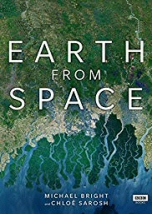
In just half a century, the human population has doubled to 7.4 billion, and during that time, astronaut and satellite photos have been capturing the startling changes on our planet. See how humans have made their mark reshaping the planet in our quest for new sources of food, power, and shelter. From glimmering new megacities like Shenzhen, China to areas affected by climate change like Mt. Kilimanjaro and Florida, witness Earth's changing look--the spectacular and the shocking--from 250 miles up.
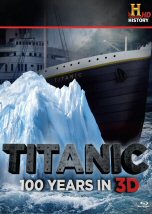
Titanic 100 Years combines stunning imagery of the wreck with powerful untold stories of passengers and crew, letting audiences experience the real life drama of Titanic in a way never before possible. In 2010, an unprecedented expedition by Woods Hole Oceanographic Institute and RMS Titanic, Inc. went on location to document the entire wreck site of Titanic, using high-resolution optical video, sonar, acoustic imaging, and 3D HD video and acoustic modeling. These incredible visuals are accompanied by the untold stories of people who were on the ship and linked with one or more recovered artifacts that connect to that passenger or crewmember. These haunting artifacts and unforgettable personal stories of average people take viewers back in time, making the history of Titanic as vivid as it was yesterday.
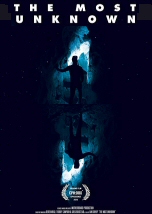
An epic documentary film in which nine scientists will meet in a chain of encounters to uncover unexpected answers to some of humanity's biggest questions. How did life begin? What is time? What is consciousness? How much do we really know? By introducing researchers from diverse backgrounds for the first time, then dropping them into new, immersive field work they previously hadn't tackled, the film reveals the true potential of interdisciplinary collaboration, pushing the boundaries of how science storytelling is approached. What emerges is a deeply human trip to the foundations of discovery and a powerful reminder that the unanswered questions are the most crucial ones to pose. The Most Unknown is an ambitious look at a side of science.
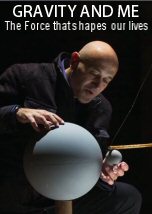
Professor Jim Al-Khalili investigates the amazing science of gravity. A fundamental force of nature, gravity shapes our entire universe. It sculpts galaxies and warps space and time. But gravity’s strange powers also affect our daily lives in the most unexpected ways. This is a story with surprises in store for Jim himself. In telling the story of gravity, his own understanding of the nature of reality comes to be challenged. Finally, Jim discovers that, despite incredible progress, gravity still has many secrets to unveil.
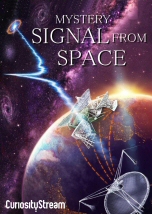
Deep in the mountains of West Virginia, the Green Bank Observatory has been receiving a mysterious signal from deep space. A team of astronomers has been detecting high-energy bursts erupting from unknown sources far off in space since years ago. But one of them is different from the rest. They call it FRB 121102. What is actually giving rise to this very powerful flash? Could this be a message from an advanced civilization, or is it a much stranger and violent occurrence? Visit the largest steerable radio telescope on the planet for answers.





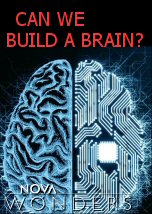



The world’s brightest computer programmers are trying to build brighter machines by reverse-engineering the brain and by inventing completely new kinds of computers, with exponentially greater speed and processing power. The documentary looks at how far we’ve come and where machines are headed as their software becomes ever more... cerebral. How close are we from a world in which computers take over—from diagnosing cancer to driving our cars to targeting weapons? If we place more and more of our lives under the control of these artificial brains, what are we putting at risk?