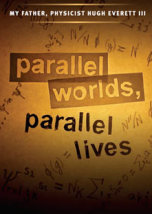
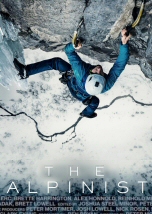
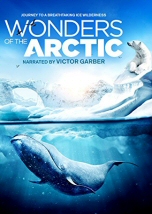
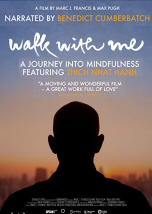
A thought-provoking and imaginative perspective on a scientific discovery. Follow maverick doctors who supercharge killer T cells, creating a breakthrough treatment for cancer.
In the final part, Professor Al-Khalili uncovers tales of success and heartache in the story of chemists' battle to control and combine the elements, and build our modern world. He reveals the dramatic breakthroughs which harnessed their might to release almost unimaginable power, and he journeys to the centre of modern day alchemy, where scientists are attempting to command the extreme forces of nature and create brand new elements.
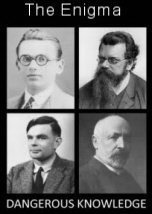
brilliant mathematicians whose genius has profoundly affected us, but which tragically drove them insane and eventually led to them all committing suicide. Kurt Gödel, the introverted confidant of Einstein, proved that there would always be problems which were outside human logic. His life ended in a sanatorium where he starved himself to death. Finally, Alan Turing, the great Bletchley Park code breaker, father of computer science and homosexual, died trying to prove that some things are fundamentally unprovable.
Ewan, Charley, and the team land in Ushuaia, the southernmost tip of South America, but tensions arise due to snow and mechanical issues. Traveling 13000 miles over 100 days on electric bikes is hard to imagine. Ewan McGregor and Charles Boorman find out how challenging their mission is as they embark on a journey on prototype Harley Davidsons and the Rivian trucks. The first obstacle is electricity. While parts of the city have no problems with charging the bikes and the trucks, the countryside is where the duo face issues.
This episode examines the British Raj and India’s struggle for freedom. Wood reveals how in South India a global corporation came to control much of the subcontinent, and explores the magical culture of Lucknow, discovering the enigmatic Briton who helped found the freedom movement. He traces the Amritsar massacre, the rise of Gandhi and Nehru, and the events that led to the Partition of India in 1947.
Aliens almost certainly do exist. So why haven't we yet met E.T.? It turns out we're only just developing instruments powerful enough to scan for them, and science sophisticated enough to know where to look. As a result, race is on to find the first intelligent aliens. But what would they look like, and how would they interact with us if we met? The answers may come to us sooner than we imagine, for one leading astronomer believes she may already have heard a hint of their first efforts to communicate