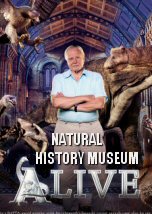
In this ground-breaking film, Sir David Attenborough takes us on a journey through the world-famous Natural History Museum in London in a captivating tale of discovery, adventure, and magic, where state-of-the-art CGI, science, and research combine to bring the museum's now long-extinct inhabitants to life to discover how these animals once roamed the planet. As the doors are locked and night falls, Attenborough stays behind and meets some of the most fascinating extinct creatures which come alive in front of his eyes; dinosaurs, ice age beasts, and giant reptiles. The film fulfils a lifelong dream of him, who said: 'I have been coming to the Natural History Museum since I was a boy. It's one of the great places to come to learn about natural history. In this film we have the technology to bring back to life some of the most romantic and extraordinary extinct creatures that can be conceived; some are relatively recent animals like the dodo, others older like the dinosaurs, and some we only know through fossil evidence. Using our current scientific knowledge, this film brings these creatures alive, allowing me to look at some of the biggest questions surrounding them.'
Many argue that flying saucers and other extra-terrestrial space ships continuously visit the earth. If that were true, what kinds of technologies would such alien spacecraft require? And do eyewitness reports of UFO sightings jibe with modern theories of how interstellar travel might be possible? Authors, astronomers and theoretical physicists weigh in with the blueprints for inertia-canceling devices, nuclear-powered craft, antimatter propulsion systems and even warp drives. Based on Einstein's theories and countless scientific studies, we'll find out how these visitors might bridge the vast distances between the stars. And if they could survive such hazardous journeys, are they flesh and blood or intelligent machines?
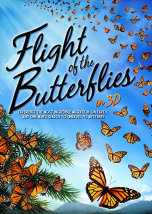
It's a natural history epic. It's a compelling detective story. It's a scientific adventure at its best. It took Dr Fred Urquhart almost 40 years to discover the monarch butterflies' secret hideaway and prove the most incredible migration on Earth. Following the year-long annual migration cycle of the butterflies, the award-winning production team filmed hundreds of millions of monarchs in their remote overwintering sanctuaries in Mexico in 2011 and again in 2012 and also along their migratory routes from Canada, across the U.S. and into Mexico. The film immerses you in the astounding migration experience as two generations of the butterflies migrate north and then a Super Generation miraculously finds its way from Canada to a few isolated mountaintops in Mexico.
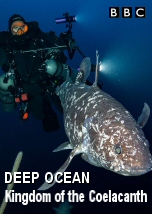
Deep beneath the Indian Ocean, a team of explorers embarks on a bold scientific mission to capture one of nature’s rarest survivors — the coelacanth, a fish unchanged for 400 million years. Narrated by David Attenborough, the film follows NHK’s deep-sea crew aboard the OceanX vessel as they attempt the world’s first 72-hour observation of this living fossil. Using cutting-edge submersibles, they descend into an ancient realm where time itself seems frozen. As the cameras reveal the coelacanth’s slow, graceful movements, scientists uncover vital clues about evolution’s greatest leap — the moment life crawled from sea to land. Blending adventure, technology, and breathtaking natural history, this deep-ocean odyssey illuminates how a single fish still holds the key to understanding our own beginnings.
Across the United States, a growing wave of censorship is turning libraries into battlegrounds. This gripping documentary follows a group of librarians in Texas, Florida, and beyond who refuse to stay silent as book bans spread through schools and communities. What begins as a local fight over reading lists becomes a powerful defense of free thought, truth, and democracy itself. Through emotional testimonies and scenes of quiet defiance, the film reveals how the right to read is being tested like never before. As pressure mounts from political groups and extremist movements, these librarians stand their ground—facing threats, intimidation, and public outrage to protect the stories that shape us all. Their courage transforms a profession built on order and access into a movement for freedom, reminding us that knowledge, once lost, is the hardest thing to reclaim.
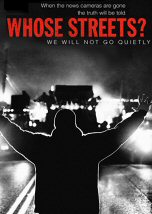
Inside one of America’s deadliest prison systems, a group of incarcerated men defy fear and isolation to reveal the truth hidden behind concrete walls. Through smuggled footage, letters, and interviews, they expose a network of corruption, abuse, and systemic neglect that has claimed countless lives. Their courage turns confinement into resistance, transforming their voices into weapons against silence. As investigations deepen, the film uncovers how the state’s drive for profit fuels overcrowding, forced labor, and violence — conditions that thrive in secrecy. What begins as a story of survival becomes a powerful quest for justice, giving a face and a voice to those the system tried to erase.













The film fulfils a lifelong dream of him, who said: 'I have been coming to the Natural History Museum since I was a boy. It's one of the great places to come to learn about natural history. In this film we have the technology to bring back to life some of the most romantic and extraordinary extinct creatures that can be conceived; some are relatively recent animals like the dodo, others older like the dinosaurs, and some we only know through fossil evidence. Using our current scientific knowledge, this film brings these creatures alive, allowing me to look at some of the biggest questions surrounding them.'