







Last Watched

"CIA"  Sort by

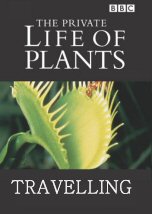
The Private Life of Plants: Travelling

   1994    Nature
Sir David Attenborough reveals plants as they have never been seen before - on the move and dangerously devious. About the major problems of life - growing, finding food, reproduction - and the varied ways plants have evolved to solve it. Filmed from the plant's point of view, using computer animations, fibre-optics and unique time-lapse photography. The first episode looks at how plants are able to move". The bramble is an aggressive example: it advances forcefully from side to side and, once settled on its course, there is little that can stand in its way. An altogether faster species is the birdcage plant, which inhabits Californian sand dunes. When its location becomes exposed, it shifts at great speed to another one with the assistance of wind — and it is this that allows many forms of vegetation to distribute their seeds. While not strictly a plant, the spores of fungi are also spread in a similar fashion. One of the most successful (and intricate) flowers to use the wind is the dandelion, whose seeds travel with the aid of 'parachutes'. They are needed to travel miles away from their parents, who are too densely packed to allow any new arrivals. Trees have the advantage of height to send their seeds further, and the cottonwood is shown as a specialist in this regard. The humidity of the tropical rainforest creates transportation problems, and the liana-species Alsomitra macrocarpa is one plant whose seeds are aerodynamic 'gliders'. Some, such as those of the sycamore, take the form of 'helicopters', while others, such as the squirting cucumber release their seeds by 'exploding'. Water is also a widely used method of propulsion. The tropical sea bean Entada gigas has one of the biggest fruits of all plants and is dispersed by water streams. However, most plants use living couriers, whether they be dogs, humans and other primates, ants or birds, etc., and to that end, they use colour and smell to signify when they are ripe for picking.
Series: The Private Life of Plants

Journey Through Space

   2013    Science    HD
Journey Through Space gives you an astronaut's eye view of the wonders of the universe, featuring imagery and specially-created animations based upon images from NASA and the European Space Agency and presented here on 720p HD. Your journey begins in Earth orbit and takes you past our moon and neighboring planets, before venturing into deep space for a stunning interstellar tour.

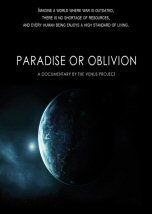
The Venus Project: Paradise or Oblivion

   2012    Technology
This documentary details the root causes of the systemic value disorders and detrimental symptoms caused by our current established system. This video presentation advocates a new socio-economic system, which is updated to present-day knowledge, featuring the life-long work of Social Engineer, Futurist, Inventor and Industrial Designer Jacque Fresco, which he calls a Resource-Based Economics.

Operation Condor

       History
Operation Condor was a campaign of political repression and terror involving intelligence operations and assassination of opponents, officially implemented in 1975 by the right-wing dictatorships of the Southern Cone of South America. The program was intended to eradicate communist or Soviet influence and ideas, and to suppress active or potential opposition movements against the participating governments.

Adoration in the Forest

   2010    Art
Painted over five centuries ago, Filippo Lippi's nativity is like none other: it shows the birth of Christ in a dark, wooded wilderness. There are no shepherds, kings, ox, ass – there is no Joseph. Its beauty inspired Michelangelo, Leonardo da Vinci and Botticelli. But it also conceals a deeply personal story. It was painted for Cosimo de Medici, a wealthy banker who feared that his money was dragging him straight to hell. The artist's life was equally surprising. One of the most celebrated painters of his day, Filippo Lippi was also a Carmelite friar, but he was no stranger to the temptations of the flesh, to which he frequently yielded. Shortly before painting his Adoration, he caused uproar by seducing a twenty year-old nun. His paintings rejoice not only in divine beauty, but in the beauty of women. In later times, the Adoration's history was interwoven with that of rulers and dictators. It became a bargaining chip after Napoleon's allies seized twenty merchant ships. And in the 20th century, it was hidden by the Nazis in a potassium mine, where specialist american officers, known as Monuments Men, stumbled upon it. they were now told to get it ready to be shipped out. In an unprecedented turn of events they refused. This is the only known case in the whole of the Second World War of American officers refusing an order. It was sent to the National Gallery of Art, but in 1949 Lippi's Adoration was returned to Germany.
Series: The Private Life of a Masterpiece

One Voice in the Cosmic Fugue

   1980    Science
Sagan discusses the story of the Heike crab and artificial selection of crabs resembling samurai warriors, as an opening into a larger discussion of evolution through natural selection (and the pitfalls of intelligent design). Among the topics are the development of life on the Cosmic Calendar and the Cambrian explosion; the function of DNA in growth; genetic replication, repairs, and mutation; the common biochemistry of terrestrial organisms; the creation of the molecules of life in the Miller-Urey experiment; and speculation on alien life (such as life in Jupiter's clouds). In the Cosmos Update ten years later, Sagan remarks on RNA also controlling chemical reactions and reproducing itself and the different roles of comets (potentially carrying organic molecules or causing the Cretaceous–Paleogene extinction event).
Series: Cosmos
Modern Masters

Modern Masters

2024  Art
Cosmos

Cosmos

1980  Culture
Clarkson Farm

Clarkson Farm

2021  Nature
Atom

Atom

2007  Science
The Hunt

The Hunt

2015  Nature
Life on Our Planet

Life on Our Planet

2023  Science