




Last Watched

"TT"  Sort by

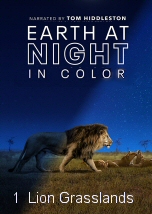
Lion Grasslands

   2020    Nature
Filmed across six continents, this docuseries uses cutting-edge camera technology to capture animal's nocturnal lives revealing new behaviours filmed in full color like never before. In the first episode, we will see how after dark on Kenya's Maasai Mara grasslands, a lioness won't rest until she finds the young cubs she's lost.
Series: Earth at Night in Color
Battle Begins

       Nature
Global warming, and how to combat it, has provoked intense debate, changed the way we see the planet and created headlines around the world. But when and how did scientists first discover global warming, why has it led to such furious debate? In this three-part series geologist Dr Iain Stewart presents a definitive guide to the history of climate change.
Battle Begins uncovers some of the great unsung heroes of climate change science, and introduces us to a secret organisation of American government scientists, known as Jason, who wrote the first official report on global warming as far back as 1979. By the late 1980s global warming had already become a serious political issue. It looked as if the world was uniting to take action. But it turned out to be a false dawn.
Series: The Climate Wars

Lost Relic of the Ice Age

   2020    History
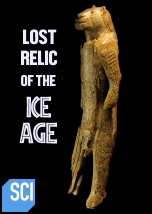
An Ice Age relic found in a mysterious cave is evidence of prehistoric humans' connection to the supernatural. Using cutting-edge tech, experts investigate this 40,000-year-old treasure to reveal why it was made and the long-lost myths it represents.
In the summer of 1939, a team of explorers unearthed hundred of mammoth ivory fragments within a cave in Germany. Due to the start of World War II, the explorers were forced to abandon their findings, and the fragments laid forgotten in a museum. Decades later, as archeologists began piecing the fragments together, an extraordinary artifact emerged -- a figure with both animal and human features, now known as the 'Lion man.'

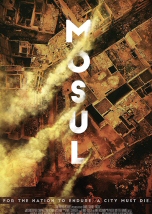
Mosul

   2019    Historia
In the fall of 2016, an army of over 100,000 Iraqi soldiers and militiamen mobilize to liberate Mosul, Iraq's second largest city, from the clutches of the Islamic State. Ali Mula, an Iraqi journalist, joins this army of uneasy allies--including Sunnis, Shiites, Christians and Kurds--to find out if they can put aside their sectarian differences and finally free their country from the scourge of ISIS.
Along the way to Mosul, Ali encounters an unforgettable group of characters including a Sunni tribal leader who calls himself 'the Crocodile', a female militia leader avenging the death of her husband, a canny, Iranian-backed militia leader, a lawyer-turned-warrior, an elite band of ISIS killers, and refugees who survived the brutality of ISIS occupation. As he nears the end of his journey, Ali meets face-to-face with a die-hard ISIS prisoner who reveals the truth behind his nefarious organization.

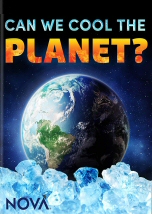
Can We Cool the Planet

   2020    Nature
Are rising temperatures driving Earth's ecosystems past a point of no return? We have promising technologies that put solutions within our grasp. Scientists are exploring solutions: from geoengineering to sucking carbon out of the air to cloud brightening, as means to cool the planet. Cutting-edge solutions and high-risk measures. But would they work? And what are the risks of engineering Earth's climate?

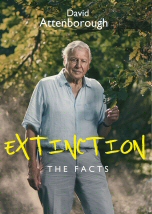
Extinction: The Facts

   2020    Nature
With a million species at risk of extinction, Sir David Attenborough explores how this crisis of biodiversity has consequences for us all, threatening food and water security, undermining our ability to control our climate and even putting us at greater risk of pandemic diseases.
Everything in the natural world is connected in networks that support the whole of life on earth, and we are losing many of the benefits that nature provides to us. The loss of insects is threatening the pollination of crops, while the loss of biodiversity in the soil also threatens plants growth.
Last year, a UN report identified the key drivers of biodiversity loss, including overfishing, climate change and pollution. But the single biggest driver of biodiversity loss is the destruction of natural habitats. Seventy-five per cent of Earth's land surface (where not covered by ice) has been changed by humans, much of it for agriculture, and as consumers we may unwittingly be contributing towards the loss of species through what we buy in the supermarket. Human activities like the trade in animals and the destruction of habitats drive the emergence of diseases. Disease ecologists believe that if we continue on this pathway, this year’s pandemic will not be a one-off event.
The Dinosaurs

The Dinosaurs

2026  Science
Ancient Rome

Ancient Rome

2006  History
Food Inc

Food Inc

2009  Technology
Our Universe

Our Universe

2022  Nature
The Sky at Night

The Sky at Night

2024  Science
Clarkson Farm

Clarkson Farm

2021  Nature
Worst Ex Ever

Worst Ex Ever

2024  Culture