The last episode examines the fragile interdependence that exists between forests' wide variety of residents, including bald eagles, hunting dogs and Siberian tigers. Over half of all the world's trees, evergreen and deciduous, stand in great assemblies. For many of us, they are places of mystery and darkness. They are key to our climate, and home to countless unique species. The boreal forest contains 750 billion trees, and it stores over 40 percent of the world's carbon, making it a vital element in the fight against climate change. In the past, we have destroyed them without hesitation. Yet, forests do have an astonishing ability to recover. If we choose to give forests time and space, they could reclothe the earth with much of the rich and varied communities of animals and plants of which we have, so recently, robbed it. A future with more forests is key to the resilience of our planet.
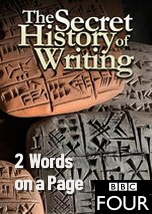
Writing itself is 5,000 years old, and for most of that time words were written by hand using a variety of tools. The Romans were able to run an empire thanks to documents written on papyrus. Scroll books could be made quite cheaply and, as a result, ancient Rome had a thriving written culture. With the fall of the Roman Empire, papyrus became more difficult to obtain. Europeans were forced to turn to a much more expensive surface on which to write: Parchment. Medieval handwritten books could cost as much as a house, they also represent a limitation on literacy and scholarship. No such limitations were felt in China, where paper had been invented in the second century. Paper was the foundation of Chinese culture and power, and for centuries how to make it was kept secret. When the secret was out, paper mills soon sprang up across central Asia. The result was an intellectual flourishing known as the Islamic Golden Age. Muslim scholars made discoveries in biology, geology, astronomy and mathematics. By contrast, Europe was an intellectual backwater. That changed with Gutenberg’s development of movable type printing. The letters of the Latin alphabet have very simple block-like shapes, which made it relatively simple to turn them into type pieces. When printers tried to use movable type to print Arabic texts, they found themselves hampered by the cursive nature of Arabic writing. The success of movable type printing in Europe led to a thousand-fold increase in the availability of information, which produced an explosion of ideas that led directly to the European Scientific Revolution and the Industrial Revolution that followed.
Across the world, rising demands for food, water and materials have pushed resources to the limit. Many parts of the world have major challenges over fresh water. A lot of soils have a lot of residual pesticides and herbicides. At the same time waste is piling higher. All this demands a new wave of innovation. The challenge is to make more of the things we need without the environmental cost.
The Blue Marble is an image of Earth taken on 1972, from a distance of about 18,000 miles from the planet's surface. It was taken by the crew of the Apollo 17 spacecraft on its way to the Moon. Before it was photographed from space, our perspective of Earth was fragmented and disconnected. Recent discoveries have revealed a dynamic and rapidly changing planet, above the crust and below.
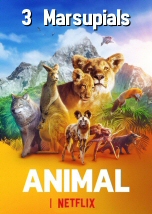
It's not all about the pouches. These mammalian misfits are full of surprises, from flamboyant kangaroo showdowns to rattling koala mating calls. They might seem a bit bizarre but don't underestimate them. With unexpected superpowers and amazing adaptability, they have conquered a continent.
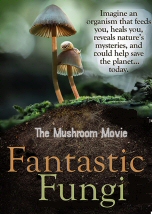
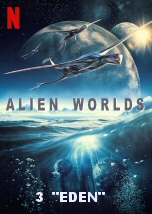
Planets beyond our solar system are known to astronomers as exoplanets. They are at trillions of miles from Earth and yet, it might be possible to detect a faint signature of life in them. From the light of the stars they orbit that passes through the atmosphere of an exoplanet, it is possible to capture the chemical fingerprint of the elements in that atmosphere. The fictional world Eden is orbiting not one star, but two. The light from its twin stars powers photosynthesis, pumping more oxygen into the atmosphere than in Earth, allowing life to thrive. Grazers are constantly alert to danger, because the canopy is home to predators perfectly evolved to live among the trees. In Episode 3, another topic are fungi and the role they could play on exoplanets. Ecologist Thomas Crowther talks about the role mycelial networks play in the Rothiemurchus forest in Scotland.








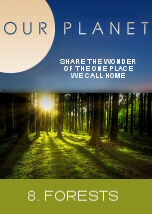

Over half of all the world's trees, evergreen and deciduous, stand in great assemblies. For many of us, they are places of mystery and darkness. They are key to our climate, and home to countless unique species. The boreal forest contains 750 billion trees, and it stores over 40 percent of the world's carbon, making it a vital element in the fight against climate change. In the past, we have destroyed them without hesitation. Yet, forests do have an astonishing ability to recover. If we choose to give forests time and space, they could reclothe the earth with much of the rich and varied communities of animals and plants of which we have, so recently, robbed it. A future with more forests is key to the resilience of our planet.