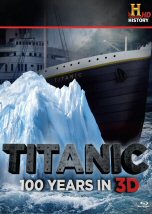
Titanic 100 Years combines stunning imagery of the wreck with powerful untold stories of passengers and crew, letting audiences experience the real life drama of Titanic in a way never before possible. In 2010, an unprecedented expedition by Woods Hole Oceanographic Institute and RMS Titanic, Inc. went on location to document the entire wreck site of Titanic, using high-resolution optical video, sonar, acoustic imaging, and 3D HD video and acoustic modeling. These incredible visuals are accompanied by the untold stories of people who were on the ship and linked with one or more recovered artifacts that connect to that passenger or crewmember. These haunting artifacts and unforgettable personal stories of average people take viewers back in time, making the history of Titanic as vivid as it was yesterday.
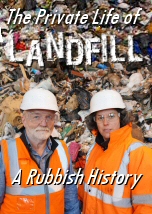
Their quest is to discover whether the items we throw away today have any value for tomorrow's world. In a unique science experiment, Dr George McGavin and Dr Zoe Laughlin chronicle the history of rubbish and explore how what we throw away tells us about the way we live our lives. With unprecedented access to one of the UK's largest landfill sites, the team of experts spend three days carrying out tests all over the site, revealing the secret world of rubbish. They also carry out three other 'archaeological' digs into historic landfills to chart the evolution of our throwaway society. Is mining trash for something valuable really viable? McGavin concluded: 'The idea of landfill mining is a pretty compelling vision of the future.'
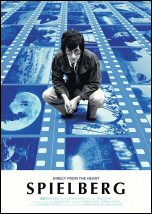
Through exclusive interviews with actors, family, and the filmmaker himself, this unprecedented documentary pulls back the curtain on the remarkable career of Steven Spielberg. Featuring Leonardo DiCaprio, Martin Scorsese, Liam Neeson, and many more.
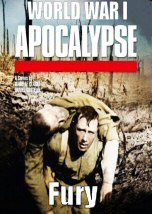
Was the sacrifice of an entire generation worldwide an avoidable or a necessary tragedy? Are the roots of World War II to be found in the devastation of World War I? Drawing from over 300 hours of archival footage and tracing the journeys of the civilians and soldiers across the world, anonymous or well-known, who fought for survival in this unprecedented period in human history, both heroic and barbaric. On June 28th, 1914, the assassination of an obscure Austrian archduke in Sarajevo triggers the most disastrous conflict the world has ever known. Germany becomes an enemy to France, invades Belgium, and in September arrives at the gates of Paris.
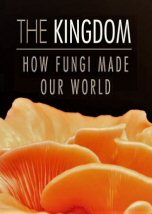
You find fungi in Antarctica and in nuclear reactors. They live inside your lungs and your skin is covered with them. Fungi are the most under appreciated and unexplained organisms, yet they could cure you from smallpox and turn cardboard boxes into forests. They could even transform Mars into Eden. There are vastly more fungi species than plants and each and every one of them plays a crucial role in life’s support systems. Join us on a journey into the mysterious world of Fungi to witness their beauty, unravel their mysteries and discover how this secret kingdom is essential to life on Earth, and may in fact hold the key to our future.
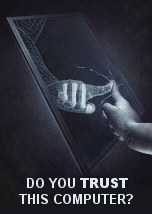
Science fiction has long anticipated the rise of machine intelligence. Today, a new generation of self-learning computers is reshaping every aspect of our lives. Incomprehensible amounts of data are being collected, interpreted, and fed back to us in a tsunami of apps, smart devices, and targeted advertisements. Virtually every industry on earth is feeling this transformation, from job automation to medical diagnostics, from elections to battlefield weapons. Do You Trust This Computer? explores the promises and perils of this developing era. Will A.I. usher in an age of unprecedented potential, or prove to be our final invention?




These incredible visuals are accompanied by the untold stories of people who were on the ship and linked with one or more recovered artifacts that connect to that passenger or crewmember. These haunting artifacts and unforgettable personal stories of average people take viewers back in time, making the history of Titanic as vivid as it was yesterday.