






Last Watched

"Peoples"  Sort by

The Cities

   2011    Culture
Humans are so clever they’ve built their own habitat, designed to keep wild nature out. Yet as we discover the urban environment is totally dependant on the natural world. Over the three years of filming for Human Planet, the teams have spent time with over seventy different communities in countries across the planet. Despite seeing many different ways of living, there are some aspects of family life that remain the same whether you live in a tree house in West Papua, or a brick house in Bolton. These similarities became very clear when the urban team went to film on a rubbish dump in Kenya. Here on the Kibarani dump on the outskirts of Mombasa, Ali, Ashe and their family live and survive amongst the rubbish, and even here, just like anywhere on the planet, everything stops for a nice cup of tea!
Series: Human Planet
Escape from North Korea

   2013    Culture
North Koreans cross the border into China illegally every year, some via a modern-day underground railroad to freedom and eventual citizenship in South Korea. VICE visits the most dangerous place in the world: Kashmir's line of control, which partially occupies the Indian state and separates India from Pakistan.
Series: Vice

Omens of Doom

   2016    Science
Why were the most fearsome warriors our planet has ever known stopped by a flaming light in the sky? How did Columbus use secret knowledge of the heavens to cheat death in the New World? Our ancestors saw a universe filled with bad omens. The film examines the interpretations by ancient peoples of celestial phenomena as bad omens, and the impact that the perceived omens may have had on history.
Series: The Universe Season 8

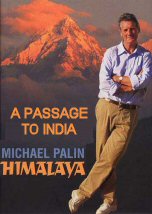
A Passage to India

   2004    Nature
Travelling from K2 in Pakistan to Ladakh in India. It is a short distance as the crow flies but, due to politics, a huge loop. He passes through the Sikh city of Amritsar, with its Golden Temple, and through Shimla with its Vice Regal Lodge, Gaiety Theatre and cosy half-timbered tea-houses. He then meets the 14th Dalai Lama in Dharamsala, where the Tibetan government is in exile.
Series: Himalaya with Michael Palin

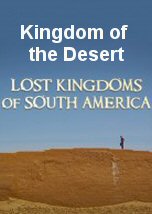
Kingdom of the Desert

   2013    History
In the spectacular deserts of coastal Peru, archaeologist Dr Jago Cooper explores the dramatic rise and fall of Chimor, the first empire of South America. His journey begins among the ruins of a vast lost city once home to an all-powerful monarchy, whose subjects transformed the desert landscape, created gold and silver treasures and believed so strongly in the power of their gods that they made the most shocking of sacrifices. Chimor thrived despite facing some of the most extreme climate conditions in the world, but not even this powerful empire could withstand the forces that eventually destroyed it.
Series: Lost Kingdoms of South America

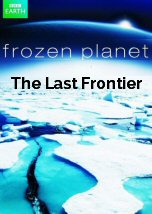
Frozen Planet: The Last Frontier

   2011    Culture
The documentary series reveals the extraordinary riches and wonders of the Polar Regions that have kept people visiting them for thousands of years. Today, their survival relies on a combination of ancient wisdom and cutting-edge science. Most Arctic people live in Siberia, either in cities like Norilsk - the coldest city on earth - or out on the tundra, where tribes like the Dogan survive by herding reindeer, using them to drag their homes behind them. On the coast, traditional people still hunt walrus from open boats - it is dangerous work, but one big walrus will feed a family for weeks. Settlers are drawn to the Arctic by its abundant minerals; the Danish Armed Forces maintain their claim to Greenland's mineral wealth with an epic dog sled patrol, covering 2,000 miles through the winter. Above, the spectacular northern lights can disrupt power supplies so scientists monitor it constantly, firing rockets into it to release a cloud of glowing smoke 100 kilometres high. In contrast, Antarctica is so remote and cold that it was only a century ago that the first people explored the continent. Captain Scott's hut still stands as a memorial to these men. Science is now the only significant human activity allowed; robot submarines are sent deep beneath the ice in search of new life-forms, which may also be found in a labyrinth of ice caves high up on an active volcano. Above, colossal balloons are launched into the purest air on earth to detect cosmic rays. At the South Pole there is a research base designed to withstand the world's most extreme winters. Cut off from the outside world for six months, the base is totally self-sufficient, even boasting a greenhouse.
Series: Frozen Planet