Professor Jerry Brotton reveals that maps are far more than neutral guides to places: they are expressions of the societies that create them and powerful instruments for shaping territory, belief and authority. Beginning with some of the earliest known maps, he traces how cartography evolved from marking land and ownership to serving kings, empires, scientists and governments. From Henry VIII’s coastal surveys and the Cassini family’s scientific breakthroughs to the drawing of modern national borders, the series shows how maps can define who controls land, who belongs where and even how entire peoples understand the world around them. Across the three episodes, presented here together in a single uninterrupted video, the journey moves from ancient and medieval worldviews to imperial expansion and the digital age. Brotton explores religious maps, Aztec symbolism, Victorian attempts to classify societies, the politics behind projections of the globe, and the rise of Google Earth and data-driven mapping. He then follows the mapmakers and explorers who turned distant lands into targets for conquest and profit, from Ptolemy and Columbus to Walter Raleigh and the trading empires that followed. The story ends in the Arctic, where new maps are once again being used to stake claims over oil, gas and minerals, proving that even in the twenty-first century, cartography remains inseparable from power, plunder and possession.
From a small and aggressive republic fighting for survival in the ancient Mediterranean to an empire that dominated much of the known world, Rome’s story is one of extraordinary ambition, conquest and transformation. The documentary follows the decisive struggles that shaped its rise, from the wars with Carthage and Hannibal to the upheavals of Spartacus, Julius Caesar and the collapse of the Republic, before Augustus establishes a new imperial order. Military power, political rivalry, engineering, law, spectacle and ruthless violence combine to reveal how Rome created a civilization of unprecedented scale, but also planted the seeds of its own destruction. At its height, the empire reaches astonishing levels of wealth and power under rulers such as Trajan and Marcus Aurelius, yet the system becomes increasingly difficult to control. Plague, civil conflict, destructive emperors such as Commodus, religious transformation and mounting pressure from Germanic peoples, Goths, Vandals and other invaders gradually weaken the foundations of Roman authority. From the Colosseum and the grandeur of imperial Rome to Attila and the invasions that accelerate its collapse, the two-part series shows how one of history’s greatest superpowers ultimately became a warning about the dangers of unchecked power and overextension. Presented here with both episodes combined into a single video, viewers can follow the complete rise and fall of Rome without interruption.
Dan Snow follows the route of Odysseus across the Mediterranean, beginning with the world of Troy and the Bronze Age warriors who inspired Homer’s epic. Sailing through Greece and the Ionian islands, he explores places traditionally associated with the Cyclops, Circe, the Sirens and other episodes of the hero’s long journey home, while examining the archaeology and historical evidence behind the legends. Along the way, Dan asks how much of the story may preserve memories of real places, peoples and events from the ancient Greek world. His voyage ends at Ithaca, where Odysseus’s struggle to return to his family reaches its climax. Combining myth, history, archaeology and travel, this documentary reveals how one ancient story became one of the most influential adventures ever told.
Click CC for subtitles. In a quiet North Macedonian village, a farmer forms an extraordinary bond with a white stork, a creature deeply rooted in local legend and seasonal ritual. What begins as a simple act of care gradually unfolds into a story where nature, folklore, and everyday life merge. Through patient observation and intimate storytelling, the documentary reveals how ancient beliefs still breathe beneath the surface of modern rural life. As the stork becomes both companion and symbol, the film explores themes of belonging, migration, and the fragile balance between humans and the natural world. Blending myth with reality, it offers a poetic meditation on tradition, resilience, and the invisible threads that tie a community to the rhythms of the land and sky.
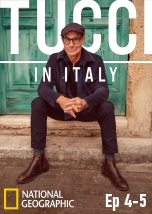
In the final two episodes, Stanley Tucci ventures into some of Italy’s most rugged and surprising landscapes, discovering how geography carves flavor into every bite. In a windswept sheep country, he grills mutton over open flames, savors French-influenced Sunday traditions, and traces the sweet, centuries-old origins of confetti, revealing how history and terrain combine to shape unexpected culinary treasures. It’s a journey where the land itself becomes the secret ingredient. The adventure continues in Lazio, where Tucci explores the powerful connection between countryside and capital. From Roman pizza to Ariccia’s legendary porchetta, from rustic fish soup to tender spring lamb, each dish reflects a cuisine rooted in simplicity yet elevated by elegance. These episodes celebrate the authenticity of regional food, showing how tradition, landscape, and community come together to define what it truly means to eat Italian.
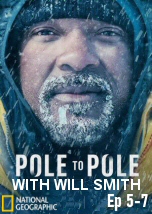
In the final three episodes, the journey deepens into a powerful exploration of culture, survival, and science at the planet’s edges. On a remote Pacific island threatened by rising seas, Will Smith joins Dr. Walworth and John Aini to document a dying language spoken by only five people, turning marine research into an intimate race against time to preserve human memory. The mission reveals how climate change erodes not just coastlines, but identities. The adventure then shifts to extremes of land and ice. In the Kalahari Desert, Will learns survival from the San people, confronting the limits of his endurance during a traditional hunt with guide Kane Motswana. The odyssey culminates beneath the ice of the North Pole, where, alongside polar ecologist Allison Fong, a daring dive to collect critical samples is jeopardized by a sudden storm and equipment failure. What follows is a gripping test of courage and teamwork that redefines heroism at the end of a 100-day quest.









Across the three episodes, presented here together in a single uninterrupted video, the journey moves from ancient and medieval worldviews to imperial expansion and the digital age. Brotton explores religious maps, Aztec symbolism, Victorian attempts to classify societies, the politics behind projections of the globe, and the rise of Google Earth and data-driven mapping. He then follows the mapmakers and explorers who turned distant lands into targets for conquest and profit, from Ptolemy and Columbus to Walter Raleigh and the trading empires that followed. The story ends in the Arctic, where new maps are once again being used to stake claims over oil, gas and minerals, proving that even in the twenty-first century, cartography remains inseparable from power, plunder and possession.