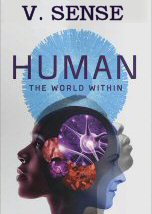
How do the five senses really work? In fact, there are many more than five, and they all work together to create our own version of reality. We dive into the stories of a pairs figure skating team, a perfumer, a cave explorer, and a musician to decipher how different ways of sensing the world all create their own vivid, and unique, picture. This episode explores the world of human sensation and how it defines reality.
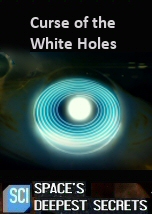
The white hole is a region of spacetime and that cannot be entered from the outside, although energy-matter, light and information can escape from it. In this sense, it is the reverse of a black hole. Einstein predicted strange cosmic phenomena known as white holes, but scientists have yet to prove they exist. Today, astronomers race to find the clues that can unlock the secrets of white holes. They investigate the tiny black holes that hide in the most ancient parts of the universe to finally find the smoking gun.
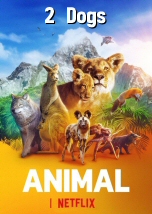
Be it foxes on city streets or wolves on the tundra, canines rely on sharp senses, athleticism and fierce determination to punch above their weight. But the real secret of their success is much more surprising. It's a story of their intimate side. It's what makes every dog, from pet pooch to wild dogs, one of the family.
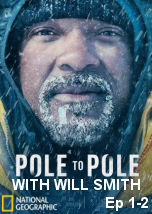
On the trail of tiger sharks in the Pacific, Will Smith explores the power of smell. Sharks have a sense of smell that's hundreds of times more potent and accurate than that of humans. An enormous part of their brain is dedicated to smelling, to finding their way through the vast expanse of the ocean.
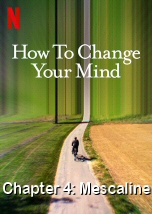
The last episode explores Mescaline, the psychoactive molecule in San Pedro and peyote cacti, a sacred medicine that Native Americans have had to fight for the right to use. At the Indigenous practices there's always an elder, someone who knows the territory very well, who's presiding. There's usually a group, a community is involved, There's always an intention, a purpose to what you're doing, and you're treating it as sacred, in order to achieve altered states of consciousness, which contribute to worship in various ways, or celebration or healing. But maybe all this is not so new to Western culture after all. In the old Greek histories of Eleusis, people who were initiated there got the drink, the kykeon, and then they had the illumination. The precise recipe is a mystery, but we know that the kykeon was a psychoactive brew that was used at the Eleusinian mysteries, a sacred annual ritual of enlightenment practiced by some of the world's greatest minds including Socrates, Plato, and Aristotle. So why did this ritual come to an end more than 1,000 years ago? Was the possibility of illumination or achieving a higher consciousness considered threatening to the powers that be? Have the drug wars been merely an extension of that fear? Psychedelics has a major part in how we can heal as a community, how we can heal as a city, and how we can heal as a country. The current renaissance of psychedelics could not come at a better time as the world confronts a crisis in mental health. But psychedelics have much to offer. The psychedelic experience changes the mind in ways that will help scientists better understand how it works. All these altered states allow us to probe what is the greatest mystery in all of nature. The emergence from mere matter of something as miraculous as consciousness. But an even bigger question is whether psychedelics might help us address the environmental crisis of how we think about our place in nature. One of the greatest gifts of psychedelics is how they reanimate the natural world, allowing us to perceive the subject, the spirit of all species, not just our own. And to feel a deeper sense of interconnectedness with nature.
Our super friends in the animal world possess so many hidden superpowers. In the third episode we meet heat-seeking dogs, GPS-outfitted cats, and a sporty goldfish with squad goals. When we think we know them inside out, dogs surprise us with something new. what sensory superpower have dogs been hiding all this time? They have a thermal sensor in the tip of his nose. In the wild, a dog could use his thermal nose to spot the heat of a prey animal, allowing him to hunt even if his other senses were impaired. It also explains that uncanny knack for stealing a warm seat.




















This episode explores the world of human sensation and how it defines reality.