




Last Watched

"TT"  Sort by

Let there be Life

   2014    Science
Professor of physics Jim Al-Khalili investigates the most accurate and yet perplexing scientific theory ever - quantum physics, the perplexing theory of sub-atomic particles. Turning his attention to the world of nature, can quantum mechanics explain the greatest mysteries in biology? The European robin navigates using one of the most bizarre effects in physics - quantum entanglement, a process which seems to defy common sense. Jim finds that even the most personal of human experiences - our sense of smell - is touched by ethereal quantum vibrations. According to new experiments it seems that our quantum noses are listening to smells. Jim discovers that the most famous law of quantum physics - the uncertainty principle - is obeyed by plants and trees as they capture sunlight during the vital process of photosynthesis. Jim wonders if the strange laws of the sub-atomic world, which allow objects to tunnel through impassable barriers in defiance of common sense, could effect the mechanism by which living species evolve?
Series: The Secrets of Quantum Physics
History of the World: Survival

   2012    History
Andrew Marr sets off on an epic journey through 70,000 years of human history. Using dramatic reconstructions, documentary filming around the world and cutting-edge computer graphics, he reveals the decisive moments that shaped the world we live in today, telling stories we thought we knew and others we were never told." Starting with our earliest beginnings in Africa, Marr traces the story of our nomadic ancestors as they spread out around the world and settled down to become the first farmers and townspeople. He uncovers extraordinary hand-prints left in European caves nearly 30,000 years ago and shows how human ingenuity led to inventions which are still with us today. He also discovers how the first civilisations were driven to extremes to try to overcome the forces of nature, adapting and surviving against the odds, and reveals how everyday life in ancient Egypt had more in common with today's soap operas than might be imagined.
Series: History of the World

The Hawking Paradox

   2005    Science
Stephen Hawking is the most famous scientist on the planet. But behind the public face lies an argument that has been raging for almost 30 years. Has he been wrong for the last 30 years? Hawking shot to fame in the world of physics when he provided a mathematical proof for the Big Bang theory. This theory showed that the entire universe exploded from a singularity, an infinitely small point with infinite density and infinite gravity. Hawking was able to come to his proof using mathematical techniques that had been developed by Roger Penrose. These techniques were however developed to deal not with the beginning of the Universe but with black holes". Science had long predicted that if a sufficiently large star collapsed at the end of its life, all the matter left in the star would be crushed into an infinitely small point with infinite gravity and infinite density – a singularity. Hawking realised that the Universe was, in effect, a black hole in reverse. Instead of matter being crushed into a singularity, the Universe began when a singularity expanded to form everything we see around us today, from stars to planets to people. Hawking realised that to come to a complete understanding of the Universe he would have to unravel the mysteries of the black hole and its paradoxes

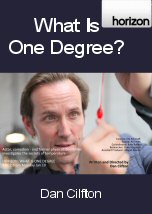
What is One Degree

   2011    Science
Comedian Ben Miller returns to his roots as a physicist to try to answer a deceptively simple question: what is one degree of temperature? His quest takes him to the frontiers of current science as he meets researchers working on the hottest and coldest temperatures in the universe, and to a lab where he experiences some of the strangest effects of quantum physics - a place where super-cooled liquids simply pass through solid glass. Plus, Ben installs his very own Met office weather station at home. Ben's investigations in this personal and passionate film highlight the importance of measurement and accuracy in the 21st century.

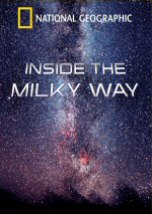
Inside the Milky Way

   2011    Science
Embark on an astounding journey across 100,000 light-years to witness key moments in the history of the Milky Way. Using cutting-edge science, National Geographic constructs a 3-D state-of-the-art CGI model of our galaxy. We'll peer into the heart of the Milky Way on the hunt for super-massive black holes, watch how stars are born and die, fly out and above the plane of our galaxy to understand its true shape and scour its dusty spiral arms for the possibility of life

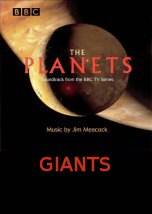
Giants

   2000    Science
Be prepared to fight your way past all kinds of computer animation. Somehow Patrick Moore's The Sky at Night manages to convey just as much excitement with little more than a couple of diagrams and the presenter's hyperactive enthusiasm. The series cover the history of the solar system and humanity's age-old desire to learn its secrets. Far beyond the inner planets of rock and iron lie the gas giants. Discover the most distant and alien worlds in our Solar System and the moment of genius that allowed scientists to explore them.
Series: The Planets
Long Way Up

Long Way Up

2020  Culture
Leaving Neverland

Leaving Neverland

2019  Culture
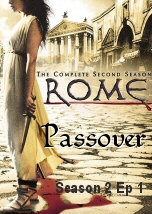
Rome Second Season

Rome Second Season

  History
Arnold

Arnold

2023  History
Food Inc

Food Inc

2009  Technology
Human

Human

2025  History
Chased by Sea Monsters

Chased by Sea Monsters

2003  Science