James Blake returns to the front line of online crime to investigate one of the darkest threats facing young people today: a hidden world of sextortion, grooming, harmful algorithms, and sexual exploitation moving across social media platforms with frightening speed. What begins with victims in the UK and warnings from police, experts, and whistle-blowers soon reveals a much larger and more disturbing picture, where online predators, organized networks, and global demand turn private screens into places of fear, blackmail, and abuse. The investigation takes him from Britain to the Philippines, where he joins a specialist international task force during police operations targeting livestreamed sexual exploitation linked to offenders abroad. Through survivor testimony, frontline officers, digital evidence, and the reality of raids on suspected abusers, the documentary exposes how technology, money, and anonymity can connect criminals thousands of miles away with vulnerable children. Urgent, shocking, and deeply human, it asks who is really protecting young people when the worst crimes online are only a few clicks away.
A gripping documentary that delves into the shadowy world of social media algorithms, revealing how they amplify harmful content and controversial figures like Andrew Tate. With exclusive interviews from his critics, supporters, and those who know him personally, the film exposes the shocking truth behind Tate's rise to infamy and influence. It asks a critical question: how does someone with such toxic, misogynistic views manage to captivate millions of young followers, despite facing charges of rape and human trafficking? This film goes beyond the surface of Tate’s controversial persona to uncover the disturbing power of social media platforms. By pulling back the curtain on the algorithms designed to promote extreme and inflammatory content for profit, it paints a chilling picture of the real-world consequences of online hate. A must-watch for anyone seeking to understand the dangerous intersection of internet culture and its impact on society.
What connects amateur sleuths turning up at crime scenes, anti-social behaviour in schools and riots? Marianna Spring has spent one year investigating harmful behaviour on TikTok spilling out into the real-world. As well as crunching the numbers, Marianna tracks down TikTok users, victims and former employees to interrogate and expose how extremely high engagement on TikTok around particular topics appears to be creating these 'frenzies'. The documentary explores how users go to extreme lengths in order to get more engagement in a battle for followers and likes. Marianna investigates the role TikTok's algorithm and format plays in what’s happening and reveals insiders’ concerns about the app. The film seeks to find out if this is the real danger and what impact it is having on society.
Without us noticing, modern life has been taken over. Algorithms run everything from search engines on the internet to satnavs and credit card data security - they even help us travel the world, find love and save lives. Professor Marcus du Sautoy demystifies the hidden world of algorithms. By showing us some of the algorithms most essential to our lives, he reveals where these 2,000-year-old problem solvers came from, how they work, what they have achieved and how they are now so advanced they can even programme themselves.
Predictions underlie nearly every aspect of our lives, from sports, politics, and medical decisions to the morning commute. With the explosion of digital technology, the internet, and 'big data,' the science of forecasting is flourishing. But why do some predictions succeed spectacularly while others fail abysmally? And how can we find meaningful patterns amidst chaos and uncertainty? From the glitz of casinos and TV game shows to the life-and-death stakes of storm forecasts and the flaws of opinion polls that can swing an election, 'Prediction by the Numbers' explores stories of statistics in action. Yet advances in machine learning and big data models that increasingly rule our lives are also posing big, disturbing questions. How much should we trust predictions made by algorithms when we don't understand how they arrive at them? And how far ahead can we really forecast?
Frequent security expos feature companies like Megvii and its facial- recognition technology. They show off cameras with A.I. that can track cars, and identify individuals by face, or just by the way they walk. In China it's been projected that over 600 million cameras will be deployed by 2020. Here, they may be used to discourage jaywalking, but they also serve to remind people that the state is watching. Matching with the most advanced artificial intelligence algorithm, they can actually use this data, real-time data, to pick up a face or pick up a action. A.I. is a technology that can be used for good and for evil. So, how do governments limit themselves in, on the one hand, using this A.I. technology and the database to maintain a safe environment for its citizens, but not to encroach on a individual's rights and privacies?
















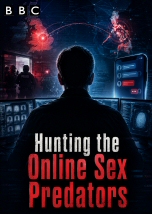








The investigation takes him from Britain to the Philippines, where he joins a specialist international task force during police operations targeting livestreamed sexual exploitation linked to offenders abroad. Through survivor testimony, frontline officers, digital evidence, and the reality of raids on suspected abusers, the documentary exposes how technology, money, and anonymity can connect criminals thousands of miles away with vulnerable children. Urgent, shocking, and deeply human, it asks who is really protecting young people when the worst crimes online are only a few clicks away.