Embark on an extraordinary journey across our cosmic neighborhood to witness the hidden wonders of planets, moons, and asteroids—each world more astonishing than the last. Cutting-edge imaging and breathtaking visuals unveil the solar system in ways never imagined, revealing alien landscapes, colossal storms, and secrets that challenge everything we know about our place in the universe. In the first episode, you can explore volcanic realms where otherworldly landscapes are sculpted by fire and ice. Discover planets and moons blanketed with enormous volcanoes, some erupting so violently that plumes rise into the darkness of space. From oceans of molten rock to frozen geysers launching towering jets of vapor, these spectacular worlds showcase the raw power and beauty of nature beyond Earth.
A chillingly realistic scenario unfolds: what would happen if a massive asteroid were hurtling toward Earth—and we only had months to prepare? This gripping special plunges viewers into the very real threat of cosmic collisions, combining cutting-edge science, expert analysis, and stunning visualizations. Follow the urgent efforts of scientists racing to detect and deflect potential impacts, with exclusive access to astronomers monitoring the skies. More than just a documentary, it's a wake-up call from the cosmos—a thrilling journey into one of the most dramatic `what if’ scenarios humanity could face.
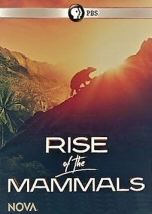
Sixty-six million years ago, an asteroid wiped out the dinosaurs in a fiery global catastrophe. But we know little about how their successors, the mammals, recovered and took over the world. Now, hidden inside ordinary-looking rocks, an astonishing trove of fossils reveals a dramatic new picture of how rat-sized creatures ballooned in size and began to evolve into the vast array of species.
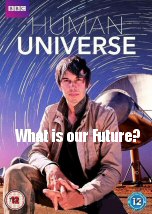
Professor Brian Cox concludes his exploration of our place in the universe by asking what next for the ape that went to space. Our future is far from certain. In Florida, Brian joins the latest efforts to protect Earth from potential catastrophic events. He joins a team of Nasa astronauts who are training for a future mission to an asteroid - should we ever discover one coming our way - under 30 feet of water in a submerged laboratory that simulates space. It is just one example of how, for our long-term survival, space exploration may well be vital. It is a view shared by Apollo 16 astronaut Charlie Duke, who tells Brian what it was like to escape the confines of the planet. It is a dream that both Nasa and now commercial companies share as they race to get humans back into deep space. But space travel, like every leap our civilisation has ever made, requires energy. Here too, scientists are hard at work attempting to safeguard our future. At the National Ignition Facility in California, Brian witnesses the world's most successful fusion experiment in action. He believes that if their mission succeeds, our civilisation will have unlocked a way to the stars that will not destroy the planet in the process. Brian concludes by returning to the top of the world in Svalbard, where he gains access to our civilisation's greatest treasure, locked away in a vault buried deep in the permafrost.
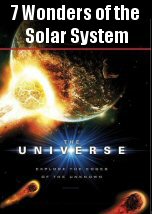
Take an exhilarating, unprecedented exploration of the seven most amazing wonders of our solar system. Our virtual tour begins with a trip to Enceladus, one of Saturn's outer moons, where icy geysers spout from its surface. Then venture to Saturn's famous rings, which contain mountain ranges that rival the Alps. Next dive into the eye of the biggest storm in the solar system--Jupiter's Great Red Spot. Soar through the Asteroid Belt, containing millions of leftover rocks from the formation of the solar system. Trek up Mount Olympus, the largest volcano, located on Mars. Have a close encounter with the searing surface of the Sun, and finish the journey by exploring our home planet Earth.
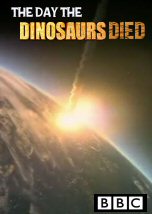
Experts suspect that the dinosaurs were wiped out after a city-sized asteroid smashed into the Gulf of Mexico causing a huge crater. But until now, they haven't had any proof. In a world first, evolutionary biologist Ben Garrod joins a multi-million pound drilling expedition into the exact spot the asteroid hit to get hard evidence of the link. The team overcomes huge obstacles as it attempts to drill 1,500 metres beneath sea level to pull up rock from the Chicxulub crater. Meanwhile, paleopathologist Professor Alice Roberts travels the globe meeting top scientists and gaining exclusive access to a mass fossil graveyard in New Jersey - believed to date from the same time the asteroid hit. Alice also treks by horseback across the remote plains of Patagonia, to see if the effects of the asteroid impact could have wiped out dinosaurs across the world - almost immediately.









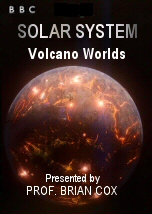



In the first episode, you can explore volcanic realms where otherworldly landscapes are sculpted by fire and ice. Discover planets and moons blanketed with enormous volcanoes, some erupting so violently that plumes rise into the darkness of space. From oceans of molten rock to frozen geysers launching towering jets of vapor, these spectacular worlds showcase the raw power and beauty of nature beyond Earth.