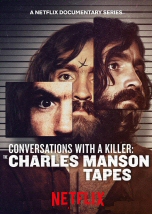
Previously unreleased prison calls, firsthand testimony and archival footage open a disturbing window into the world Charles Manson created around himself. Against the backdrop of the late-1960s counterculture, Manson draws vulnerable and disillusioned young people into a tightly controlled group built on promises of love, freedom and belonging. His manipulation gradually deepens into paranoia, domination and violence, culminating in the 1969 murders committed by members of the Manson Family, including the killings at the home of Sharon Tate, and in Manson’s delusional belief that the crimes could help ignite a racial apocalypse he called “Helter Skelter.” The story then follows the investigation, arrests and extraordinary 1971 trial, where Manson and his followers turn the courtroom into a spectacle and become symbols of a darker side of the era. Recordings of Manson himself are joined by voices from people who lived through the events, including material connected to followers such as Charles “Tex” Watson, Susan Atkins and Leslie Van Houten, revealing how charisma, coercion and group loyalty were transformed into lethal obedience. Presented here with all three episodes combined into a single video, viewers can follow the complete story without interruption, from the formation of the Family to the murders, the trial and the disturbing legacy Manson left behind.
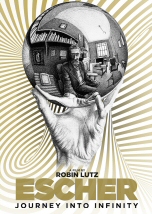
Explore the intriguing world of M.C. Escher in this captivating documentary, which delves deep into his life and artistic journey through his own words. Narrated with excerpts from his writings, the film is visually enriched with archival footage of Escher himself and showcases his iconic drawings. Gain unique insights from interviews with his surviving family members who illuminate aspects of his personal and professional life. Escher, who often described his work as straddling the realms of art and mathematics, admitted to not excelling in either yet found profound expression in geometry-infused art. Choosing to work in stark black and white, he embraced the challenge of conveying complex ideas without the use of color. The film explores pivotal phases in his career, including his mesmerizing explorations of the human eye and his ultimate obsession with the concept of infinity—depicted in real forms like circles and through visual illusions such as his famous never-ending staircase. The documentary also features perspectives from admirers such as musician Graham Nash, who argues that Escher's genius remains underappreciated. This film promises not only to shed light on Escher’s innovative work but also to inspire a deeper appreciation for his unique blend of visual storytelling and mathematical precision.
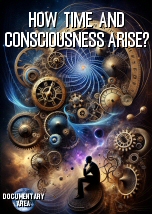
The documentary, an own production, immerses the viewer in a journey that blends science and philosophy, questioning the nature of time and unveiling a 4-dimensional universe, where space and time are integrated. We are invited to consider a universe in which past, present, and future coexist, suggesting that our linear perception of time might be more of a mental construction than a physical reality. The narrative progresses by exploring how quantum particles exist in states of probability until they are observed, at which point they acquire defined properties. Then, the provocative hypothesis is presented that observation also fixes the temporal dimension of the particles. The sensation of the flow of time and the distinction between past, present, and future are introduced as mental constructions, arising from the human brain's limited capacity to process the complexity of reality. It is then proposed that the mind, by observing itself, fixes itself in the temporal dimension, thus creating the illusion of the present. Finally, the impact of these theories on free will is discussed. This documentary challenges viewers to look beyond their everyday perceptions and consider the possibility that reality is much more complex and fascinating than our immediate experiences suggest. It is an invitation to explore the limits of science, philosophy, and the mind itself in search of answers to some of the deepest questions of existence.
More information on https://www.javier-serrano.blog/Ciencia/representacion_tridimensional_del_universo.php
Killing Kennedy begins in 1959, at major turning points for both the future president and his assassin. John F. Kennedy (played by Rob Lowe) is in Washington, D.C., preparing to announce his presidential candidacy, while Lee Harvey Oswald finds himself in the U.S. embassy in Moscow, renouncing his U.S. citizenship. These two events start both men-one a member of one of the United States' most wealthy and powerful families, the other a disillusioned former Marine and Marxist-on a cataclysmic track that would alter the course of history". Throughout the film, we see their highs and lows, culminating in not one but two shocking deaths that stunned the nation. Based on the best-selling book by Bill O'Reilly and Martin Dugard.
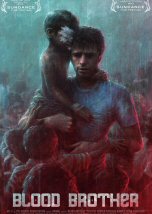
Rocky Braat went to India as a disillusioned tourist. When he met a group of children with AIDS, he decided to stay. He never could have imagined the obstacles he would face, or the love he would find.
Horizon explores the strange and wonderful world of illusions – and reveals the tricks they play on our senses and why they fool us. We show how easy it is to trick your sense of taste by changing the colours of food and drink, explain how what you see can change what you hear, and see just how unreliable our sense of colour can be. But all this trickery has a serious purpose. It’s helping scientists to create a new understanding of how our senses work – not as individual senses, but connected together. It holds the intriguing possibility that one sense could be mapped into another.
















The story then follows the investigation, arrests and extraordinary 1971 trial, where Manson and his followers turn the courtroom into a spectacle and become symbols of a darker side of the era. Recordings of Manson himself are joined by voices from people who lived through the events, including material connected to followers such as Charles “Tex” Watson, Susan Atkins and Leslie Van Houten, revealing how charisma, coercion and group loyalty were transformed into lethal obedience. Presented here with all three episodes combined into a single video, viewers can follow the complete story without interruption, from the formation of the Family to the murders, the trial and the disturbing legacy Manson left behind.