Professor Jerry Brotton reveals that maps are far more than neutral guides to places: they are expressions of the societies that create them and powerful instruments for shaping territory, belief and authority. Beginning with some of the earliest known maps, he traces how cartography evolved from marking land and ownership to serving kings, empires, scientists and governments. From Henry VIII’s coastal surveys and the Cassini family’s scientific breakthroughs to the drawing of modern national borders, the series shows how maps can define who controls land, who belongs where and even how entire peoples understand the world around them. Across the three episodes, presented here together in a single uninterrupted video, the journey moves from ancient and medieval worldviews to imperial expansion and the digital age. Brotton explores religious maps, Aztec symbolism, Victorian attempts to classify societies, the politics behind projections of the globe, and the rise of Google Earth and data-driven mapping. He then follows the mapmakers and explorers who turned distant lands into targets for conquest and profit, from Ptolemy and Columbus to Walter Raleigh and the trading empires that followed. The story ends in the Arctic, where new maps are once again being used to stake claims over oil, gas and minerals, proving that even in the twenty-first century, cartography remains inseparable from power, plunder and possession.
In the final two episodes of this season, Phil continues his joyful culinary adventure, discovering how food reveals the heart and traditions of remarkable cultures. With his trademark humor and curiosity, he shares unforgettable meals with locals whose stories bring every dish to life. First, Phil dives into the bold flavors of the Philippines, savoring sizzling pork sisig, sharing a lively roadside lunch with Jeepney drivers, and bravely joining his first traditional boodle fight, where friends gather around a table covered with food and eat together with their hands. The journey then takes him to Guatemala, where rich volcanic soil and vibrant traditions create an extraordinary culinary landscape. Traveling with Claudia, his family’s longtime babysitter and dear friend, Phil explores colorful markets, local dishes, and heartfelt connections that make this trip especially meaningful.
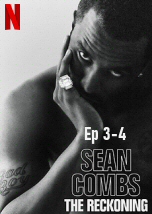
In the final two episodes, the story enters its darkest chapter as Sean Combs faces the consequences of a life lived at the center of power and controversy. After the death of The Notorious B.I.G., his influence and wealth surge, but so do reports of violence and instability surrounding his world, exposing a widening gap between public triumph and private turmoil. As multiple accusers come forward with disturbing allegations of abuse, the narrative shifts from rumor to reckoning. Their testimonies ignite a federal investigation that culminates in a 2024 arrest and a high-profile trial, forcing a confrontation with questions of accountability, silence, and the cost of celebrity. What emerges is a tense, unflinching examination of how fame can shield wrongdoing—and how that shield can finally crack.
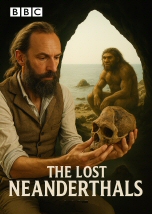
In the heart of southern France, the Mandrin Cave has drawn archaeologists for over three decades, its soils preserving an extraordinary archive of human life stretching back tens of thousands of years. Within its layers lie traces of fire, tools, and bones that tell the story of survival in a harsh prehistoric world. In 2015, the remarkable discovery of a Neanderthal individual—nicknamed Thorin—revealed that these ancient humans once lived side by side with the first Homo sapiens to arrive in the region. Following an international team of scientists, the investigation uncovers fragile relics of the Palaeolithic era that are rewriting our understanding of how two human species encountered one another. With every excavation, new details emerge about resilience, adaptation, and coexistence, offering a powerful re-examination of what it meant to be human 50,000 years ago. This is not only the story of the Neanderthals’ fate, but also of the deep roots of our own identity.
The future of transportation is no longer a distant dream — it's here, and it's electric. But beneath the sleek designs and zero-emission promises lies a more complex reality. From hidden environmental costs to the fierce battle for battery materials, and from government incentives to powerful oil lobbies, this gripping investigation peels back the glossy surface to reveal the full story behind the electric revolution. Experts, insiders, and whistleblowers offer unprecedented insights into the true cost — and potential — of going electric. Fast-paced, eye-opening, and often surprising, this journey challenges everything you thought you knew about the cars of tomorrow.
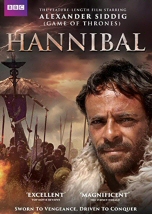
It is 200 years before the birth of Christ and Rome is the new superpower of the ancient world. She believes she is invincible - but one man is destined to change that. He is a man bound by oath to avenge the wrongs inflicted on his home and, in pursuit of revenge, he will stop at nothing. This featured docudrama explores the man behind the myth, revealing what drove the 26-year-old to mastermind one of the most audacious military moves in history. With 40,000 soldiers and 37 elephants, he marched 1,500 miles to challenge his enemies on their own soil. It was an act so daring that few people believed it possible. ‘Hannibal: Rome Worst Nightmare’ combines drama, the latest historical research and state-of-the-art CGI to bring this spectacular story to life.










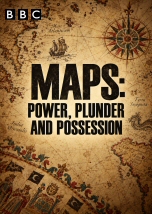



Across the three episodes, presented here together in a single uninterrupted video, the journey moves from ancient and medieval worldviews to imperial expansion and the digital age. Brotton explores religious maps, Aztec symbolism, Victorian attempts to classify societies, the politics behind projections of the globe, and the rise of Google Earth and data-driven mapping. He then follows the mapmakers and explorers who turned distant lands into targets for conquest and profit, from Ptolemy and Columbus to Walter Raleigh and the trading empires that followed. The story ends in the Arctic, where new maps are once again being used to stake claims over oil, gas and minerals, proving that even in the twenty-first century, cartography remains inseparable from power, plunder and possession.