A chilling investigation dives into the looming threat scientists call “Disease X” — an unknown pathogen capable of triggering the next global pandemic. Led by physician and broadcaster Chris van Tulleken, the documentary explores how modern life, global travel, and human–animal contact are creating the perfect conditions for a catastrophic outbreak. What begins as a scientific inquiry quickly becomes a race against time to understand how close we may already be to the next crisis. To uncover where Disease X might emerge, van Tulleken retraces the fault lines of past outbreaks, from the deadly Nipah virus in Malaysia to the spread of bird flu among dairy cattle in California. Through frontline reporting, expert interviews, and unsettling real-world examples, the film reveals how fragile global health defenses truly are — and why the next pandemic may not be a question of if, but when.
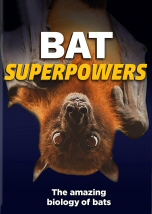
Could the source of the world’s deadliest viruses hold the secret to a healthier and longer life? Bats have a sinister reputation as potential sources for some of the deadliest disease outbreaks: Ebola, MERS, SARS, and most recently, the virus behind the COVID-19 global pandemic. Yet scientists are discovering new evidence that bats are biological marvels and may hold a key to longevity. They’re resistant to the diseases they carry and have freakishly long lifespans for their tiny size. So, what’s their secret? And what else can we learn from their peculiar biology? From caves in Thailand and Texas to labs around the globe, the films meets the scientists who are decoding the superpowers of the bat.
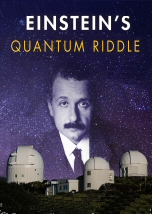
Join scientists as they grab light from across the universe to prove quantum entanglement is real. Einstein called it 'spooky action at a distance,' but today quantum entanglement is poised to revolutionize technology from computers to cryptography. Physicists have gradually become convinced that the phenomenontwo subatomic particles that mirror changes in each other instantaneously over any distance is real. But a few doubts remain. The film follows a ground-breaking experiment in the Canary Islands to use quasars at opposite ends of the universe to once and for all settle remaining questions.
Lucy Worsley travels to Russia to tell the extraordinary story of the dynasty that ruled the country for more than three centuries. It's an epic tale that includes giant figures such as Peter the Great and Catherine the Great, the devastating struggle against Napoleon in 1812, and the political murders of Nicholas II and his family in 1918 which brought the dynasty to a brutal end. In this first episode, Lucy investigates the beginning of the Romanovs' 300-year reign in Russia. In 1613, when Russia was leaderless, 16-year-old Mikhail Romanov was plucked from obscurity and offered the crown of Russia. Lucy also charts the story of Peter the Great, the ruthless and ambitious tsar who was determined to modernise Russia at the end of the 17th century.
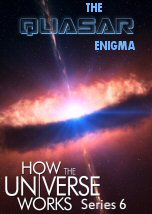
Mysterious lights shine out from the edge of space, brighter than a trillion suns. They had to be the brightest objects we've ever seen in the universe, putting out amounts of energy that we couldn't possibly explain. So powerful, they can incinerate planets and rip stars to pieces. These are among the most mysterious and most energetic phenomenon in the universe. They can destroy galaxies, but may also be the key to their survival. These objects are a hotbed of all kinds of crazy physics. These celestial powerhouses are called quasars, and we may owe them our very existence.
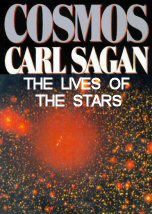
The simple act of making an apple pie is extrapolated into the atoms and subatomic particles (electrons, protons, and neutrons) necessary. Many of the ingredients necessary are formed of chemical elements formed in the life and deaths of stars (such as our own Sun), resulting in massive red giants and supernovae or collapsing into white dwarfs, neutron stars, pulsars, and even black holes. These produce all sorts of phenomena, such as radioactivity, cosmic rays, and even the curving of spacetime by gravity. Cosmos Update mentions the supernova SN 1987A and neutrino astronomy.






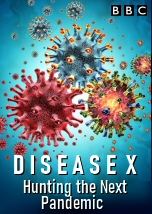


To uncover where Disease X might emerge, van Tulleken retraces the fault lines of past outbreaks, from the deadly Nipah virus in Malaysia to the spread of bird flu among dairy cattle in California. Through frontline reporting, expert interviews, and unsettling real-world examples, the film reveals how fragile global health defenses truly are — and why the next pandemic may not be a question of if, but when.