As artificial intelligence accelerates at a breathtaking pace, filmmaker Daniel Roher sets out to understand whether humanity is approaching an extraordinary new era or a catastrophe of its own making. What begins as a personal investigation becomes far more urgent when he and his wife learn they are expecting a child. Faced with predictions ranging from revolutionary medical breakthroughs and powerful new tools for creativity to mass unemployment, deepfakes, autonomous systems and even existential risk, he asks some of the world’s leading AI thinkers a deceptively simple question: should we be excited about the future, or terrified of it? The film explores how generative AI works, why its capabilities are advancing so quickly and what could happen if increasingly powerful systems become difficult to control. Experts debate AI safety and alignment, the race between competing companies, the possibility of machines seeking greater power, and the social consequences of automation and concentrated wealth. At the same time, the documentary confronts the technology’s remarkable promise, from personalized education to scientific discovery and potential cancer treatments. Moving between anxiety and hope, Roher ultimately searches for a way to face an uncertain future not as a pessimist or a blind optimist, but as something in between: an “Apocaloptimist.”
Deep beneath the surface of the internet lies a hidden world built on anonymity, encryption, and unimaginable crimes. In this gripping investigative documentary, an elite international task force of undercover officers ventures into the most dangerous digital territories to track down predators who believe they are untouchable. Led by determined U.S. agent Greg Squire, the team navigates complex cyber networks, encrypted marketplaces, and secret forums where every click could mean the difference between rescue and disappearance. Blending real operations with unprecedented access to those on the front lines, this powerful exposé reveals the technological cat-and-mouse battle between law enforcement and criminals operating in the shadows. As the stakes escalate and time runs out, viewers witness not only the scale of the global threat but also the relentless dedication of those risking everything to bring children to safety. It is a tense, emotional, and ultimately hopeful look at courage in the darkest corners of the digital age.
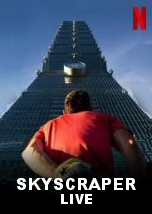
This high-stakes documentary follows climber Alex Honnold as he attempts the unthinkable: scaling Taipei 101, one of the tallest skyscrapers on Earth, without ropes or safety gear—and doing it live. With cameras rolling in real time, every movement becomes a moment of tension, turning a feat of athletic precision into a global spectacle where a single mistake could be fatal. As the climb unfolds, the film pulls viewers inside Honnold’s mindset, revealing the discipline, focus, and psychological control required to face extreme exposure hundreds of meters above the city. Blending vertigo-inducing visuals with the immediacy of live broadcast, it becomes a gripping meditation on risk, human limits, and what drives someone to push beyond fear in front of the world.
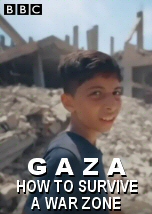
In the shattered streets of Gaza, four young lives unfold with raw intensity and haunting contradictions. Ayman Alyazouri and his companions navigate the chaos of relentless airstrikes, makeshift shelters, and impossible choices—while holding fast to a worldview shaped by conflict and a fervent hatred they scarcely question. Their daily struggle to find safety and meaning is captured in unflinching detail, blending scripted scenes with documentary realism to reveal the emotional cost of generations raised in perpetual war. This gripping portrait invites viewers to witness an unsettling intimacy with those who dream not of peace, but of vengeance.
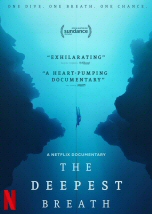
(Click CC for subtitles) Descending to remarkable depths below the sea on one single breath, Alessia Zecchini enters what she describes as the last quiet place on Earth. The Italian champion is determined to set a new world record in freediving, a dangerous extreme sport in which competitors attempt to reach the greatest depth without the use of scuba gear. Freedivers are often subject to blackouts upon ascent, necessitating the help of safety divers like Stephen Keenan, a free-spirited Irish adventurer who fell in love with the sport in Dahab, Egypt. Having formed a special bond on the freediving circuit, Alessia and Stephen train together to make an attempt on Dahab’s legendary Blue Hole and its challenging 85-foot-long tunnel 184 feet below the Red Sea, their fates inextricably bound together.
The film tells the story of the ill-fated Nazi Land Speed record attempts. This is a story of engineering excellence, Grand Prix racing, Nazi propaganda, celebrity, and an intense rivalry which would leave a speed record unbroken for 79 years and one of Nazi Germany's best racing drivers dead. During the rise of the Third Reich two German car manufacturers were ordered to build the most high performance vehicles the world had ever seen. What followed was a rivalry that would reap Grand Prix victories, international domination that was a propaganda coup, and provide world fame to its drivers who risked their lives smashing speed records that would stand for 79 years. All under the direct orders of the Fuhrer himself. Bugatti and Alfa Romeo dominated racing before 1934. But the years from 1934 to 1939 were six tumultuous years in which Grand Prix racing was dominated by the German Auto Union, the arranged marriage of Audi, Horch, Wanderer, and DKW, and Mercedes-Benz teams and provided a spectacle of speed, sound and fury never previously attained and never since matched. There are few periods of racing that have excited as much interest, event attendance and sophistication of equipment as the era of the Silver Cars. They were so far ahead of their time that many of their accomplishments were not duplicated until Mercedes went racing again in the early 1950s. There is also something about men who faced the challenges of staying in a cockpit of a highly sophisticated machine capable of 200 mph with no safety systems. They were giants and among them were Italian Tazio Nuvolari and two greatest German pilots of the thirties, Rudolf Caracciola of Mercedes and Auto Union's Bernd Rosemeyer who duelled with faster, more innovative and sleeker machines, developed in wind tunnels. This special documentary charts the rise of Nazi Germany's dominate 'Silver Arrow' Grand Prix and Speed Record cars of the 1930's. Leading motor racing and World War 2 experts James Holland, Richard Williams, Eberhard Reuss and Chris Routledge tell the story of the Nazi funded Auto Union and Mercedes Benz 'National Racing Cars'. Hitler's Supercars interweaves the rise of the Third Reich with the racing exploits it funded and what propaganda messages these racing cars where sending.






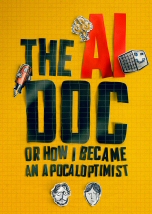




The film explores how generative AI works, why its capabilities are advancing so quickly and what could happen if increasingly powerful systems become difficult to control. Experts debate AI safety and alignment, the race between competing companies, the possibility of machines seeking greater power, and the social consequences of automation and concentrated wealth. At the same time, the documentary confronts the technology’s remarkable promise, from personalized education to scientific discovery and potential cancer treatments. Moving between anxiety and hope, Roher ultimately searches for a way to face an uncertain future not as a pessimist or a blind optimist, but as something in between: an “Apocaloptimist.”