With a humorous and surprisingly revealing look at modern farming, this documentary series follows Jeremy Clarkson as he trades fast cars and city life for the unpredictable challenges of running a working farm in the English countryside. What begins as an ambitious new venture soon becomes a constant battle against weather, bureaucracy, livestock, machinery, and the harsh realities faced by farmers every day. Combining stunning rural landscapes with Clarkson's trademark humor, the series offers an entertaining and eye-opening glimpse into life on the land. In the first three episodes, Jeremy finds himself largely on his own as key members of the team are away, forcing him to take greater responsibility for the farm's daily operations. Persistent rain threatens crucial planting schedules, while new equipment, a new farmhand, and even a potential new business opportunity provide fresh challenges and unexpected lessons. As he searches for a local pub to expand his ambitions, Jeremy also faces competition, difficult decisions, and the constant pressure of keeping the farm running in an environment where success often depends on factors completely beyond his control.
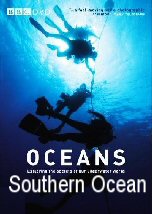
The Southern Ocean, which circles the globe without being blocked by land, is home to the Antarctic Circumpolar Current (ACC), the longest of the world's ocean currents. Also known as the "channel", it connects the Indian, Atlantic and Pacific Ocean basins and exerts a powerful influence over the Earth's climate. The ACC carries 150 times more water around Antarctica than the flow of all the world's rivers combined.
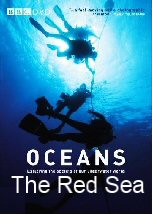
The Red Sea is one of the youngest oceans in the world and one of the warmest. The northern region, with its diverse array of marine life, is one of the most visited dive locations on earth while the southern end remains virtually unexplored. It's a global hotspot for marine biology and an important trade route throughout human history, linking the trade goods of India and the Far East with the markets of Egypt and Europe.
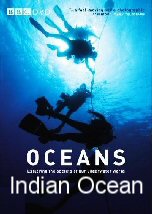
The Indian Ocean is the third largest body of water on Earth at more than 6,000 miles wide and covering 13% of the world's surface. It is home to 5,000 species of fish, many of which only exist in the Indian Ocean. But it is also an ocean under threat from global issues such as over-fishing and climate change, which make this an ocean on the edge.
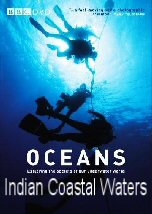
The tropical Indian Ocean is home to the Spice Islands. Characterised by beautiful sandy beaches, fringing coral reefs and coastal mangrove forests, this is a vibrant nursery area for marine life, such as whale sharks, crabs, seahorses and a great variety of fish. The coastal areas are where humans have the most direct impact on the ocean's resources.
With much of it covered in ice all year round and with no daylight from October to March, the Arctic Ocean is one of the world's most remarkable oceans. Its home to a multitude of unique life forms, all highly adapted to cope with the extreme and seasonal conditions. The impacts of climate change are more strongly felt here than anywhere else in the world.




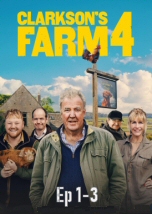











In the first three episodes, Jeremy finds himself largely on his own as key members of the team are away, forcing him to take greater responsibility for the farm's daily operations. Persistent rain threatens crucial planting schedules, while new equipment, a new farmhand, and even a potential new business opportunity provide fresh challenges and unexpected lessons. As he searches for a local pub to expand his ambitions, Jeremy also faces competition, difficult decisions, and the constant pressure of keeping the farm running in an environment where success often depends on factors completely beyond his control.