







Last Watched

"Wings"  Sort by

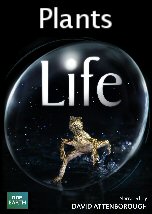
Life: Plants

   2009    Nature
Plants' solutions to life's challenges are as ingenious and manipulative as any animal's. Innovative time-lapse photography opens up a parallel world where plants act like fly-paper, or spring-loaded traps, to catch insects. Vines develop suckers and claws to haul themselves into the rainforest canopy. Every peculiar shape proves to have a clever purpose. The dragon's blood tree is like an upturned umbrella to capture mist and shade its roots. The seed of a Bornean tree has wings so aerodynamic they inspired the design of early gliders. The barrel-shaped desert rose is full of water. The heliconia plant even enslaves a humming bird and turns it into an addict for its nectar.
Series: Life
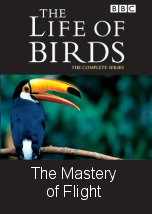

The Mastery of Flight

   1998    Nature
The second programme deals with the mechanics of flight. Getting into the air is by far the most exhausting of a bird's activities, and Sir Attenborough observes shearwaters in Japan that have taken to climbing trees to give them a good jumping-off point. The albatross is so large that it can only launch itself after a run-up to create a flow of air over its wings. A combination of aerodynamics and upward air currents (or thermals), together with the act of flapping or gliding is what keeps a bird aloft. Landing requires less energy but a greater degree of skill, particularly for a big bird, such as a swan. Weight is kept to a minimum by having a beak made of keratin instead of bone, a light frame, and a coat of feathers, which is maintained fastidiously. The peregrine falcon holds the record for being fastest in the air, diving at speeds of over 300 km/h. Conversely, the barn owl owes its predatory success to flying slowly, while the kestrel spots its quarry by hovering. However, the true specialists in this regard are the hummingbirds, whose wings beat at the rate of 25 times a second. The habits of migratory birds are explored. After stocking up with food during the brief summer of the north, such species will set off on huge journeys southwards. Some, such as snow geese, travel continuously, using both the stars and the sun for navigation. They are contrasted with hawks and vultures, which glide overland on warm air, and therefore have to stop overnight.
Series: The Life of Birds

Conquistadors: The Conquest of the Incas

   2002    History
Fancisco Pizarro hoped to find great riches in the land of the Inca when he set off on his third voyage to the new world in 1527. Travel back in time with Michael Wood and learn how Pizarro ransomed the life of a king for a room full of gold and silver. Trough letter and drawings from the 16th century and film from modern-day south America, discover this remarkable story of greed, faith, dishonor and valor.
Series: Conquistadors

What is the Secret of Life

   2010    Science
The story of how the secret of life has been examined through the prism of the most complex organism known - the human body. It begins with attempts to save the lives of gladiators in Ancient Rome, unfolds with the macabre work and near-perfect drawings of Leonardo in the Renaissance, through the idea of the 'life force' of electricity, to the microscopic world of the cell. It reveals how a moral crisis unleashed by work on the nuclear bomb helped trigger a great breakthrough in biology - understanding the structure and workings of DNA.
Series: The Story of Science
Atom

Atom

2007  Science
The Story of Science

The Story of Science

2010  History
Follow This

Follow This

2018  Medicine
Wild South America

Wild South America

2005  Nature
Natural World

Natural World

2015  Nature
Clarkson Farm Season 2

Clarkson Farm Season 2

2023  Nature