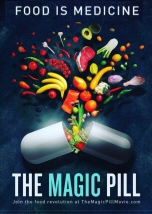
The Magic Pill follows doctors, patients, scientists, chefs, farmers and journalists from around the globe who are combating illness through a paradigm shift in eating. According to its followers, this simple change - embracing fat as our main fuel - is showing profound promise in improving the health of people, animals and the planet. The film is highly controversial and was criticized by some medical associations. The Paleo diet proposes that humans were genetically adapted to eating specifically those foods that were readily available to them in their local environments. Advocates of the diet claim many chronic diseases and degenerative conditions evident in modern Western populations have arisen because of a mismatch between Stone Age genes and modern lifestyles. The Paleo diet typically includes vegetables, fruits, nuts, roots, and meat and excludes foods such as dairy products, grains, sugar, legumes, processed vegetable oils, salt, alcohol or coffee.
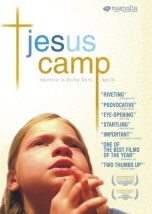
The youngest foot soldiers for the Lord are shown in their native environment in this documentary. Becky Fischer is a children's pastor who runs 'Kids on Fire,' a summer camp for evangelical Christian children in North Dakota. Fischer believes in the political and moral importance of a Christian presence in America, and uses her camp to reinforce the religious training most of her charges are already receiving at home (the majority of the campers are home-schooled by their parents). Using video games, animated videos, and group activities to help put her message across, Fischer encourages the kids to pray for the President and his Supreme Court appointees while urging them to help 'take back America for Christ.' For the most part, the children seem reasonably ordinary beyond the fact they pray with uncommon fervour and sometimes speak in tongues. Along with Fischer and her cohorts, Jesus Camp features interviews with Ted Haggard, an evangelist and advisor to George W. Bush, and Mike Papantonio, a Christian talk-show host who believes the right-wing slant of many Christian evangelists is taking the church into a dangerous direction.
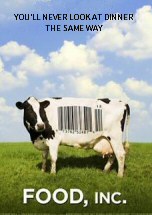
Filmmaker Robert Kenner lifts the veil on our nation's food industry, exposing the highly mechanized underbelly that's been hidden from the American consumer with the consent of our government's regulatory agencies, USDA and FDA. Our nation's food supply is now controlled by a handful of corporations that often put profit ahead of consumer health, the livelihood of the American farmer, the safety of workers and our own environment. We have bigger-breasted chickens, the perfect pork chop, insecticide-resistant soybean seeds, even tomatoes that won't go bad, but we also have new strains of e coli--the harmful bacteria that cause illness for an estimated 73,000 Americans annually. We are riddled with widespread obesity, particularly among children, and an epidemic level of diabetes among adults Featuring interviews with such experts as Eric Schlosser (Fast Food Nation), Michael Pollan (The Omnivore's Dilemma) along with forward thinking social entrepreneurs like Stonyfield Farms' Gary Hirschberg and Polyface Farms' Joe Salatin, the film reveals surprising--and often shocking truths--about what we eat, how it's produced, who we have become as a nation and where we are going from here.
Their quest is to discover whether the items we throw away today have any value for tomorrow's world. In a unique science experiment, Dr George McGavin and Dr Zoe Laughlin chronicle the history of rubbish and explore how what we throw away tells us about the way we live our lives. With unprecedented access to one of the UK's largest landfill sites, the team of experts spend three days carrying out tests all over the site, revealing the secret world of rubbish. They also carry out three other 'archaeological' digs into historic landfills to chart the evolution of our throwaway society. Is mining trash for something valuable really viable? McGavin concluded: 'The idea of landfill mining is a pretty compelling vision of the future.'
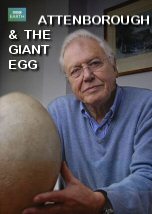
David Attenborough returns to the island of Madagascar on a very personal quest. In 1960, he visited the island to film one of his first ever wildlife series - Zoo Quest. Whilst he was there, he acquired a giant egg belonging to an extinct bird known as the 'elephant bird' - the largest bird that ever lived. It has been one of his most treasured possessions ever since. Fifty years older, he now returns to the island to find out more about this amazing creature and to see how the island has changed. Could the elephant bird's fate provide lessons that may help protect Madagascar's remaining wildlife? Using Zoo Quest archive and specially shot location footage, this film follows David as he revisits scenes from his youth and meets people at the front line of wildlife protection. On his return, scientists at Oxford University are able to reveal for the first time how old David's egg actually is, and what that might tell us about the legendary elephant bird.
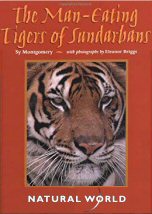
The Sundarbans mangrove forest, in Bangladesh near the Indian border, is a tidal jungle where Ganges and Brahmaputra enter the Indian Ocean. Its has some 400 Bengal tigers - the largest population in the world, and the only to be hardly scared of men. The downside is tigers kill up the 50 Bangladeshis a year, even from neighbouring villages, so keeping them inside the reserve is key to long-term survival. A recent project tries to train local mongrels, not pets but fiercely self-reliant dogs, to spot and even scare off tigers from villages. An individual tiger can turn into a man-eater in order to survive - this process may occur due to an injury or old age (and so cannot hunt agile prey) or even accidentally tasting human flesh.












The Paleo diet proposes that humans were genetically adapted to eating specifically those foods that were readily available to them in their local environments. Advocates of the diet claim many chronic diseases and degenerative conditions evident in modern Western populations have arisen because of a mismatch between Stone Age genes and modern lifestyles. The Paleo diet typically includes vegetables, fruits, nuts, roots, and meat and excludes foods such as dairy products, grains, sugar, legumes, processed vegetable oils, salt, alcohol or coffee.