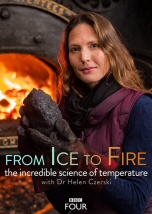
Physicist Dr Helen Czerski journeys to the extremes of the temperature scale, where the everyday laws of physics break down and a new world of scientific possibilities begins. In the first part, Frozen Solid, Helen reveals how cold has shaped the world around us and why frozen doesn't mean what you think it does. She meets scientists pushing temperature to the limits of cold, driving technologies such as superconductors. The second part, A Temperature for Life, explores the narrow band of temperature that has led to life on Earth, how life began where hot meets cold and how every living creature depends on temperature for survival. In the last part, Playing with Fire, Helen Czerski explores the science of heat. She reveals how heat is the hidden energy contained within matter with the power to transform it from state to state.
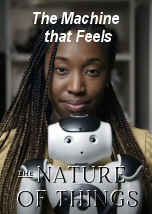
The film explores how artificial intelligence (AI) is catching up to us in ways once thought to be uniquely human: empathy, emotional intelligence and creativity. AI has the potential to reshape every aspect of our world – but most of us are unaware of what looms on the horizon. This documentary shows viewers what they need to know about a field that is advancing at a dizzying pace, often away from the public eye. Have AI the power to disconnect us from fellow humans? What does it mean when AI makes art? Can really AI interpret and understand human emotions? How is it possible that AI creates sophisticated neural networks that mimic the human brain? The documentary includes interviews with global leaders, commentators and innovators from the AI field, including Geoff Hinton, Yoshua Bengio, Ray Kurzweil and Douglas Coupland, who highlight some of the innovative and cutting-edge AI technologies that are changing our world.
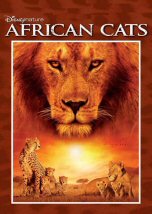
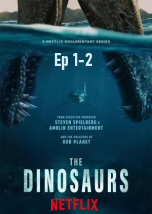
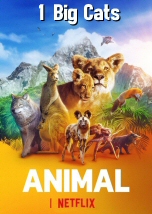
This immersive series follows the world's most magnificent creatures, capturing never before seen moments from the heartwarming to the outrageous. In the first episode, majestic, powerful and deadly, big cats were once thought to be solitary creatures. But we're now realizing just how collaborative they can be.
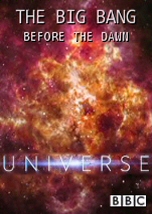
How did the universe come to be? Thanks to a series of discoveries, our most powerful space missions have unravelled 13.8 billion years of cosmic evolution and revealed the story of our universe from its birth all the way to the arrival of our nascent civilization. Our guide on this odyssey back to the dawn of time is light. Telescopes are time machines - by looking out into the distant universe, they open a window to the past. One telescope more than any other has helped us journey through the history of the universe: NASA’s Hubble Space Telescope. Remarkably, Hubble has even found one of the first galaxies ever to exist in the universe, which was born some 13.4 billion years ago. It's a discovery that hints at the beginnings of our own Milky Way. Vivid CGI brings this ancient galaxy to life, allowing us to witness for ourselves the first dawn. It was the beginning of a relationship between stars and planets that would, on a faraway world, lead to the origin of life - and ultimately to us. Hubble’s incredible discoveries have allowed scientists to piece together much of our cosmic story, but it cannot take us back to the most important moment in history: the Big Bang. For decades, the moment the universe began was the subject of pure speculation, but by combining astronomy and cosmology, scientists have finally found a way to put their theories to the test and study the momentous events that took place during the Big Bang. They can do this because the European Space Agency’s Planck space telescope has seen the afterglow of the Big Bang itself – something we call the Cosmic Microwave Background. The unparalleled detail Planck gave us has helped confirm something remarkable: the Big Bang may not be the beginning. There was a time before the dawn – a place beyond anything we can comprehend. Professor Brian Cox transports us back to the fraction of a second before the Big Bang, when the seeds of our universe were planted.
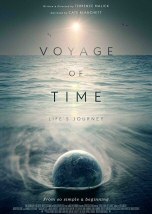
The film intends to illustrate the birth and death of an undiscovered universe, with powerful images, from the Big Bang to the Mesozoic era and through the present and beyond. Based on a project conceived decades ago, the documentary is highly experimental and perhaps Terrence Malick's most ambitious film, described by the director himself as 'one of my greatest dreams.'
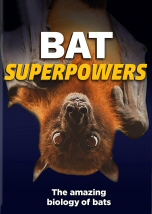
Could the source of the world’s deadliest viruses hold the secret to a healthier and longer life? Bats have a sinister reputation as potential sources for some of the deadliest disease outbreaks: Ebola, MERS, SARS, and most recently, the virus behind the COVID-19 global pandemic. Yet scientists are discovering new evidence that bats are biological marvels and may hold a key to longevity. They’re resistant to the diseases they carry and have freakishly long lifespans for their tiny size. So, what’s their secret? And what else can we learn from their peculiar biology? From caves in Thailand and Texas to labs around the globe, the films meets the scientists who are decoding the superpowers of the bat.







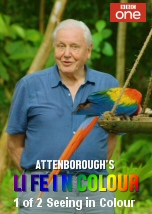


The second part, A Temperature for Life, explores the narrow band of temperature that has led to life on Earth, how life began where hot meets cold and how every living creature depends on temperature for survival. In the last part, Playing with Fire, Helen Czerski explores the science of heat. She reveals how heat is the hidden energy contained within matter with the power to transform it from state to state.