Buddhists, Hindus, and hundreds of thousands of travellers from around the globe flock to Cambodia every year to experience the grandeur of Angkor. Its famous temples were built over the span of five centuries by the rulers of the Khmer Empire, and endure today as one of Earth's greatest archaeological wonders. Join us as we shed light on one of the most enigmatic, mesmerizing civilizations in the history of mankind. We peel away the myth and legend to uncover the hidden story behind the creation of this ancient city. Angkor Wat is the largest temple on the face of the Earth and is a symbol of one of the greatest empires in the history of Southeast Asia. And yet, for centuries, the sacred structure remained lost within the tropical forests of Cambodia, along with the history of the young king who built the temple. Discover the story of Suryavarman II and how he ushered in the golden age of the Khmer Empire. See how Angkor Wat was constructed over four backbreaking decades, and witness the monument in its true glory and splendour, as it appeared 900 years ago.
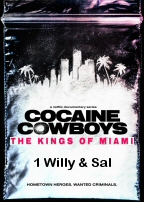
A Six-part Saga on the South Florida traffickers indicted in one of the largest drug cases in U.S. history. Alleged to be the chief U.S. distributors for two of Colombia's biggest cartels, Cuban exiles Augusto 'Willy' Falcon and Salvador 'Sal' Magluta were accused of smuggling over 75 tons of cocaine into the U.S. in the 1980s. The high school friends built a reputed $2 billion empire that made Willy and Sal two of Miami's biggest celebrities. Featuring colourful interviews with those closest to them, their defence team, and the Feds tasked with taking them down, the series paints a vivid portrait of the last of Miami's 'cocaine cowboys.' The first episode shows how in the 1970s and '80s, friends Willy Falcon and Sal Magluta leave humble beginnings behind as they allegedly ascend to the top of Miami's drug trade.
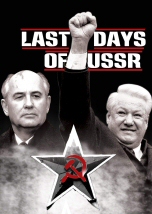
Moscow, 31 December 1991: the Red Flag of the Kremlin is pulled down and replaced by the three-coloured banner of Russia, marking the end of the Soviet Union and of its ideologies. Illustrated with testimonies of top protagonists and Mikhail Gorbachev himself, the documentary recounts, day by day, the critical last two years that led to the fall of the largest and one of the most totalitarian empires of the 20th century.
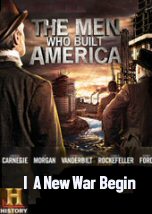
This series shines a spotlight on the influential builders, dreamers and believers whose feats transformed the United States, a nation decaying from the inside after the Civil War, into the greatest economic and technological superpower the world had ever seen. The Men Who Built America is the story of a nation at the crossroads and of the people who catapulted it to prosperity. In the first episode, Cornelius Vanderbilt grows from a steamboat entrepreneur to the head of a railroad empire, and gets into a heated rivalry with Jim Fisk and Jay Gould; the up and coming John D. Rockefeller founds Standard Oil. Many business owners lay their own rail lines which leads to the Panic of 1873. Later, Rockefeller starts to expand his wealth by diverting his business from the railroads to a new innovation, oil pipelines.
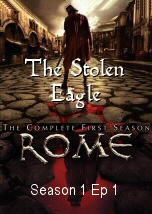
In this historical drama, the turbulent transition from Roman republic to autocratic empire, which changed world history through civil war and wars of conquest, is sketched both from the aristocratic viewpoint of Julius Caesar, his family, his adopted successor Octavian Augustus, and their political allies and adversaries, and from the politically naive viewpoint of a few ordinary Romans, notably the soldiers Lucius Vorenus and Titus Pullo and their families. 'The Stolen Eagle.' In Gaul in 52 B.C., two Roman soldiers, Legionary Titus Pullo and Centurion Lucius Vorenus, are tasked with recovering Julius Caesar's personal Eagle, stolen from his camp in the dead of night. With his campaign in Gaul coming to a successful conclusion, Caesar's popularity is continuing to grow. He's saddened however when he receives news from his good friend Pompey Magnus that his daughter, Pompey's wife, has died in childbirth. In the Senate, Pompey must defend the prolonged absence of his friend and co-Consul Caesar against charges of corruption.
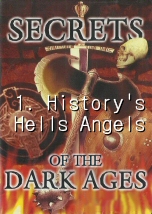
Richard Rudgley goes in search of evidence of the barbarians of the dark ages, people whose names have for 1500 years been bywords for mindless brutality. The real truth about the barbarians who marched across Europe during the Dark Ages is more shocking than what you may know. Where did they come from? Who are their descendants? Are any of their techniques and inventions still used? Richard discovers the secrets of forgotten empires, and of mighty clashes throughout Europe. The art, society and cultural legacy of the barbarians are shown to have shaped and moulded the destiny of Europe even more than the Roman Empire. In the first part of the journey through the Dark Ages we will be tracing the legacies of the Huns, Vandals and Goths, to ask whether the 'dark ages' represent a resurfacing of much older tribal lines. Sites in Austria show how sophisticated pre-Roman communities had become with evidence of stunning craftsmanship and sophisticated farming techniques which defy the image of a mindless rabble we have come to accept without challenge.







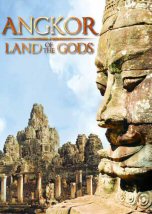


Angkor Wat is the largest temple on the face of the Earth and is a symbol of one of the greatest empires in the history of Southeast Asia. And yet, for centuries, the sacred structure remained lost within the tropical forests of Cambodia, along with the history of the young king who built the temple. Discover the story of Suryavarman II and how he ushered in the golden age of the Khmer Empire. See how Angkor Wat was constructed over four backbreaking decades, and witness the monument in its true glory and splendour, as it appeared 900 years ago.