Ottoman Sultan Mehmed II wages an epic campaign to take the Byzantine capital of Constantinople. Twenty-three armies have tried to take the legendary city and all have failed. Out of the carnage, one ruler will emerge victorious and shapes the course of history for centuries. For one empire to rise, another must fall. The Ottomans, former Anatolian warlords and nomads who've built a burgeoning empire are the biggest threat to the Romans' 1100-year reign. The death of Ottoman Sultan Murad II in 1451 unleashes a chain of events that will soon bring the Ottomans and Romans to the brink of war. After claiming the Ottoman throne, Mehmed II sends an unmistakable signal to Byzantine emperor Constantine XI.
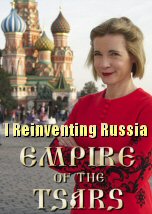
Lucy Worsley travels to Russia to tell the extraordinary story of the dynasty that ruled the country for more than three centuries. It's an epic tale that includes giant figures such as Peter the Great and Catherine the Great, the devastating struggle against Napoleon in 1812, and the political murders of Nicholas II and his family in 1918 which brought the dynasty to a brutal end. In this first episode, Lucy investigates the beginning of the Romanovs' 300-year reign in Russia. In 1613, when Russia was leaderless, 16-year-old Mikhail Romanov was plucked from obscurity and offered the crown of Russia. Lucy also charts the story of Peter the Great, the ruthless and ambitious tsar who was determined to modernise Russia at the end of the 17th century.
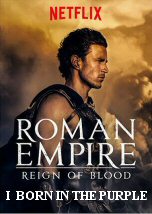
This stylish mix of documentary and historical epic chronicles the reign of Commodus, the emperor whose rule marked the beginning of Rome's fall. In the first episode, the death of Marcus Aurelius brings a century of Roman triumphs and victories to an end, transferring power to his spoiled, unprepared son Commodus. When his father bequeaths him the world's mightiest empire, he is forced to spill the blood of both friends and enemies alike to keep his crown.
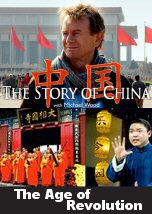
Between 1850 and 1950, three cataclysmic revolutions shook China to the core, but out of them, today's China emerged. The film begins in Canton with the meeting of a US missionary and a Chinese student. Inspired by the Christian story and calling himself God's second son, Hong unleashed the bloodiest war of the 19th century, the Taiping Rebellion. As imperial China weakened, foreign influence grew. Treaty ports expanded, bringing growth and wealth, trams, railways and western sensibilities. But this provoked another surge of violence, the Boxer Rebellion, an attack against the foreigners, which was crushed by those same foreigners, who extorted a huge indemnity - $60 billion in today's money. Then in 1912, the empire fell, and many groups contested China's future. In World War I, China sent 100,000 men to the western front, only to be humiliated at Versailles when German colonies in China were handed to Japan. Between the two world wars, the disparity between rich and poor, city and countryside increased. We visit Hong Kong's Peninsular Hotel in the jazz age and then follow Mao on the Long March to Yan'an, the heartland of revolution. World War II came to China two years earlier than it did in the west. Wood talks to a survivor of the Japanese massacre of Nanjing in 1937 and then charts the triumph of the communists, before ending the story with Mao's death and the boom time of the last 30 years. The series ends with the warmth of the Chinese family and, at Beijing's Altar of Heaven, a final haunting glimpse of eternal China.
How should art depict the relationship between man and God? How can art best express eternal values? Can you and should you portray the face of Christ? For over 1,000 years these were some of the questions which taxed the minds of the greatest artists of the early West. In this three-part series, art historian Andrew Graham-Dixon sets out to unravel the mysteries of art from the pre-perspective era". In the first episode, Andrew traces the beginnings of Christian art in the declining Roman Empire, Egypt and medieval France, and reveals the ideas which lay behind the transition
This acclaimed multi-million dollar 4 part series shows the rise of the tribes of a primitive culture on the fringe of northern Europe to become the heirs of the Roman Empire. Since the age of Caesar this Roman-Germanic conflict was characterized not only by fierce battles but also by phases of co-existence & cooperation. the Germans dug the grave of the Roman Empire, but were also the preserves of the Roman legacy.












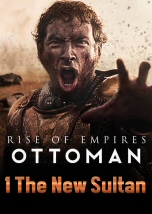


The Ottomans, former Anatolian warlords and nomads who've built a burgeoning empire are the biggest threat to the Romans' 1100-year reign. The death of Ottoman Sultan Murad II in 1451 unleashes a chain of events that will soon bring the Ottomans and Romans to the brink of war. After claiming the Ottoman throne, Mehmed II sends an unmistakable signal to Byzantine emperor Constantine XI.