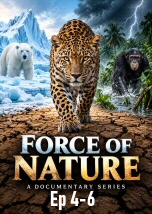
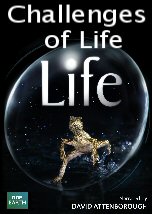
In the final three episodes, the series follows animals being pushed to the edge as melting ice, extreme heat and prolonged drought reshape the environments they depend on. In the Himalayas, a snow leopard is forced from familiar territory, while an Arctic ground squirrel in Alaska undertakes an extraordinary migration and a young Arctic fox in Svalbard faces her first winter alone. These cold-adapted animals must rapidly change behaviours that once worked for generations as their frozen worlds become increasingly unstable. The struggle then shifts to the opposite extreme, where wombats, leopards and kangaroo rats are tested by record heat and worsening drought, pushing their remarkable physical and behavioural adaptations to their limits. In the final episode, attention turns to the people working directly to help wildlife survive these new extremes, revealing rescue efforts, scientific interventions and conservation strategies in some of the planet’s harshest environments. Together, these final chapters show that survival now depends not only on the animals’ ability to adapt, but increasingly on how far humans are willing to go to protect them.
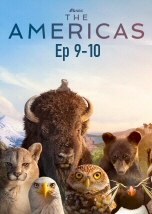
In the final two episodes, the journey reaches the Pacific edge of North America and the remote wilderness of Patagonia, two spectacular regions shaped by powerful oceans, towering forests and extreme weather. Along the West Coast, wolves comb the shoreline for food, sea otters battle crashing surf, blue whales gather in a rare display of speed and movement, and giant Pacific octopuses devote everything to protecting the next generation. High in the redwood canopy, even tiny salamanders perform extraordinary leaps to survive, revealing how life has adapted to one of the continent’s most dramatic coastal environments. The series then travels to the far south of the Americas, where Patagonia delivers a fittingly wild finale. Pumas stalk guanacos through snowy mountains, rockhopper penguins fight their way through violent waves to reach their colonies, giant stag beetles climb immense trees to compete for mates, and elephant seals clash for dominance along the coast. In one of the most remarkable scenes, a family of orcas passes down a dangerous hunting technique from one generation to the next, showing how survival here depends not only on strength, but also on experience, cooperation and learning.
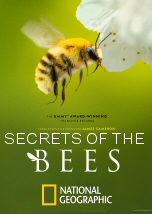
A hidden world unfolds as cutting-edge cameras follow bees closer than ever before, revealing the inner workings of their hives and the intelligence behind their behavior. Over several years, the documentary captures how these tiny pollinators build, communicate, and survive through changing seasons, while playing a critical role in sustaining a third of the food we depend on. Along the way, it exposes the growing threats they face and why their survival is essential for the balance of life on Earth. Both episodes of this series are combined into a single video, so you can experience the full story in one continuous viewing. With never-before-seen footage and expert insight, it offers a clear and fascinating look at one of nature’s most important—and most overlooked—species.
In a world where convenience rules what lands on our plates, this eye-opening investigation pulls back the curtain on the true cost of our modern food economy. What once promised abundance and innovation has morphed into a system where a few powerful corporations hold the reins, shaping government policy, squeezing farmers, and prioritizing profit over people. The result is a food supply that is astonishingly efficient yet painfully vulnerable — and deeply tied to a global health crisis fueled by ultra-processed products. With incisive reporting and compelling voices from leading food system critics, this urgent follow-up dives deeper into how profit-driven consolidation has rewired what we eat and how it’s made. Through revealing stories from workers, families, and the experts who dared to investigate, it challenges everything we think we know about food, health, and corporate control — and urges viewers to rethink the cost of what ends up on our tables.
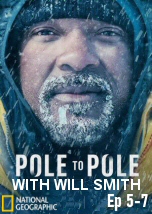
In the final three episodes, the journey deepens into a powerful exploration of culture, survival, and science at the planet’s edges. On a remote Pacific island threatened by rising seas, Will Smith joins Dr. Walworth and John Aini to document a dying language spoken by only five people, turning marine research into an intimate race against time to preserve human memory. The mission reveals how climate change erodes not just coastlines, but identities. The adventure then shifts to extremes of land and ice. In the Kalahari Desert, Will learns survival from the San people, confronting the limits of his endurance during a traditional hunt with guide Kane Motswana. The odyssey culminates beneath the ice of the North Pole, where, alongside polar ecologist Allison Fong, a daring dive to collect critical samples is jeopardized by a sudden storm and equipment failure. What follows is a gripping test of courage and teamwork that redefines heroism at the end of a 100-day quest.
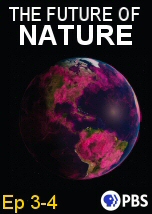
In the final two episodes, the focus shifts to forests and humanity’s defining role in the planet’s future. Ancient woodlands emerge as powerful engines of climate balance, storing vast amounts of carbon while sustaining intricate webs of life. Through striking visuals and frontline science, the documentary reveals how the health of the world’s forests is inseparable from the stability of Earth’s climate—and how their decline accelerates global risk. The story then turns inward, asking what responsibility humans bear in shaping what comes next. From indigenous stewardship to bold restoration projects, these episodes explore how human choices can either deepen the crisis or unlock nature’s capacity to heal. It’s a compelling conclusion that reframes our relationship with the natural world, showing that the future of nature is, ultimately, the future of humanity itself.





















The struggle then shifts to the opposite extreme, where wombats, leopards and kangaroo rats are tested by record heat and worsening drought, pushing their remarkable physical and behavioural adaptations to their limits. In the final episode, attention turns to the people working directly to help wildlife survive these new extremes, revealing rescue efforts, scientific interventions and conservation strategies in some of the planet’s harshest environments. Together, these final chapters show that survival now depends not only on the animals’ ability to adapt, but increasingly on how far humans are willing to go to protect them.